Canadians choosing not to snap up remaining ‘out-of-reach’ World Cup tickets
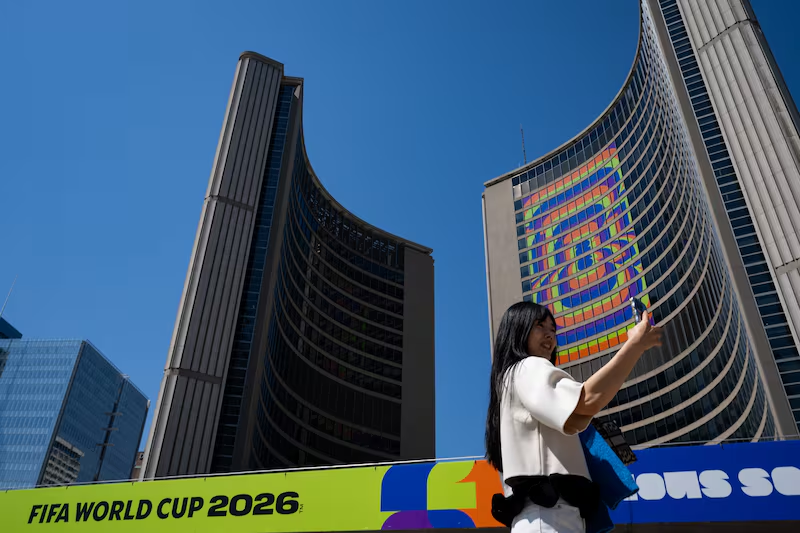
Just a short walk away from the Toronto stadium that will host the world’s biggest soccer tournament in less than two weeks, a group of a dozen or so men in their 20s have decided to use the beautiful Sunday afternoon weather to start an impromptu soccer game at the field neighbouring their homes.
All of them are some of the biggest soccer fans you can find in the city — but none of them will be attending the FIFA World Cup matches in their own backyard.
“The prices, I think it really pushes the game out of reach for people who want to be there and want to show up — and it’s really disheartening,” said 22-year-old Joshua Kautto, who calls himself a “huge” soccer fan.
“It kind of turns the games themselves into a status affair that pushes people away from it altogether, which is not in the spirit of what the game’s about,” he said.
“It’s really upsetting to see ticket prices where they are,” added Kautto, who said he’s willing to pay for tickets that would cost somewhere in the low hundreds of dollars.
Dozens of tickets for Canada’s opening match versus Bosnia and Herzegovina on June 12 were still available Sunday, with none of them below $3,000 — while other non-Canada matches later in the month had full rows of seats up for grabs, ranging from just over $600 to more than $1,600.
Michael Naraine, associate professor of sport management at Brock University, says that it’s not just the price of the tickets that has fans shying away from attending the matches.
“Hotels are very expensive in Vancouver and Toronto, airline flights are very expensive right now, given the conflict in the war in the Middle East and the bottleneck in the Strait of Hormuz when it comes to oil exports,” said Naraine in an interview.
“And so when you take those pieces and you add them up in totality, the value proposition for the average FIFA men’s sports fan is not there right now.”
Naraine also believes the political climate is playing a role — and resulting in a hesitancy by international visitors to attend the games.
“I think that that’s part of the general malaise that we’re seeing in the North American sport landscape when it comes to international hosting,” said Naraine.
“There is a significant cloud over the FIFA World Cup stemming from the United States domestic policies… with respect to ICE and immigration and detention — and so for international visitors… it’s a situation of do I risk going (and) travelling from places like Eastern Europe, Africa, South Asia, East Asia to the United States, to Canada, even to Mexico.”