Protesters rally against planned AI data centres in Vancouver
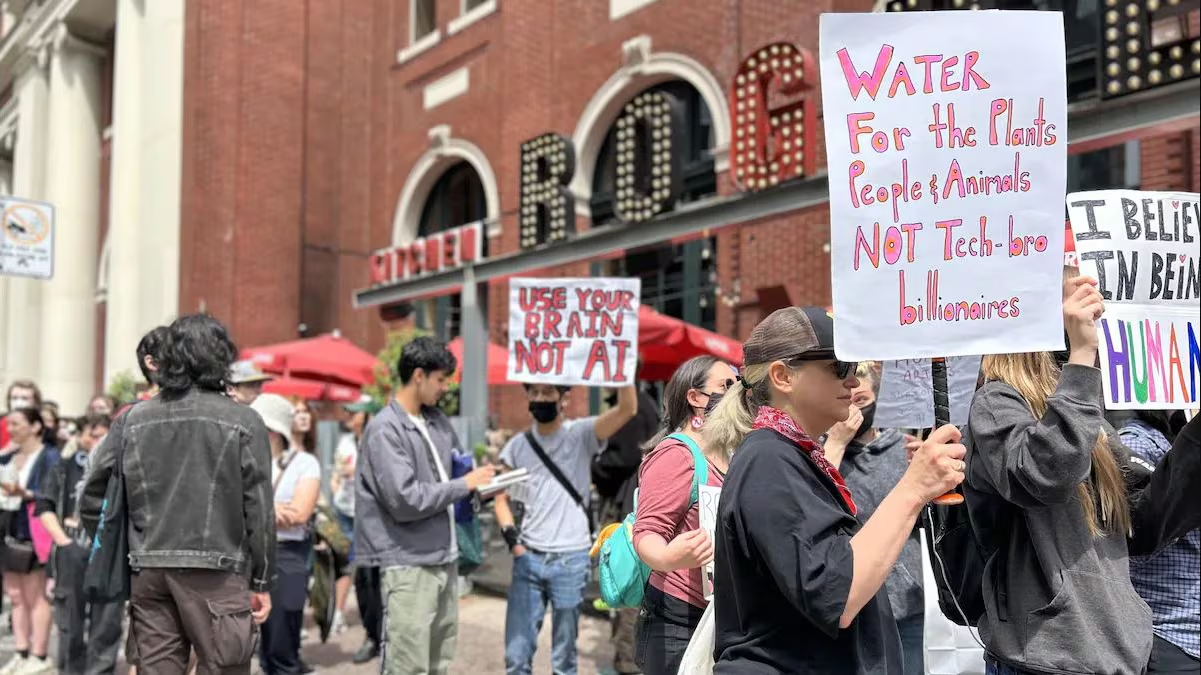
Hundreds of people marched through Vancouver on Saturday to protest two planned AI data centres in the city, raising concerns about the amount of water and energy such facilities can use as the region faces tighter water restrictions.
The demonstration began at Waterfront Station, where protesters gathered before marching toward Granville Island as they chanted against artificial intelligence and carried signs opposing the construction of new data centres in Vancouver.
Torin LaRocque, who organized the protest, said he wants the city and federal government to stop the projects.
“We should just not have any data centres in Canada, period,” he said. “Instead of focusing on these giant corporations, our government should be focusing on its citizens,” LaRocque said.
Telus is proposing two new AI data centres in Vancouver and an expansion of its existing facility in Kamloops as part of Ottawa’s Enabling large-scale sovereign AI data centres initiative.
Federal Artificial Intelligence Minister Evan Solomon has said the project would expand Canada’s “sovereign compute capacity” while helping domestic commercial and academic interests to compete in the global AI economy.
The first Vancouver project, located at the former Hootsuite headquarters in Mount Pleasant, will come online later this year. A second facility at 150 West Georgia Street is planned for 2029.
The project has the backing of the B.C. government, which rolled out its own AI data centre power policy in January.
The City of Vancouver is also throwing its support behind the proposal, with Mayor Ken Sim calling the data centres “world-class facilities.”
But protesters say the public has not been given enough information about the environmental impacts and raised concerns over rising electricity demand and massive water consumption linked to AI data centres.
“Why should we be using so much water for these AI data centres rather than using that water to help our people,” said LaRocque.
The protest comes as Metro Vancouver remains under Stage 2 water restrictions, which bans lawn watering, and prepares for the likely move to Stage 3 restrictions sometime in June.
Linda Parkinson, director of water services at Metro Vancouver, said there is no regional policy specifically for data centres.
She said a facility of that size would be treated like any other large water user.