Race to build Canada’s next submarine fleet enters its final stretch
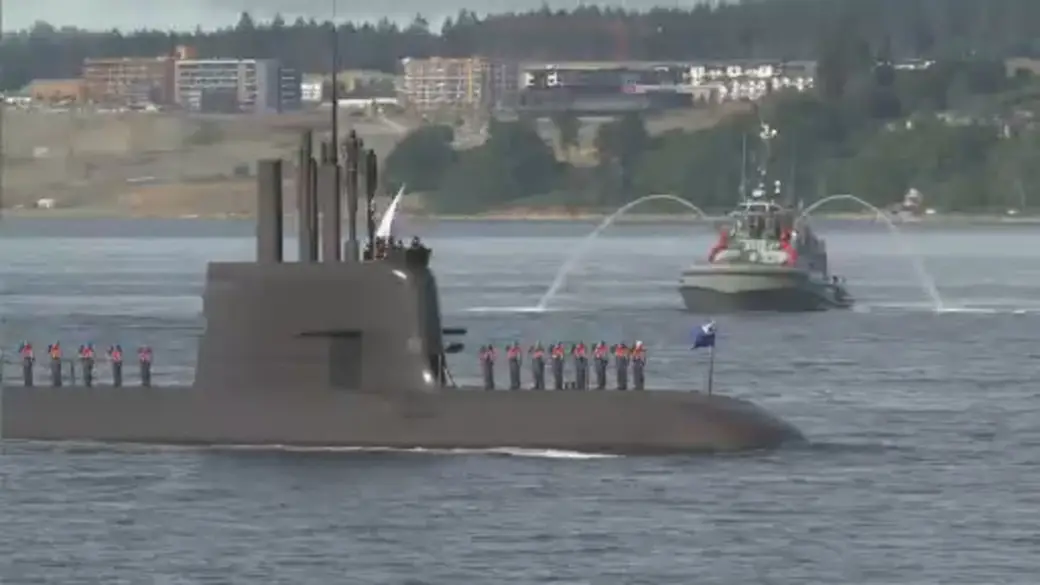
The race to build Canada’s next submarine fleet is on its final lap as the federal government evaluates two rival bids for the lucrative contract.
The two qualified bidders, South Korea’s Hanwha Oceans and Germany’s TKMS, have fought tooth and nail in an unusually short competition to supply the Royal Canadian Navy with some 12 submarines — a large order expected to be worth tens of billions of dollars.
The federal government’s internal analysis of the competing bids is expected to be complete by now.
“Third quarter of the game and it’s still a draw, so let’s see who will win,” TKMS CEO Oliver Burkhard told The Canadian Press recently while he was in the nation’s capital for CANSEC, Canada’s largest defence trade expo.
“We’re ready.”
Ottawa hasn’t tipped its hand but Prime Minister Mark Carney’s government is pushing the project along at an unusually fast pace for such a massive procurement. It also hasn’t made a secret of the fact that it sees the contract as a way to secure domestic economic benefits.
Secretary of State Stephen Fuhr, Carney’s point person for military equipment purchasing, said this past week the winner will be selected by the “end of June.”
“This could possibly be the biggest military procurement Canada has ever done … and Canada will have done a competitive process on submarines inside a year,” Fuhr told journalists on May 27.
“That is an unbelievable speed to do such a large procurement, so we’re really proud of that.”
Procurement projects for major navy combat ships typically take longer than five years. Burkhard said Canada is moving at “light speed,” something he’s not seen before.
“We have to accept as industry that this is maybe the new normal and Canada is maybe leading the pack maybe for other nations as well, to find out how much benefit (the country) can generate when (it) buys submarines,” he said.
The German sales pitch revolves around building up the NATO alliance. It’s promoting its subs as interoperable with German and Norwegian fleets which track Russian sub movements together and share knowledge, data and equipment.
The company is an established industry powerhouse that has supplied most of the NATO alliance’s conventional fleet.
“If Canada would choose us, then it’s a proven, not a promised, approach,” Burkhard said.
His rival is a dark horse that has never exported a submarine abroad but is hungry to establish itself as a major global player.