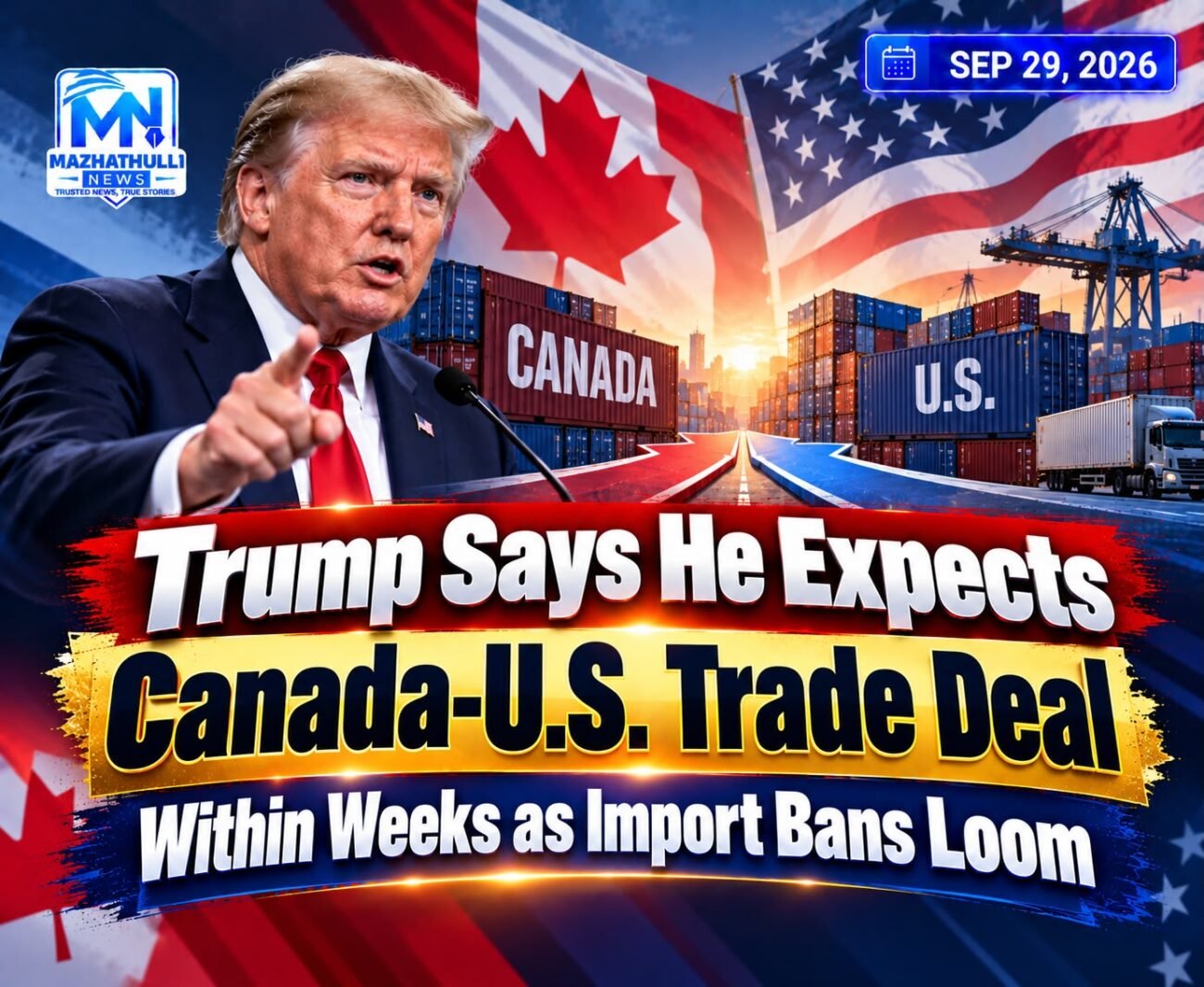
Trump Says He Expects Canada-U.S. Trade Deal Within Weeks as Import Bans Loom
U.S. President Donald Trump said Monday that he expects the United States and Canada could reach a new trade agreement within the next few weeks, even as new American import bans on several Canadian products are set to take effect. Speaking to reporters at the White House on September 28, Trump said he expects Canadian officials to return to negotiations within the next three or four weeks and that he believes a “fair” trade deal can eventually be reached. His comments came only hours before new U.S. restrictions on selected Canadian products were scheduled to take effect. The measures are set to begin at 12:01 a.m. Eastern Time on Tuesday, September 29. The new restrictions will affect a range of Canadian products, including certain alcoholic beverages, dairy products and motorcycles. The measures represent another escalation in the trade dispute between the two countries.
The U.S. administration has argued that the restrictions are a response to what it considers discriminatory Canadian trade policies. Canada has rejected those arguments and has introduced retaliatory measures of its own.
The latest import bans follow the breakdown of formal Canada-U.S. trade negotiations last month. Since then, the Trump administration has imposed additional tariffs on some Canadian goods and taken other trade-related actions.
Some Canadian products are already facing tariffs of up to 50 per cent under U.S. trade measures. The latest import restrictions move beyond tariffs by preventing certain Canadian products from entering the U.S. market altogether. The alcohol restrictions cover a range of Canadian-made beverages, including certain whisky, rye, wine, beer, vodka, rum, tequila and vermouth products. Certain Canadian dairy products and dairy-related goods are also included. The restrictions come amid longstanding disagreements between Canada and the United States over Canada’s supply-management system and access to the Canadian dairy market. Certain motorcycles with large internal-combustion engines are also affected by the new measures. The timing of Trump’s latest comments has attracted attention because Canadian and U.S. businesses are already preparing for the impact of the import restrictions. Companies that depend heavily on the American market could face additional costs, reduced sales or the need to find alternative markets. Canada-U.S. Trade Minister Dominic LeBlanc’s office said the Canadian government’s priority remains protecting Canadian workers, farmers, families and businesses from what Ottawa considers unjustified U.S. trade measures. Canadian officials have continued to communicate with their American counterparts despite the breakdown in negotiations. Ottawa has also emphasized that Canada remains interested in maintaining a strong economic relationship with the United States while expanding trade relationships with other countries. The two countries have deeply integrated economies, with billions of dollars in goods and services crossing the border every year. Industries including energy, automotive manufacturing, agriculture, steel, forestry and food production are particularly dependent on cross-border trade. The continuing trade dispute has therefore created uncertainty for businesses on both sides of the border. Companies have been assessing supply chains, investment plans, production levels and export markets as tariffs and other restrictions change. Trump’s latest comments suggest that he expects negotiations to resume despite the current escalation. However, there is no new trade agreement in place, and Canadian officials have not announced that a deal is imminent. The United States and Canada also continue to disagree over several major trade issues, including tariffs, market access, agriculture and the treatment of Canadian products entering the American market. Canada has increasingly emphasized the importance of diversifying its international trade as tensions with its largest trading partner continue. Ottawa has been pursuing closer economic relationships with Europe, India and other markets while continuing discussions with Washington. For Canadian businesses, the immediate focus is on the new U.S. import restrictions taking effect Tuesday. Whether those measures remain in place during future negotiations could become an important issue in any renewed trade talks. Trump’s expectation of a deal within weeks is therefore not a confirmation that an agreement has been reached. It represents his stated expectation that negotiations could resume and eventually produce a new arrangement between the two countries. Until an agreement is reached, the new import restrictions and existing tariffs remain in effect, leaving Canadian exporters and businesses to navigate continued uncertainty in the Canada-U.S. trade relationship.