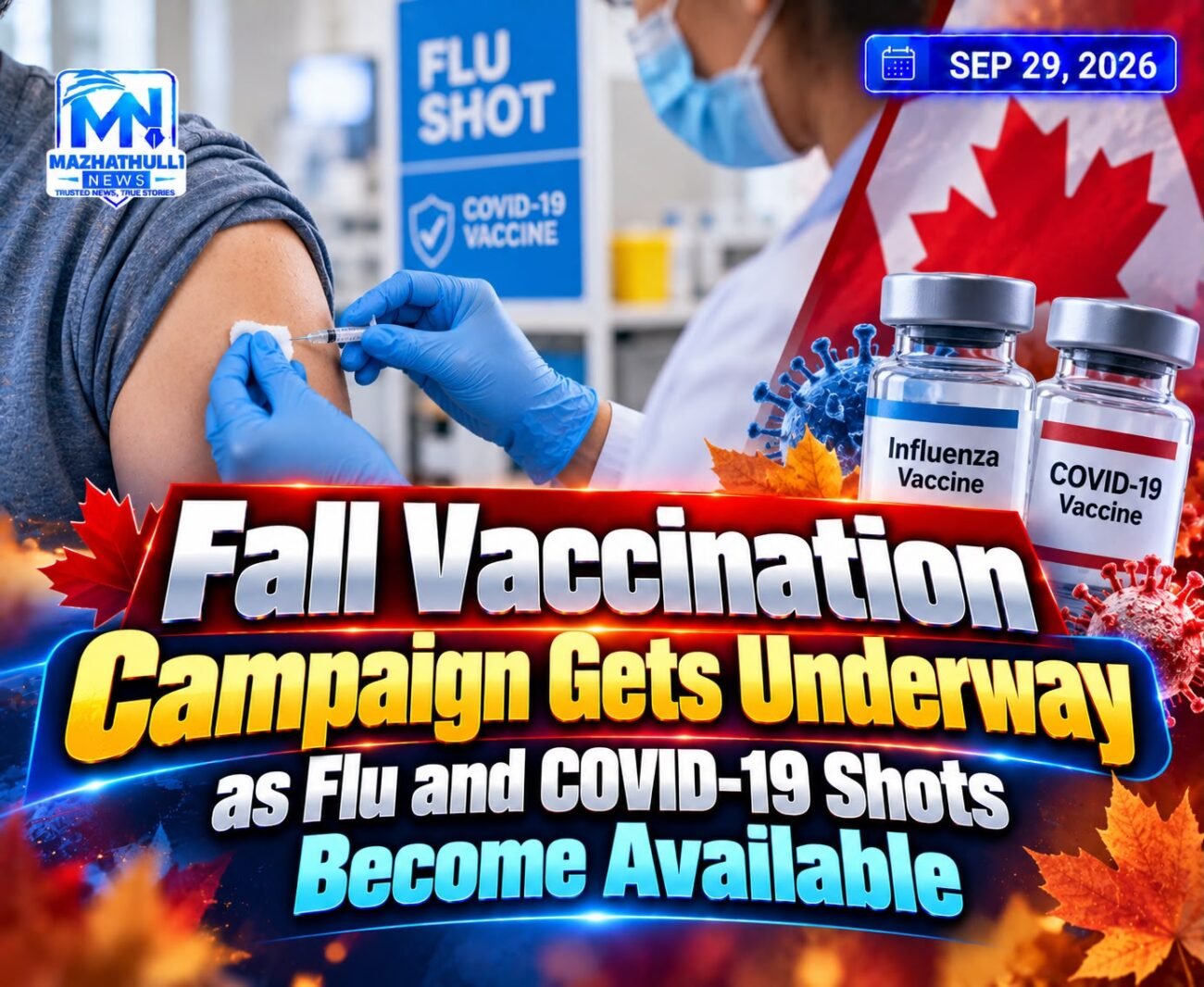
Fall Vaccination Campaign Gets Underway as Flu and COVID-19 Shots Become Available
Canada’s fall vaccination campaign is getting underway, with seasonal influenza and updated COVID-19 vaccines becoming available across the country as health authorities prepare for the coming respiratory-virus season. The National Advisory Committee on Immunization recommends that influenza vaccination be offered every year to people aged six months and older who do not have a medical reason to avoid the vaccine. Annual vaccination remains important because influenza viruses change over time and protection from vaccination decreases during the season. Influenza typically spreads more widely during the fall and winter months. Although many people recover from the flu without serious complications, infection can lead to hospitalization and, in severe cases, death. It can also worsen existing medical conditions. Vaccination is particularly important for people at higher risk of serious influenza complications, including young children, older adults, pregnant people and those living with certain chronic medical conditions. For the 2026-27 season, Canadian health authorities continue to recommend annual influenza vaccination. Adults and children aged nine and older generally require one dose each season, while some younger children receiving influenza vaccine for the first time require two doses separated by at least four weeks. COVID-19 vaccination is also part of the fall immunization program. Updated vaccines are available for the 2026 fall season, with national recommendations placing particular emphasis on people at increased risk of severe COVID-19.
This includes adults aged 65 and older, residents of long-term-care and other congregate settings, people with underlying medical conditions, pregnant people and certain other groups identified by public health authorities. Most people who have previously been vaccinated are recommended to receive one COVID-19 vaccine dose each year. Some people at higher risk of severe illness are recommended to receive two doses annually, including adults aged 80 and older and certain immunocompromised people. Adults aged 65 to 79 with underlying medical conditions that increase their risk of severe COVID-19 are also among those for whom a second annual dose is recommended. Provinces and territories are responsible for determining how their publicly funded vaccination programs are delivered. As a result, eligibility, appointment systems, timing and availability can vary across the country.
Many provinces are offering influenza and COVID-19 vaccines during the same fall period. The two vaccines can generally be administered during the same visit, making it possible for eligible people to receive both without having to make separate appointments. Health authorities are encouraging people to check their provincial or territorial vaccination program for information about eligibility, locations and appointment availability. The timing of vaccination is also an important consideration. National guidance says influenza vaccination in early fall generally provides protection for most of the influenza season, although the ideal timing can vary depending on individual circumstances and local virus activity. Protection against COVID-19 also decreases over time. People may therefore consider the timing of vaccination in relation to their previous dose, recent infection, community transmission and upcoming travel or large gatherings. Vaccination remains only one part of reducing the spread of respiratory illnesses. Health officials also recommend staying home when sick, improving ventilation, washing hands regularly and taking additional precautions around people who are particularly vulnerable to serious illness. The return of seasonal influenza also places additional pressure on hospitals and healthcare systems. Higher numbers of respiratory infections can increase emergency-room visits and hospital admissions, particularly among older adults, young children and people with chronic health conditions. For seniors, healthcare workers and people living with medical conditions that increase the risk of complications, staying up to date with recommended vaccinations can be especially important before respiratory-virus activity increases. Health authorities will continue monitoring influenza, COVID-19 and other respiratory viruses throughout the fall and winter. Vaccine recommendations may be updated if new evidence, circulating virus patterns or vaccine-related information changes. The fall campaign comes as Canada continues to manage COVID-19 as a recurring respiratory illness rather than an emergency on the scale seen during the initial years of the pandemic. Vaccination programs are now integrated into the country’s broader seasonal respiratory-virus strategy. Canadians are being encouraged to review their vaccination status and check with their local health authority, pharmacy or healthcare provider about which vaccines they are eligible to receive this fall.
With influenza and COVID-19 circulating alongside other respiratory viruses, public health officials say maintaining vaccination coverage will remain an important part of reducing severe illness and protecting healthcare capacity during the months ahead.