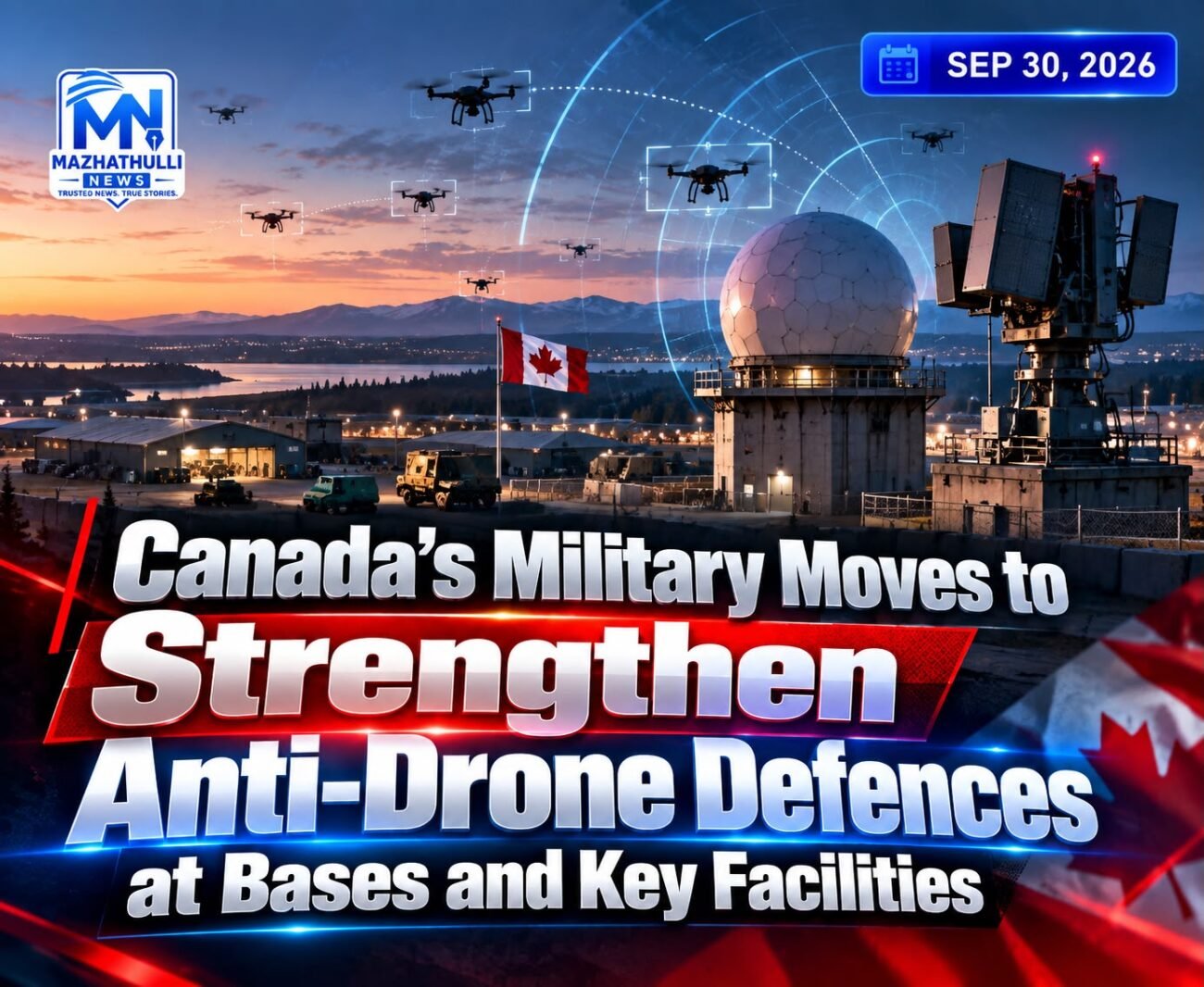
Canada’s Military Moves to Strengthen Anti-Drone Defences at Bases and Key Facilities
Canada’s military is moving to strengthen its ability to detect and respond to drones around military bases, defence facilities and other sensitive locations as unmanned aerial systems become an increasingly important security concern. The Department of National Defence is exploring advanced counter-drone technologies that can detect, identify, track and potentially neutralize unauthorized or hostile drones. The focus includes small commercial and military-grade unmanned aircraft that can be used for surveillance, intelligence gathering, targeting or attacks. The Canadian Armed Forces are particularly interested in systems capable of protecting personnel, vehicles, aircraft, equipment and critical infrastructure from low-altitude drone threats. Modern drones can be relatively inexpensive, widely available and difficult to detect, creating challenges for conventional air-defence systems. Some of the technologies being examined are designed to identify drones using radar, radio-frequency detection, electro-optical and infrared sensors and other surveillance methods. Once a threat is identified, counter-drone systems can potentially disrupt, disable or intercept the aircraft, depending on the technology and operational circumstances. Canada is also paying attention to drones that operate with reduced radio-frequency emissions or greater levels of autonomy. Such systems can make traditional detection methods less effective and require a combination of sensors and defensive technologies. The growing focus on counter-drone capabilities is closely linked to lessons from recent conflicts, where drones have been used extensively for reconnaissance, battlefield surveillance, artillery targeting and direct attacks. Their widespread use has demonstrated that even relatively small unmanned aircraft can create significant risks for military personnel and infrastructure.
For Canadian forces, the threat is not limited to overseas operations. Military installations in Canada can also face unauthorized drone activity, including flights near airfields, training areas, communications facilities and other restricted locations. The military is therefore looking at systems that can operate as part of a broader layered defence network. This could include integrating drone detection with existing radar, surveillance, communications and command-and-control systems so that potential threats can be identified and assessed more quickly.Canada is also seeking to expand domestic expertise in drone and counter-drone technologies. Government initiatives are bringing together Canadian defence companies, technology firms, universities, researchers and smaller innovative businesses to develop and test new systems. Developing domestic capabilities could also reduce reliance on foreign suppliers for specialized defence technology while creating opportunities for Canadian companies to participate in the rapidly expanding unmanned-systems sector.
Counter-drone systems can involve a wide range of technologies, from electronic systems designed to interfere with a drone’s communications or navigation to physical interceptors capable of stopping a drone. The appropriate response can depend on the type of drone, its location, the level of threat and the surrounding environment. The military must also consider the risks associated with operating counter-drone systems around populated areas, airports and other sensitive environments. Any capability deployed in Canada would need to operate within applicable laws, safety requirements and rules governing the use of force and electronic interference.
The procurement process is expected to involve testing and evaluation of different technologies before final decisions are made on which systems will be acquired and deployed. The move forms part of Canada’s broader effort to modernize its defence capabilities and prepare for emerging threats involving drones, autonomous systems and other rapidly developing technologies. As unmanned aircraft continue to become more capable and accessible, counter-drone defence is expected to remain an increasingly important component of military security planning.