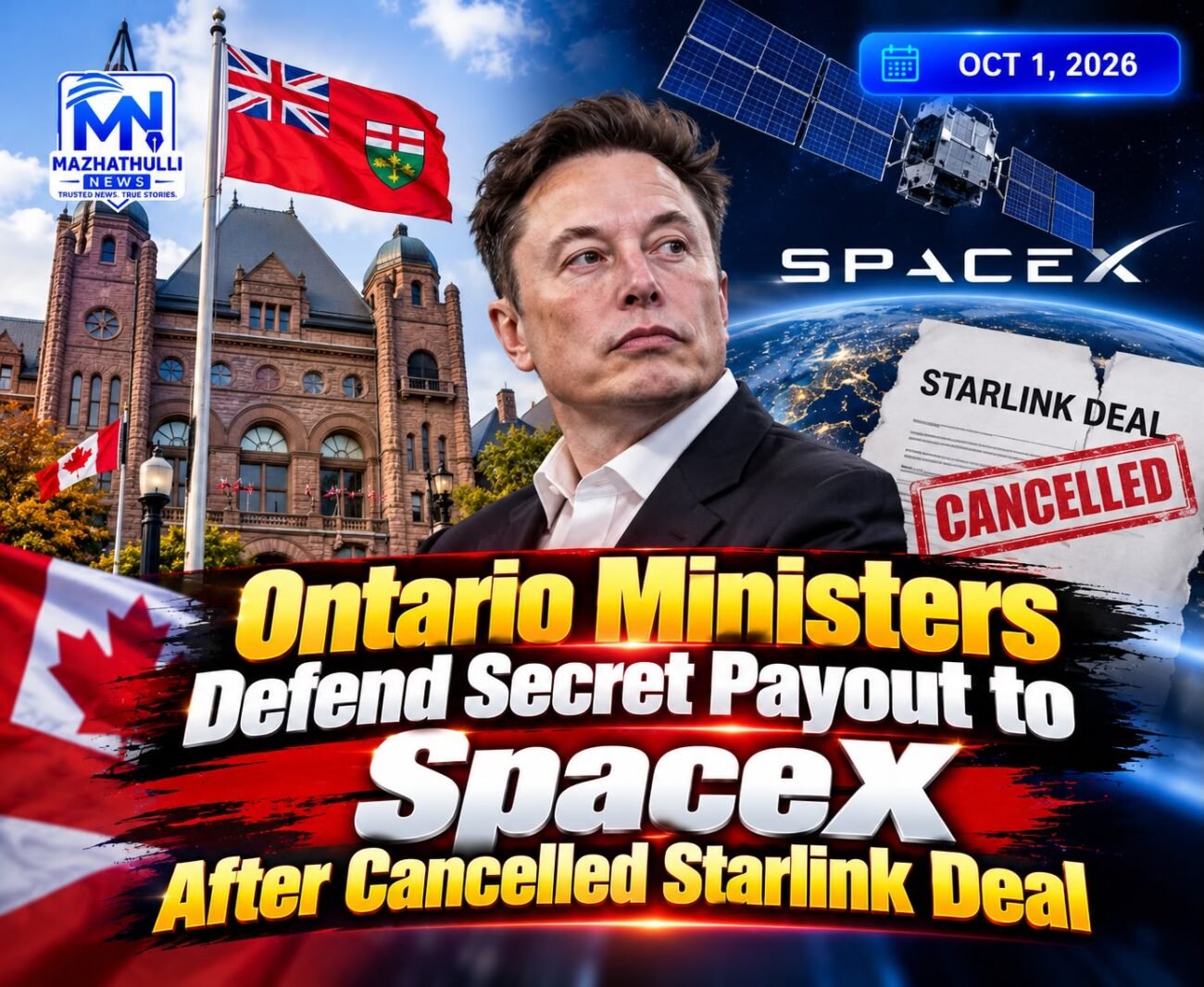
Ontario Ministers Defend Secret Payout to SpaceX After Cancelled Starlink Deal
Ontario government ministers are defending the decision to keep confidential the amount paid to Elon Musk’s SpaceX after the province cancelled a $100-million Starlink internet contract, as opposition parties and taxpayer advocates demand greater transparency. The Ford government signed the Starlink agreement in late 2024 to provide satellite internet service to about 15,000 households and businesses, particularly in rural and remote communities and First Nations across northern Ontario. The program was expected to begin operating in June 2025. The agreement was cancelled in 2025 after Premier Doug Ford said Ontario would no longer do business with SpaceX amid escalating tensions between Canada and the United States and Musk’s increasingly public comments about Canada. The province subsequently negotiated a confidential settlement with SpaceX. Ontario has acknowledged that taxpayers paid a termination or “kill fee,” but the government has repeatedly refused to disclose the amount. Officials have said the payment was significantly less than the original $100-million contract value.
Treasury Board President Kinga Surma, who was infrastructure minister when the original Starlink agreement was signed and later cancelled, defended the decision to keep the figure confidential. Surma said governments routinely keep commercially sensitive portions of procurement agreements confidential because publicly disclosing the amounts could affect their ability to negotiate future contracts. She argued that revealing the payment could weaken Ontario’s position in future procurement negotiations. Infrastructure Minister Stephen Lecce also defended the decision, saying the settlement involved commercially sensitive negotiations with SpaceX. Lecce said Ontario is now focused on finding a domestic or Canadian-controlled satellite technology provider rather than continuing with SpaceX.
The government’s explanation has drawn criticism from opposition parties, who argue that taxpayers have a right to know how much public money was spent to terminate the agreement.
Ontario NDP MPP Jessica Bell raised questions about the payment during an estimates committee hearing. She questioned whether Premier Doug Ford’s office had been informed about the cost of cancelling the contract and argued that the public should know the financial consequences of the decision. Liberal finance critic Stephanie Bowman also questioned why the SpaceX payment does not appear as a clearly identifiable item in the province’s latest public accounts. Opposition parties have said they intend to continue pressing the government for details when the legislature returns. The issue has also raised questions about Ontario’s rural broadband strategy. The cancelled Starlink agreement was intended to provide relatively rapid satellite connectivity to communities where conventional fibre infrastructure can be difficult and expensive to build. Ontario’s government has continued expanding its broader broadband program, which aims to provide high-speed internet access across the province. Officials say about 96 per cent of Ontarians now have access to high-speed internet, while work continues to reach communities that remain underserved.
However, the province has previously acknowledged delays in its broadband rollout. The target for connecting all underserved communities to high-speed internet was moved from 2025 to 2028, with officials citing challenges associated with infrastructure projects and the cancellation of the Starlink contract among the broader circumstances affecting the program. Starlink technology is already widely used independently by some remote communities in northern Ontario. First Nations, businesses and individuals in areas with limited conventional broadband infrastructure have purchased Starlink equipment and subscriptions directly. The cancelled provincial agreement would have been different from those individual arrangements. Under the proposed Ontario program, the province would have covered equipment and installation costs for participating customers, while monthly service fees would not have been covered. The original contract was announced by then-Infrastructure Minister Surma in late 2024. The province said SpaceX had been selected through a competitive procurement process and that its satellite network offered a way to connect remote locations more quickly than waiting for fibre infrastructure to be completed. The political circumstances surrounding the cancellation subsequently changed significantly. Musk became closely associated with U.S. President Donald Trump, while Trump escalated his criticism of Canada and imposed tariffs on Canadian goods. Ford responded by announcing a series of measures aimed at pressuring the United States, including cancelling the Starlink agreement and restricting some U.S. products and businesses in Ontario. Ford has defended his decision to terminate the contract, arguing that Ontario should not continue using a company controlled by Musk amid the escalating Canada-U.S. dispute. SpaceX has not publicly disclosed the settlement amount, and the company did not respond to recent requests for comment. The controversy now centres on two separate questions: whether cancelling the Starlink contract was justified and whether the public should be told exactly how much the cancellation cost. The Ford government maintains that the cancellation reflected the wishes of Ontario voters and that keeping commercially sensitive financial details confidential protects the province’s negotiating position. Critics argue that the government’s explanation does not adequately address the public interest in knowing how taxpayer money was spent. With Ontario continuing to search for alternatives to SpaceX while expanding fibre and other broadband infrastructure, the financial and practical consequences of the cancelled agreement are likely to remain a political issue when the provincial legislature resumes.