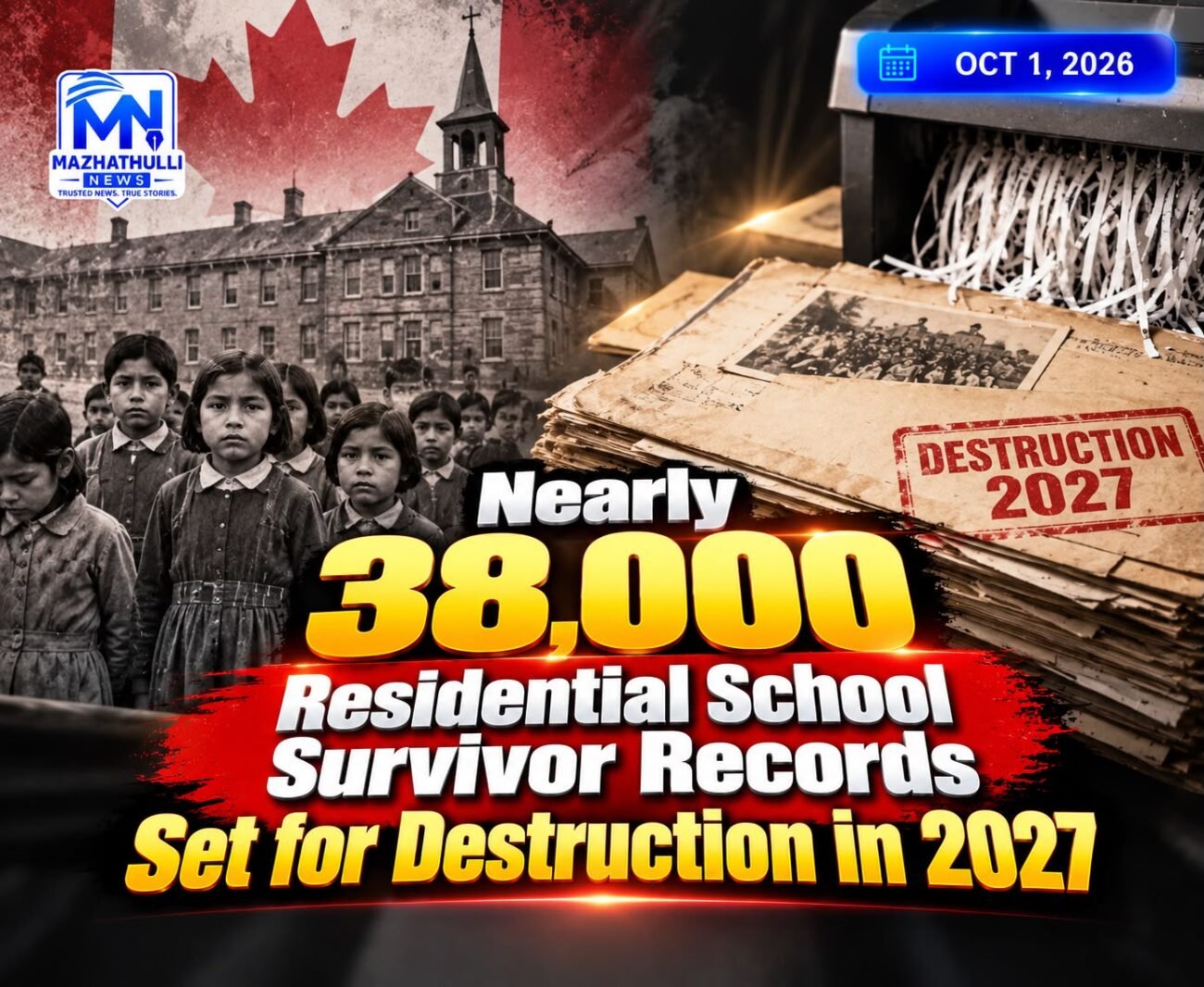
Nearly 38,000 Residential School Survivor Records Set for Destruction in 2027
Nearly 38,000 records documenting the experiences of survivors of Canada’s residential school system are scheduled to be destroyed in 2027, unless individual survivors choose to have their records preserved. The records were created through the Independent Assessment Process (IAP), a compensation process established under the Indian Residential Schools Settlement Agreement. More than 38,000 survivors participated in the process, providing written and oral accounts of abuse and other experiences at residential schools. Under a 2017 Supreme Court of Canada ruling, the IAP records are to be destroyed after a 15-year retention period. The current deadline for the remaining records is September 19, 2027. Survivors can request copies of their records or consent to having them preserved at the National Centre for Truth and Reconciliation in Winnipeg. The decision has created a difficult debate between protecting survivors’ privacy and preserving an important historical record. Survivors who provided testimony were promised confidentiality during the compensation process. Some therefore believe the records should not be retained without their explicit consent.
Others argue that the testimonies contain important evidence about what happened inside residential schools and could help future generations understand the history and legacy of the system. Geraldine Shingoose, a Saulteaux Elder who attended the Muskowekwan Indian Residential School in Saskatchewan from 1962 to 1971, has spoken publicly about the emotional and physical impact of giving testimony about her experiences. She later learned that her testimony could eventually be destroyed.
Researchers and Indigenous advocates working to preserve the records say many survivors may not be aware that they have the option to save their files. The Indian Residential School Records Project at Toronto Metropolitan University is working with survivors and their families to raise awareness and help preserve records where survivors choose to do so. Connie Walker, who leads the project, has emphasized the importance of allowing survivors to decide what happens to their own records. The project is seeking to ensure that survivors understand their options before the 2027 deadline.
The issue is particularly significant because the IAP represents one of the largest collections of firsthand testimony about residential schools. More than 38,000 survivors participated in the process, making the collection considerably larger than the number of survivor statements gathered by the Truth and Reconciliation Commission. At the same time, not every survivor supports preserving the records. Some survivors have expressed concerns that highly personal testimony provided under an expectation of confidentiality should not automatically become part of a permanent historical archive. That difference of opinion is at the centre of the current debate. Advocates for preservation say the historical value of the records must be considered, while others argue that the wishes and privacy of the people who provided the testimony must remain the priority.
The National Centre for Truth and Reconciliation has a role in preserving records when survivors provide consent. However, reports indicate that fewer than 100 survivors among the approximately 38,000 IAP claimants had chosen to preserve their records through the available process as of 2026. The issue has gained additional urgency as researchers and Indigenous organizations warn that once the records are destroyed, the information contained in them may be impossible to recover. Some advocates say the loss would remove a major source of firsthand evidence about residential school experiences. The destruction order does not mean all records related to residential schools will disappear. Other archival materials, including records held by the National Centre for Truth and Reconciliation, government documents and other historical collections, will continue to exist. The specific IAP records covered by the court order are the focus of the 2027 deadline. The debate also reflects a broader question about how Canada should preserve difficult historical records while respecting the privacy and wishes of people who experienced abuse. For survivors who want their records preserved, the remaining time before the September 19, 2027 deadline is becoming increasingly important. The current process allows survivors to request their own records and decide whether they want them kept privately, shared, or preserved in an archive. With the deadline less than a year away, Indigenous organizations, researchers and survivor advocates are urging greater public awareness so that survivors can make an informed decision about the future of their testimony.