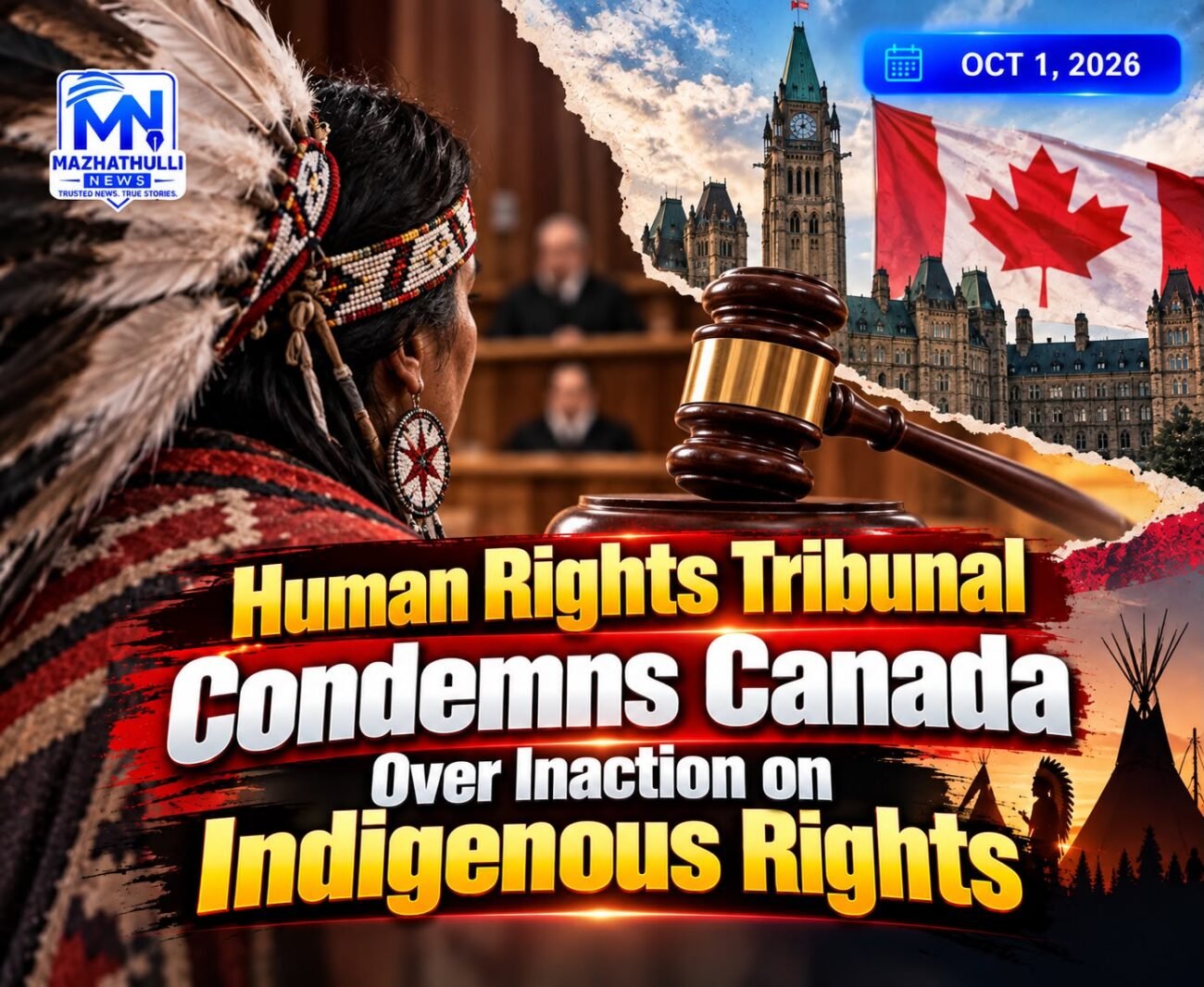
Human Rights Tribunal Condemns Canada Over Inaction on Indigenous Rights
The Permanent Peoples’ Tribunal has accused Canada of failing to meet its international human rights obligations in its response to historical and continuing violations affecting Indigenous Peoples, including abuses connected to the residential school system. In its 78-page final judgment released on September 30, the National Day for Truth and Reconciliation, the tribunal said Canada has failed to adequately investigate and prosecute serious violations committed against Indigenous people and has not taken sufficient measures to ensure accountability, reparations and guarantees that similar abuses will not happen again. The tribunal examined allegations involving residential schools, missing and disappeared Indigenous children and unmarked burials. During public hearings held in Montreal in May, its panel reviewed more than 2,000 pieces of evidence and heard testimony concerning the experiences of Indigenous survivors and communities. The judgment described the residential school system as involving widespread and systematic human rights violations. It examined evidence concerning forced separation of children from their families, inadequate living conditions, malnutrition, poor health care, forced labour, physical and sexual abuse and the suppression of Indigenous languages and cultures.
The tribunal also considered allegations involving the forced sterilization of Indigenous women and other policies and practices that it characterized as part of a broader system of colonial discrimination. It said the consequences of these policies continue to affect Indigenous communities today. A major focus of the judgment was accountability. The tribunal argued that acknowledging historical wrongdoing is not sufficient on its own and called for investigations, prosecutions where appropriate, reparations for victims and measures designed to prevent similar violations from occurring again. The panel also criticized what it described as limited implementation of the Truth and Reconciliation Commission’s recommendations. The TRC issued 94 Calls to Action in 2015, covering areas including child welfare, education, health, justice, language, culture and reconciliation. The tribunal said previous political acknowledgments of the harms suffered by Indigenous Peoples have not resulted in enough changes to laws and public policy. It pointed to statements made by former prime minister Justin Trudeau and a 2022 House of Commons motion concerning genocide, while arguing that recognition must be accompanied by concrete accountability and policy measures.
Another significant issue raised in the judgment was the preservation of historical records. The tribunal called for records and evidence relating to residential schools and missing Indigenous children to be protected and preserved. This comes as nearly 40,000 records from the Independent Assessment Process involving residential school survivors are scheduled to be destroyed in September 2027 under a previous legal process, unless survivors take steps to preserve them. The tribunal also addressed Indigenous land rights and the treatment of Indigenous land defenders. Its recommendations include measures relating to land dispossession, Indigenous territorial rights, cultural protection and support for Indigenous communities. The recommendations extend beyond governments. The tribunal also called for action involving the Catholic Church and other religious organizations that operated residential schools, including measures related to reparations and the restitution of Indigenous cultural and sacred objects.
The panel further called for stronger support for Indigenous languages and cultures, improved access to health and education services, investigations into missing and deceased children, and resources for research and identification of burial sites. The findings were released on a day of national remembrance across Canada. Prime Minister Mark Carney said in a statement marking the National Day for Truth and Reconciliation that more than 150,000 First Nations, Inuit and Métis children were separated from their families and sent to residential schools, and acknowledged the federal government’s responsibility for the lasting harm caused by the system. He also said the TRC’s 94 Calls to Action remain a roadmap for reconciliation. The Permanent Peoples’ Tribunal was established in 1979 and describes itself as an international people’s tribunal dealing with allegations of violations of fundamental rights, crimes against humanity and related issues. Its proceedings are distinct from those of Canadian courts and other legally binding international courts. The tribunal’s judgment therefore represents its findings and recommendations rather than a criminal conviction or enforceable Canadian court judgment. The report comes as Indigenous leaders, survivors and organizations continue to call for greater accountability, preservation of historical evidence and implementation of reconciliation commitments. The tribunal’s recommendations are likely to add further pressure for governments and institutions to address unresolved issues surrounding residential schools, missing children, unmarked burials, Indigenous rights and the long-term effects of colonial policies.