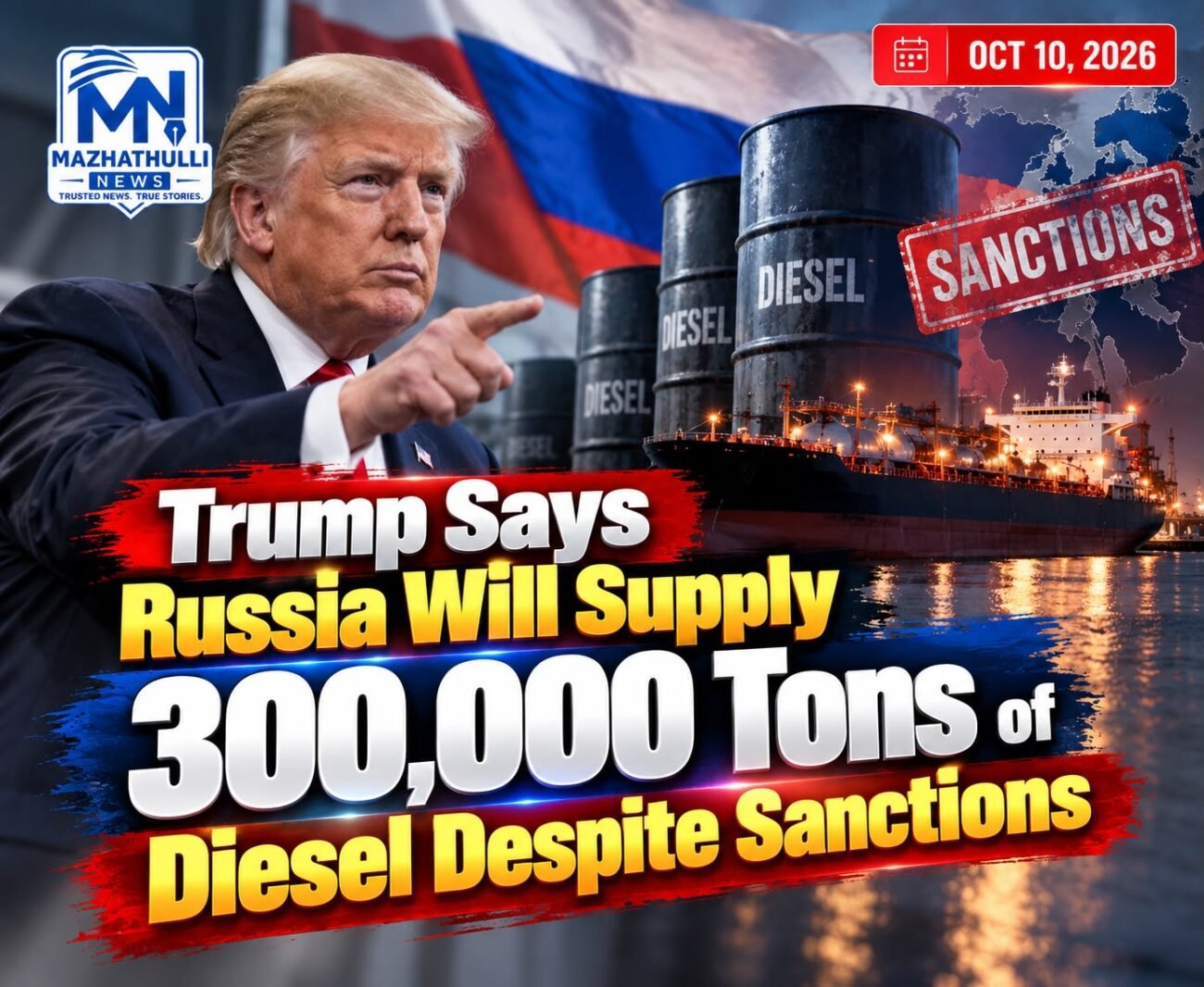
Trump Says Russia Will Supply 300,000 Tons of Diesel Despite Sanctions
U.S. President Donald Trump says Russia will immediately supply more than 300,000 tonnes of diesel fuel to the American and global markets following a telephone conversation with Russian President Vladimir Putin, marking a major shift in Washington’s approach to Russian energy exports. Trump announced the agreement on Friday, October 9, saying additional shipments would follow in November and the months ahead. The announcement comes as diesel prices remain elevated amid disruptions to global energy supplies linked to the ongoing conflict between the United States and Iran. In a post on his Truth Social platform, Trump said Russia would initially provide more than 300,000 tonnes of diesel, followed by another 500,000 tonnes in November and one million tonnes immediately afterwards. He added that Russia could deliver a further three million tonnes within a relatively short period, depending on the condition of its diesel refineries. Trump said the additional supplies would help bring down diesel prices in the United States and internationally. He described the discussion with Putin as highly successful and presented the agreement as part of his administration’s efforts to reduce fuel costs for American consumers, farmers, ranchers and truckers. The announcement represents a significant change in U.S. policy towards Russian energy exports. Since Russia launched its full-scale invasion of Ukraine in February 2022, Washington has imposed restrictions on Russian oil and petroleum products as part of broader efforts to limit Moscow’s revenue and pressure the Russian government over the war.
The United States banned imports of Russian oil and petroleum products in 2022. Trump’s latest announcement, however, was accompanied by a temporary licence from the U.S. Treasury Department allowing certain Russian diesel transactions and deliveries to proceed despite existing sanctions. The licence is intended to permit eligible Russian diesel shipments to enter the market for a limited period, with the current authorisation extending to April 2027 for qualifying fuel loaded onto vessels by the specified date. The move raises questions about how the administration will balance its efforts to lower fuel prices with its wider sanctions policy towards Moscow. The timing is particularly significant because Trump signed new legislation targeting Russian energy revenues only last month. The latest arrangement could complicate efforts to maintain economic pressure on Russia over its war in Ukraine. The agreement also comes as Ukrainian and European officials are involved in diplomatic discussions aimed at ending the war. Ukrainian President Volodymyr Zelenskyy criticised the move, describing it as a weak decision by partners that have supported Ukraine. The arrangement has raised concerns among some U.S. lawmakers and European allies about whether easing restrictions could provide additional revenue to Moscow. High diesel prices have become a growing concern for the U.S. economy. Diesel is essential to freight transportation, agriculture, construction and numerous industrial activities. When fuel costs rise, businesses often face higher operating expenses, some of which can eventually be passed on to consumers through increased prices for food and other goods. The United States has also been dealing with disruptions to international energy markets linked to the conflict with Iran. Concerns about shipping through the Strait of Hormuz and reduced availability of refined petroleum products have contributed to pressure on global fuel supplies.
Despite Trump’s claims that the Russian shipments could quickly lower prices, energy analysts caution that the impact may be limited. The initial volume is relatively small compared with overall U.S. diesel consumption, and additional Russian supplies could simply redirect fuel that would otherwise have gone to other international buyers. Analysts also point to constraints within Russia’s own refining industry. Ukrainian drone attacks have damaged Russian oil refineries, reducing processing capacity, while domestic demand has placed further pressure on available supplies. Russia had also maintained restrictions on diesel exports as it sought to protect its domestic market. The Russian government has indicated that it is prepared to increase petroleum product supplies to international markets following the conversation between Putin and Trump. However, Moscow has not independently confirmed all the specific delivery volumes and schedules announced by the U.S. president. The arrangement could provide Russia with an opportunity to earn revenue from additional diesel exports at a time when its energy sector faces sanctions and operational difficulties. It also highlights the extent to which the global energy crisis is influencing diplomatic and economic decisions. For American consumers, the key question is whether the new supplies will translate into lower prices at fuel stations. Diesel prices affect trucking companies and agricultural producers directly, while changes in transportation costs can influence the prices of groceries, manufactured products and construction materials. However, any price relief will depend on when the shipments arrive, how much fuel is actually delivered and whether other global supply disruptions continue. Experts have warned that the agreement alone is unlikely to resolve the wider shortage of refined petroleum products. The political implications are also significant as the United States approaches its November 3 midterm elections. Fuel prices and the cost of living have become important issues for voters, increasing pressure on the Trump administration to demonstrate that its energy policies can deliver tangible economic benefits. The deal therefore places two policy priorities in tension: reducing energy costs for Americans and maintaining economic pressure on Russia over the war in Ukraine. How Washington manages that balance could affect its relationships with Kyiv and European allies, as well as its future approach to Russian energy exports. For now, Trump has announced a major supply commitment, and the Treasury Department has introduced a temporary mechanism to facilitate eligible shipments. The actual scale of deliveries, their effect on global diesel prices and the longer-term consequences for sanctions policy remain to be seen.