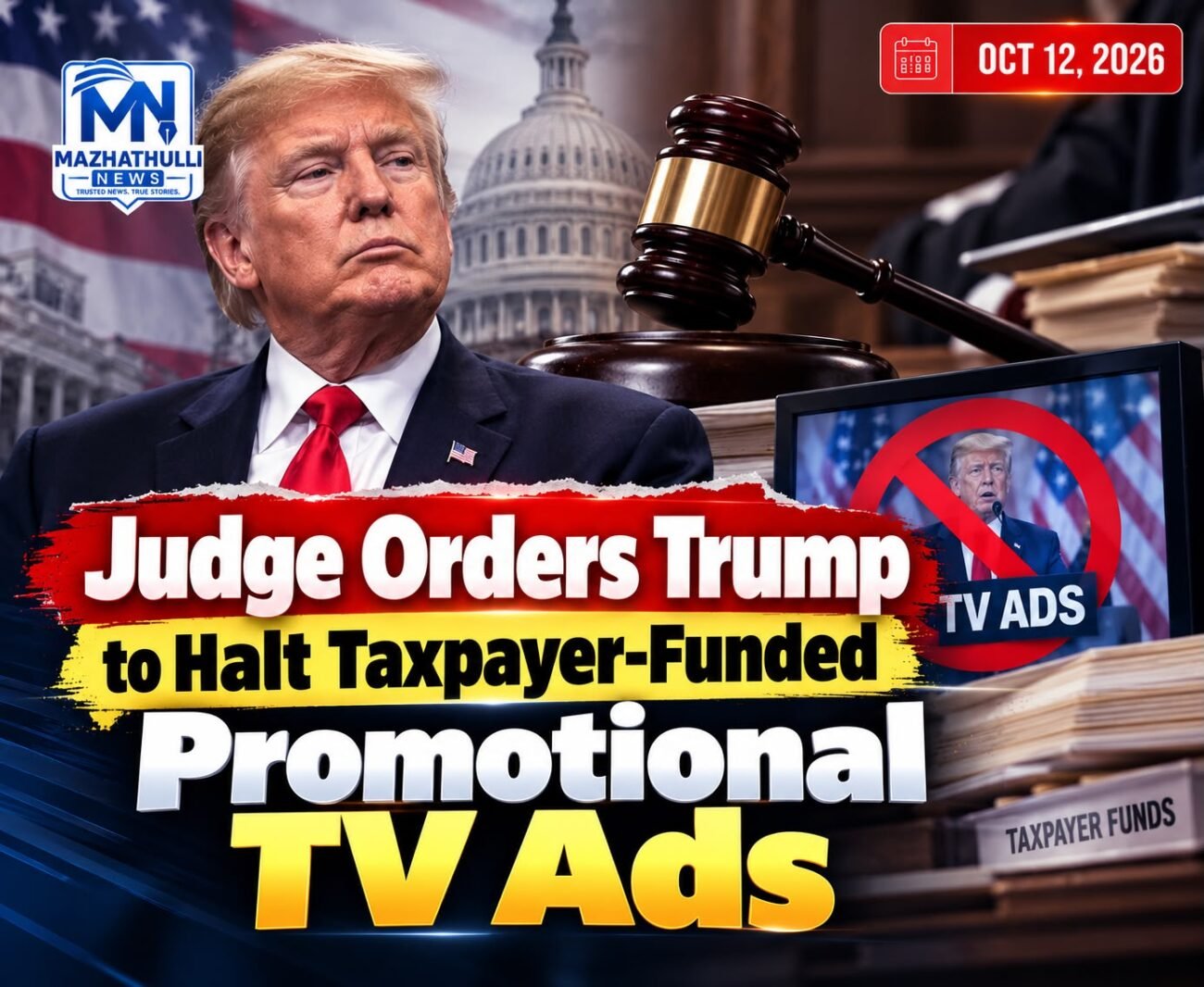
Judge Orders Trump to Halt Taxpayer-Funded Promotional TV Ads
A U.S. judge has ordered the Trump administration to stop running taxpayer-funded television advertisements promoting the president’s policies, raising questions about the use of public money for government messaging and political communication. The ruling follows a legal challenge over the administration’s use of federal funds to broadcast advertisements that critics say promote President Donald Trump rather than provide neutral information about government programmes. The case centres on whether taxpayer money can legally be used for content that appears designed to advance the president’s political interests. The court’s order requires the administration to cancel the advertisements covered by the ruling. The decision could affect how federal agencies use public funds for television campaigns, particularly those featuring the president or highlighting his administration’s political achievements. Government advertising is commonly used to inform the public about services, public health initiatives, economic programmes and other official activities. However, the use of taxpayer money for promotional messaging can raise legal concerns when advertisements appear to serve a partisan purpose rather than a public information need.
Critics of the Trump administration have argued that government-funded advertisements should not be used to promote a sitting president or provide an advantage to his political agenda. They say public resources must be used for legitimate government functions and that promotional campaigns should be clearly distinguished from political advertising. The administration’s position and the precise legal reasoning behind the order will determine how broadly the ruling applies to other federal advertising campaigns. The scope of the decision also depends on which advertisements and government agencies are covered by the court’s instructions. The case comes amid broader debates in the United States over government spending, executive authority and the boundaries between official communications and political campaigning. Legal challenges involving the use of federal funds have increasingly focused on whether government programmes are being implemented in accordance with congressional spending decisions and established legal requirements.
The ruling could have implications beyond the specific advertisements at issue, potentially prompting federal agencies to review their communications budgets and approval procedures. It may also lead to greater scrutiny of how public money is allocated to campaigns featuring senior government officials. Further details about the court’s reasoning, the agencies involved and any potential appeal will help clarify the decision’s longer-term impact. For now, the order directs the administration to halt the taxpayer-funded promotional advertisements covered by the case.