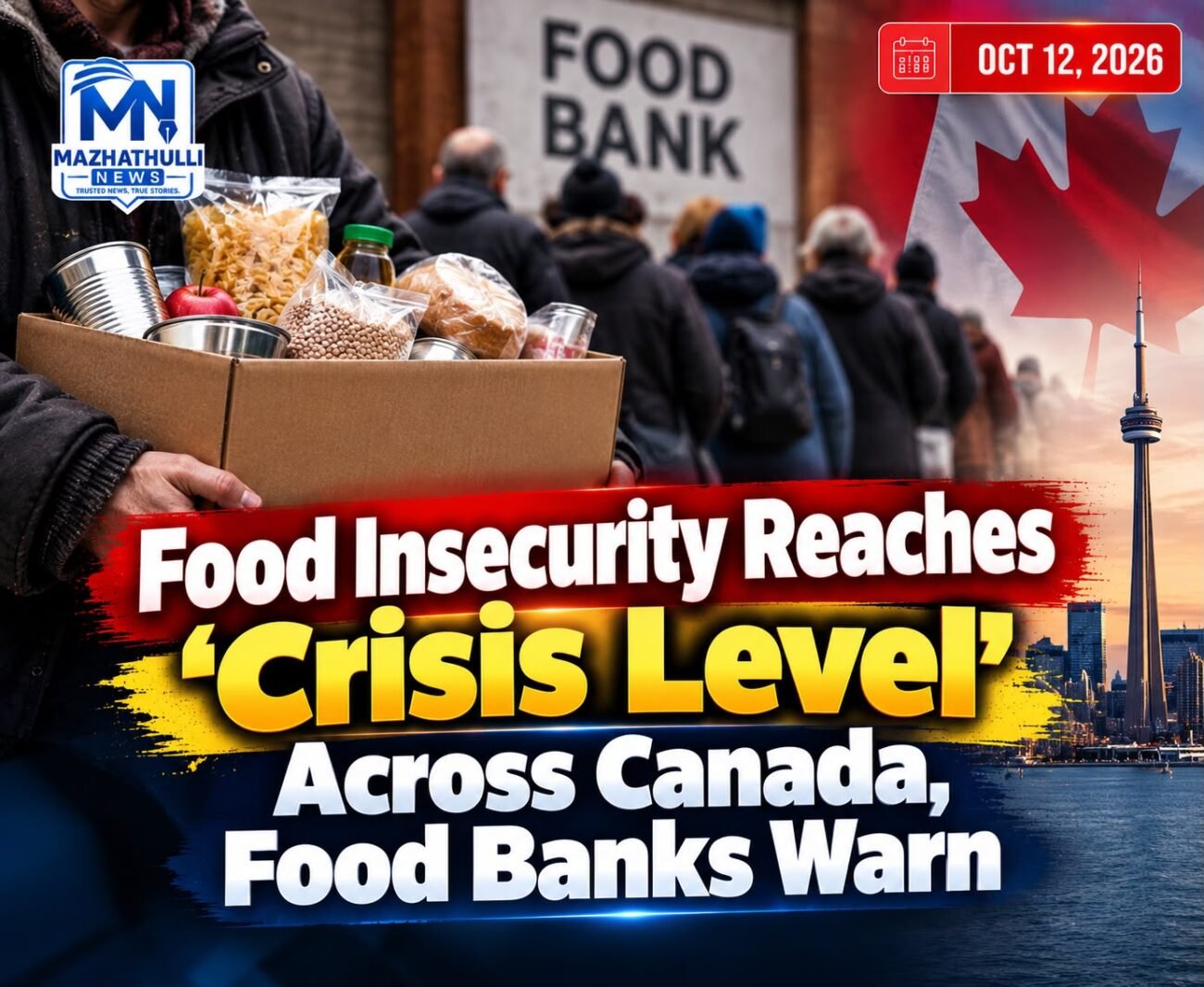
Food Insecurity Reaches ‘Crisis Level’ Across Canada, Food Banks Warn
Food insecurity in Canada has reached what food security advocates describe as a crisis level, with millions of people struggling to afford groceries and community food organizations facing growing pressure to meet demand. Rising living costs, housing expenses and stagnant household budgets are forcing more Canadians to seek food assistance, while some food banks and charities say they no longer have enough resources to help everyone who needs support.
Recent national assessments show that nearly one in four Canadians lives in a household experiencing food insecurity. The situation has become a growing concern for families, seniors, students and low-income workers who are finding it increasingly difficult to cover basic necessities. Food Banks Canada has reported that food bank use has reached record levels. Its 2025 HungerCount report recorded approximately 2.2 million visits to food banks in March 2025, nearly double the number recorded six years earlier. The figures reflect the increasing number of people relying on charitable food assistance to meet their daily needs. The pressure has continued into 2026. A national survey conducted by Ipsos for Second Harvest found that 89 per cent of surveyed nonprofit organizations providing food support had experienced increased demand over the previous year. Around one-third reported having waiting lists, while 35 per cent said they had been forced to turn people away because of limited food supplies or resources. For many households, the challenge extends beyond the price of groceries. Rent, mortgage payments, utilities, transportation and other essential expenses consume a large share of monthly income, leaving less money available for food. Some families are reducing the quality or quantity of their meals, while others are skipping meals entirely to ensure their children have enough to eat. Working Canadians are also increasingly affected. Food bank operators report that people with jobs are seeking assistance because their earnings are no longer sufficient to cover rising household costs. Families that previously managed their budgets without outside help are finding themselves unable to meet basic needs, particularly when unexpected expenses arise. Children are among those affected by the growing crisis. When household budgets become strained, parents may cut back on nutritious food or skip meals themselves to feed their children. Food insecurity can affect children’s physical health, concentration, emotional well-being and ability to participate fully in school and other activities.
Seniors and people living on fixed incomes face additional challenges. Pension payments and other benefits may not keep pace with rising expenses, leaving some older Canadians to choose between groceries, medication and housing costs. People with disabilities and individuals receiving social assistance can also face significant difficulties when available income falls short of the cost of essential goods and services. Food banks are attempting to respond by expanding food distribution, seeking donations and working with local businesses and community organizations. However, these efforts require reliable supplies, storage facilities, transportation and volunteers. When demand rises faster than donations and funding, organizations can struggle to maintain sufficient stocks of fresh produce, dairy products, proteins and other nutritious foods.
The situation is particularly challenging in remote and northern communities, where transportation costs and limited access to grocery stores can make food substantially more expensive. Indigenous communities and households in isolated regions often face additional barriers to obtaining affordable, nutritious food. Food security advocates say emergency food donations are essential but cannot resolve the underlying causes of the problem. They have called for stronger income supports, more affordable housing, improved employment insurance and policies that help ensure household incomes keep pace with the cost of living. Food Banks Canada has also urged governments to modernize employment insurance and strengthen social assistance programmes. Advocates argue that people who lose their jobs, experience reduced working hours or face unexpected financial hardship should have access to adequate support before they are forced to rely on food banks. The federal government has introduced measures intended to ease financial pressure, including the planned Groceries and Essentials Benefit and initiatives to make tax filing more accessible for low-income Canadians. Food security organizations say such measures could help eligible households, but emphasize that lasting improvements will depend on whether the support is sufficient to address the scale of food insecurity. The growing demand for food assistance highlights a broader affordability challenge facing Canada. Food banks continue to provide a vital safety net, but many organizations warn that charitable support alone cannot replace effective public policies that help people afford basic necessities. As more Canadians struggle to put food on the table, food security advocates are calling for coordinated action by federal, provincial and municipal governments, businesses and communities. They say addressing the crisis will require not only supplying more food to those in need but also tackling the financial pressures that are leaving households unable to afford it in the first place.