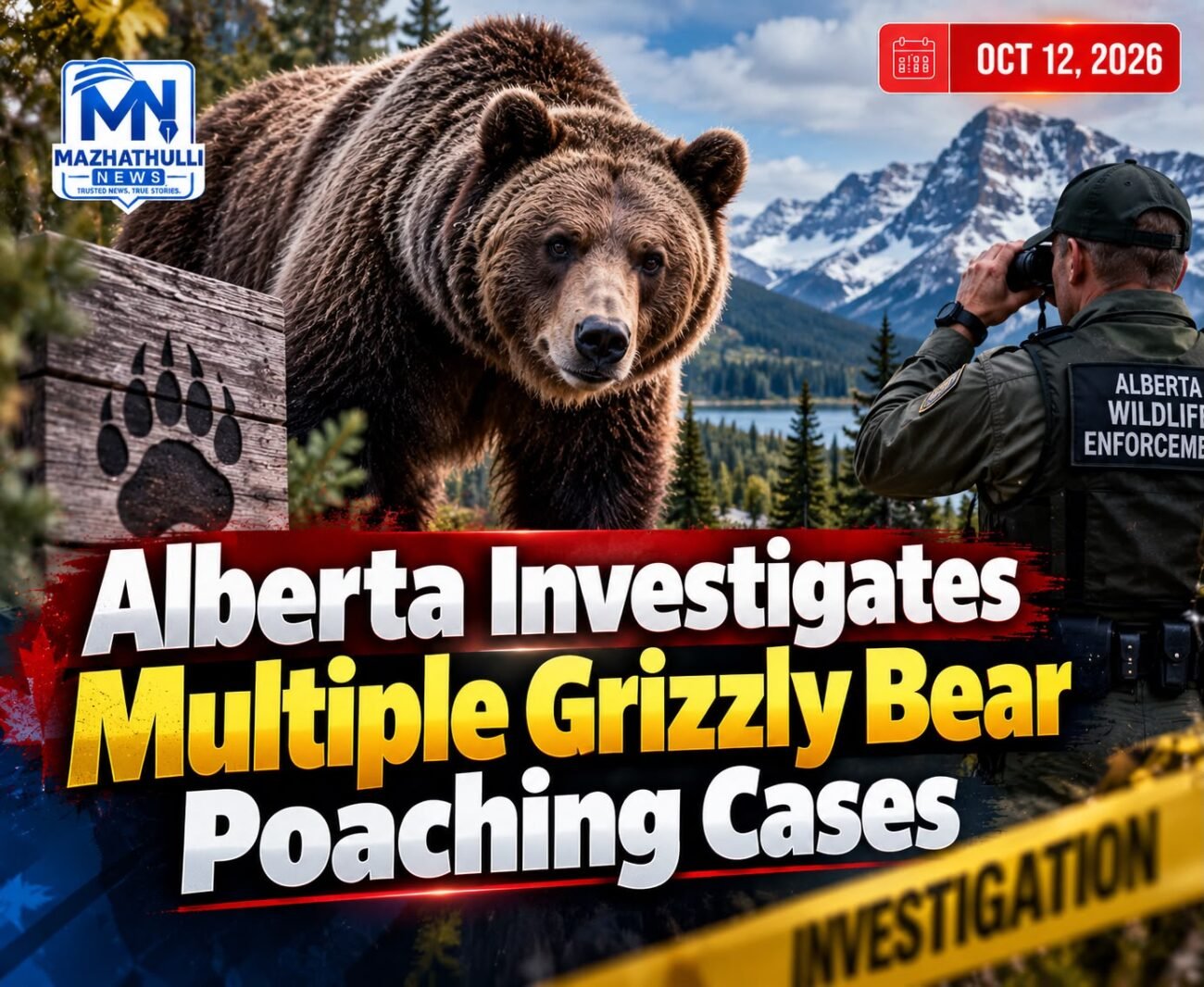
Alberta Investigates Multiple Grizzly Bear Poaching Cases
Alberta wildlife officials are investigating the illegal killings of four grizzly bears discovered at three separate locations, raising concerns about wildlife protection and the conservation of the province’s threatened grizzly bear population. Alberta Fish and Wildlife Enforcement Services is investigating the incidents, which include two bears found dead in northern Alberta in late September and early October, as well as two others discovered near Sundre in June. Authorities are asking the public to provide information that could help identify those responsible. On September 30, a grizzly bear was found shot dead along a road approximately 20 kilometres north of Swan Hills, northwest of Edmonton. The following day, another bear was discovered dead in a remote area between Little Smoky and Fox Creek. Investigators reported that the second bear had been shot and moved away from the main trail, with all four of its paws removed. The latest discoveries follow the deaths of two grizzly bears found shot along a road near Sundre, approximately 95 kilometres northwest of Calgary, in June. The circumstances surrounding the incidents have prompted renewed attention to illegal hunting and the potential motives behind the killings. Gordon Stenhouse, a biologist known for his work on Alberta’s grizzly bear population, criticised the practice of killing animals and abandoning their bodies. He said such acts demonstrate a disregard for wildlife, particularly when the animals belong to a threatened species. He also expressed concern that the number of bears discovered by authorities may represent only a fraction of the illegal killings taking place. Grizzly bears have been classified as a threatened species in Alberta since 2010. Hunting them has been prohibited in the province since 2006, with limited exceptions for Indigenous harvesting for subsistence or cultural purposes. The restrictions are intended to protect the population and support the long-term survival of the species. Provincial figures show that 28 illegal grizzly bear killings were documented between 2020 and 2025, accounting for approximately 17 per cent of recorded grizzly bear deaths during that period. Other causes of mortality include bears being killed by provincial authorities and collisions with vehicles. University of Alberta ecology professor Mark Boyce said the recent incidents were particularly troubling. He noted that grizzly bear parts, including paws, can be associated with illegal wildlife trafficking. However, investigators have not publicly confirmed a motive for the latest killings or established whether the incidents are connected. Wildlife experts say illegal hunting can stem from several factors, including fear of bears, conflicts with livestock and other property, and financial incentives linked to the illegal trade in animal parts. They also stress that preventing conflicts between people and wildlife is important for reducing the risk of bears being killed. Kim Titchener, founder of Bear Safety and More, said communities living in grizzly bear habitats need practical ways to reduce conflicts. Measures such as electric fencing, bear-resistant waste containers, secure grain storage and the proper disposal of dead livestock can help prevent bears from being attracted to farms and residential areas. The Alberta government has previously announced funding to help rural property owners reduce encounters with large carnivores. The province also supports BearSmart initiatives aimed at improving public awareness, preventing dangerous encounters and reducing wildlife deaths. Alberta estimates that approximately 1,000 grizzly bears remain in the province, although the most recent provincial population study dates to 2018. Protecting the population remains a challenge as bears share increasingly busy landscapes with roads, farms, recreation areas and expanding human activity. Authorities are urging anyone with information about the recent killings or other suspected wildlife offences to contact Alberta’s Report-A-Poacher program. Individuals whose information leads to charges may be eligible for a financial reward. The investigations remain ongoing, and no suspects have been publicly identified in connection with the four deaths. Wildlife officials are continuing their work to establish what happened and determine whether those responsible can be held accountable under Alberta’s wildlife laws.