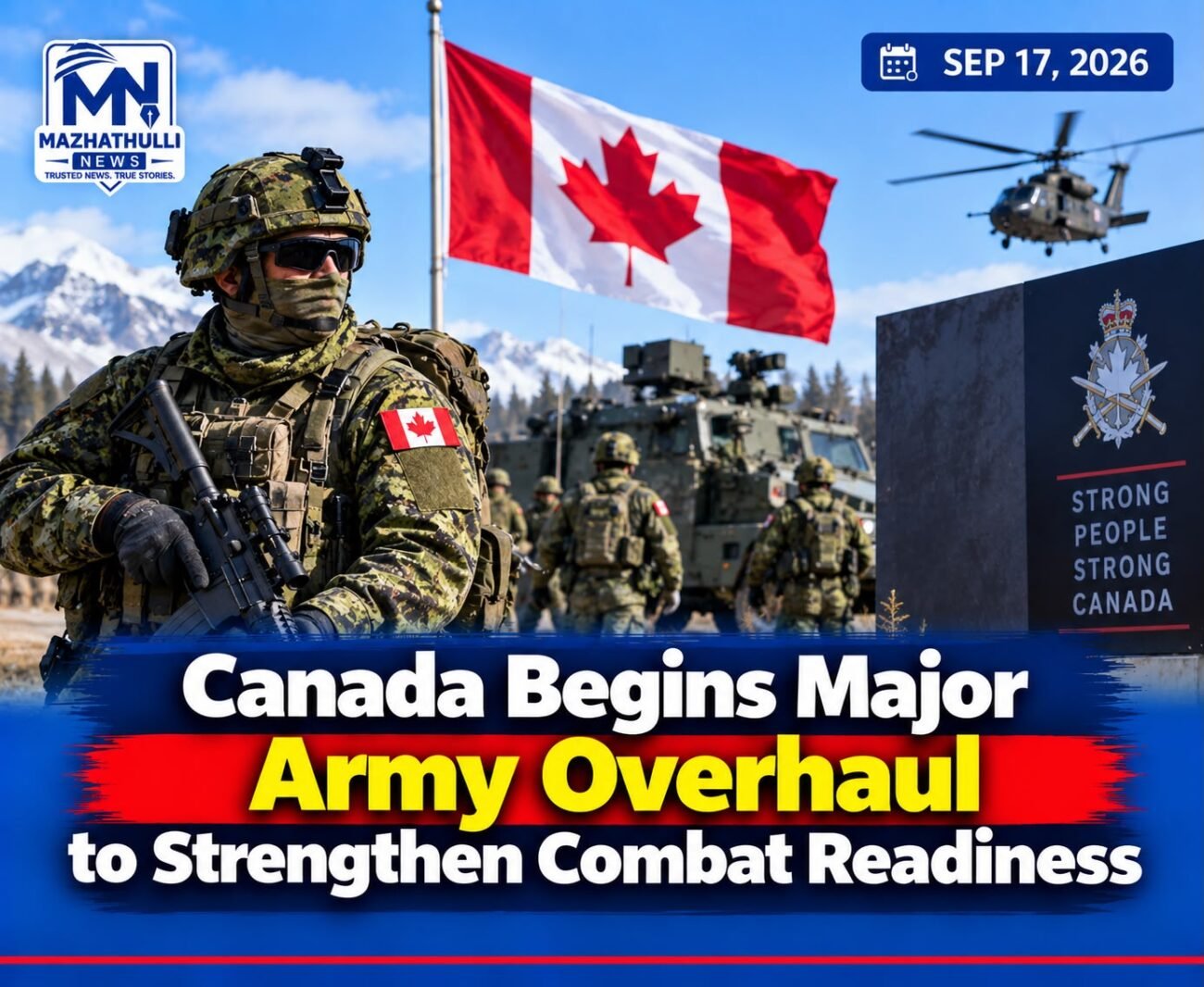
Canada Begins Major Army Overhaul to Strengthen Combat Readiness
The Canadian Army is undertaking a major modernization program to create a force that is more agile, better equipped and capable of responding quickly to emerging security threats at home and abroad. The changes involve the army’s structure, equipment, training, recruitment and support systems. The restructuring is moving the army away from its traditional geographically based model toward formations organized around specific operational purposes. The goal is to improve readiness, strengthen coordination and allow military leaders to deploy forces more efficiently during emergencies and major conflicts.
The new 1st Canadian Division, headquartered in Edmonton, will focus on developing and maintaining forces capable of large-scale combat operations. It is intended to serve as Canada’s primary expeditionary war-fighting formation, with the ability to operate in Canada or overseas. A separate formation will focus more directly on domestic defence and national security responsibilities, including support for operations within Canada. The army is also establishing dedicated support and training structures to improve logistics, sustainment and the professional development of soldiers and leaders. The modernization effort reflects lessons from recent conflicts, particularly the war in Ukraine. Military planners have identified the growing importance of drones, electronic warfare, cyber operations, long-range precision weapons, air defence, secure communications and real-time intelligence. The Canadian Army says it must be able to detect threats earlier, make decisions faster and coordinate land, air, maritime, space and cyber capabilities. A stronger digital network linking soldiers, sensors, commanders and military platforms is expected to support this objective.
Equipment modernization is another major component of the plan. Priority areas include long-range precision fires, upgraded artillery and mortar systems, ground-based air defence, improved armoured vehicles, Arctic mobility and advanced command-and-control technology. The army is also examining the use of artificial intelligence, robotics, autonomous systems and uncrewed vehicles. These technologies could support surveillance, intelligence gathering, communications, logistics and battlefield operations while reducing risks to personnel.
Defending Canada’s Arctic sovereignty remains a central concern. The region’s vast distances, severe weather and limited infrastructure require specialized equipment, improved mobility and stronger surveillance capabilities. The army is expected to increase its ability to operate in northern and remote environments. The military must also continue assisting Canadians during wildfires, floods and other natural disasters. Officials say the effects of climate change are contributing to more frequent and severe emergencies, increasing the need for rapid military support to provincial and territorial authorities.
The modernization program is built around four key areas: personnel, equipment, training and sustainment. The army says these elements must be developed together to create a force that is ready, resilient and capable of sustained operations.
The structural transition is expected to continue through 2027, with further capability development planned over the following years. Officials say the long-term objective is to build a more flexible, technologically integrated and combat-ready army capable of defending Canada, supporting allies and responding to a changing global security environment.