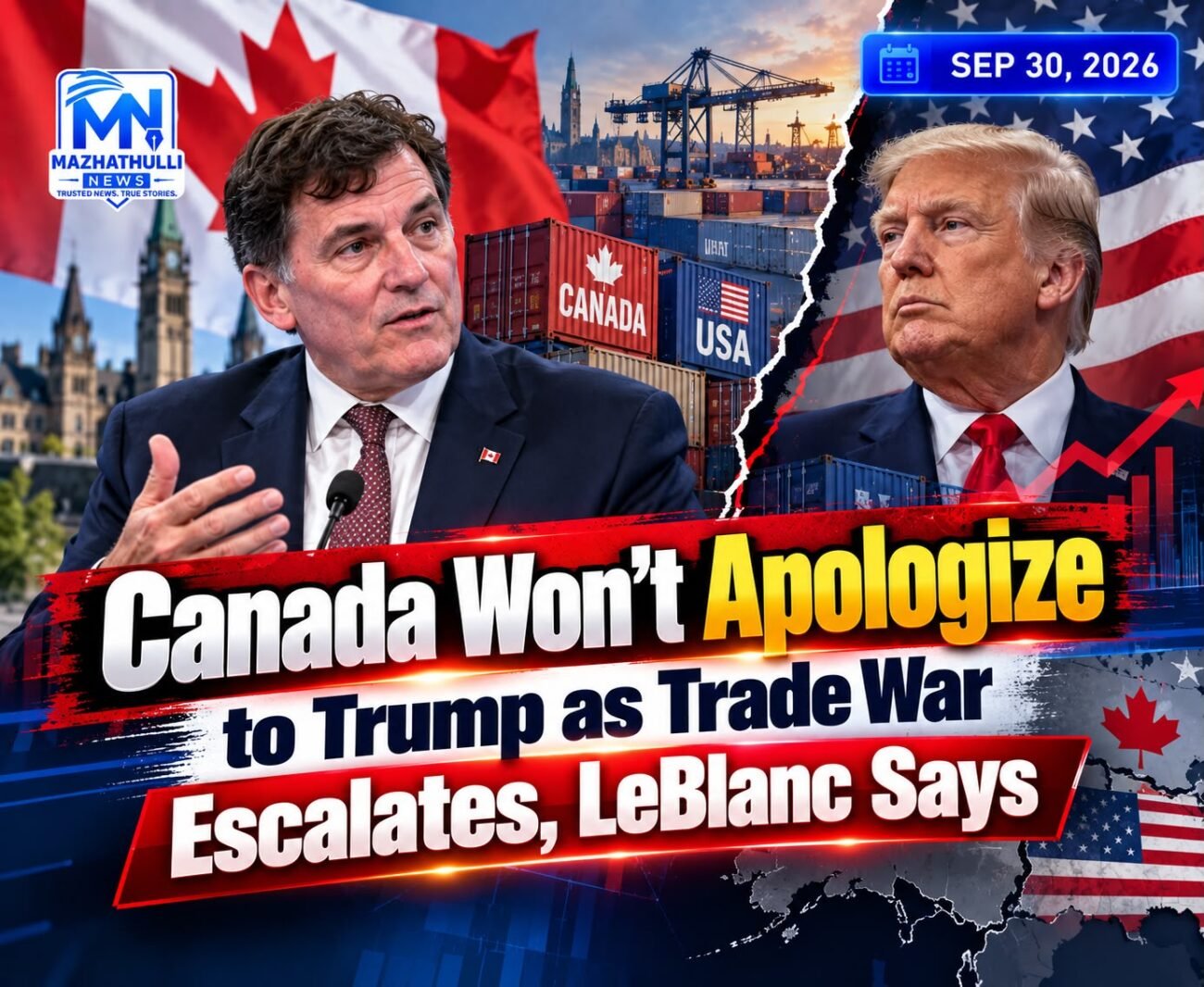
Canada Won’t Apologize to Trump as Trade War Escalates, LeBlanc Says
Canada will not apologize to U.S. President Donald Trump as the trade dispute between the two countries continues to escalate, Trade Minister Dominic LeBlanc said Tuesday, rejecting Trump’s suggestion that Ottawa could return to negotiations with an apology. Speaking to reporters in New Brunswick, LeBlanc said the Canadian government would not apologize for defending Canadian workers, businesses and the country’s economy. His comments came after Trump said he expected Canadian officials to return to the negotiating table and apologize as part of efforts to reach a new trade agreement. “I’m not thinking the government of Canada is going to apologize for standing up for Canadian workers, Canadian businesses, defending our economy,” LeBlanc said.
Trump had suggested that Canadian officials would eventually approach his administration and say they were sorry as the two countries attempt to resolve their trade dispute. The comments came amid another major escalation in restrictions on Canadian exports to the United States. On Tuesday, new U.S. import bans took effect on nearly $1 billion worth of Canadian products, including most Canadian alcoholic beverages, certain dairy products and some motorcycles. The measures represent another step in the widening trade conflict between the two countries. The latest restrictions follow earlier rounds of U.S. tariffs on Canadian products and Canada’s retaliatory measures. The dispute has affected a wide range of industries, including steel, automotive manufacturing, agriculture, energy, food production and consumer goods. LeBlanc said Canada remains in contact with American officials, but the two sides are not currently negotiating detailed trade text as they had been several weeks ago. He said Ottawa remains prepared to discuss a potential agreement if it protects Canadian sovereignty and serves the country’s economic interests. The breakdown in formal negotiations followed a decision by Prime Minister Mark Carney’s government to pull Canadian trade negotiators out of Washington after Ottawa concluded that the conditions for an acceptable agreement were not in place. The latest developments have also created additional pressure for Canadian companies that depend heavily on the U.S. market. Alcohol producers, particularly smaller distilleries, breweries and wineries, face challenges replacing American customers because of the importance of the U.S. market to their businesses. Canadian producers are also facing difficulties expanding sales within Canada because alcohol distribution remains governed by different provincial rules and retail systems. Industry representatives have called for changes that would make it easier for Canadian producers to sell products across provincial borders. The dispute is also prompting Ottawa to emphasize trade diversification. The federal government has been pursuing stronger commercial relationships with markets outside the United States as Canada seeks to reduce its dependence on its largest trading partner. Despite the absence of detailed negotiations, LeBlanc said communication between Canadian and American officials continues. He indicated that Canada would be prepared to return to substantive discussions if the government determines that an agreement capable of protecting Canadian economic interests is possible. The latest escalation leaves Canadian exporters facing continued uncertainty over access to the U.S. market. Businesses are watching closely for any changes in tariffs, import restrictions or negotiations that could affect supply chains, prices and investment decisions. For now, the Canadian government is maintaining that any future trade agreement must meet Canada’s economic and national interests, while the United States continues to use tariffs and import restrictions as part of its negotiating strategy. The two countries remain economically closely connected, making the outcome of the dispute significant for businesses, workers and consumers on both sides of the border.