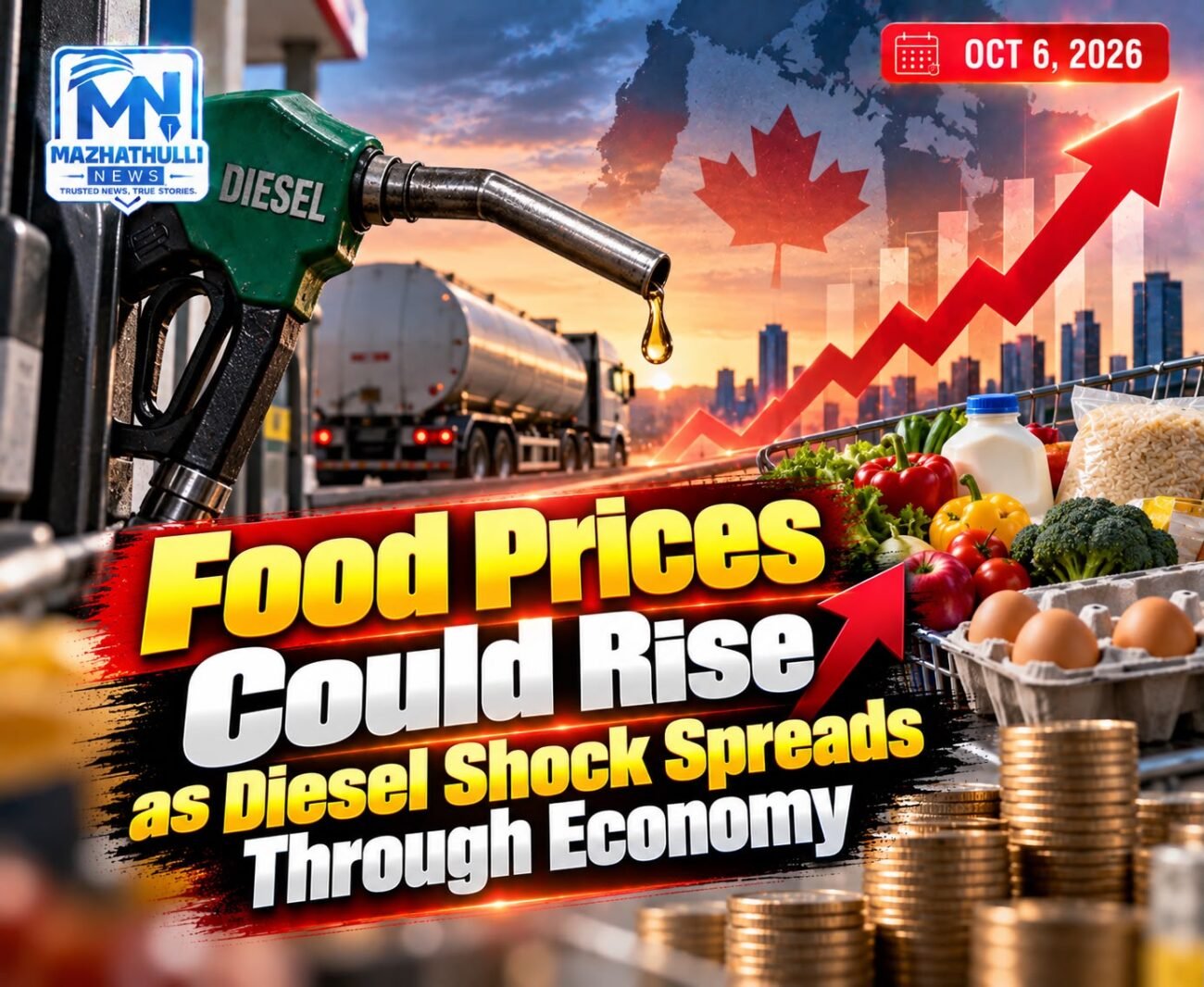
Food Prices Could Rise as Diesel Shock Spreads Through Economy
Canadian consumers could face additional pressure at grocery stores as a sharp rise in diesel prices works its way through transportation, agriculture, manufacturing and other parts of the economy, according to a new analysis from Scotiabank. The bank says the current energy shock is different from a typical increase in crude oil prices because diesel has risen significantly more than movements in crude would normally suggest. Diesel is a key fuel for trucks, farm machinery, construction equipment and other parts of the supply chain, making it particularly important to the cost of producing and moving goods. The impact is not expected to appear immediately. Businesses often absorb some higher operating costs in the short term, while others renegotiate contracts, adjust transportation costs or gradually pass expenses on to customers. Scotiabank estimates that the broader impact can take 12 to 18 months to move through the economy. Food prices are among the categories expected to see a delayed impact. The bank estimates that the effect of a diesel-specific price shock on food prices could peak roughly 18 months after the initial increase. Higher transportation costs can affect everything from moving crops and livestock to processing, packaging, refrigeration and delivering finished products to grocery stores. Farmers could also face higher expenses because diesel is widely used to operate tractors, combines, irrigation equipment and other machinery. If those costs remain elevated, producers may eventually need to recover some of the additional expenses through higher prices for agricultural products.
The pressure could extend beyond food. Scotiabank’s analysis found evidence that diesel price shocks can affect broader consumer prices, including shelter and other goods and services. Transportation costs generally respond earlier, while the impact on other parts of the economy develops more gradually.
The bank estimates that a temporary diesel-specific increase of around 15 per cent could add about 0.6 percentage points to Canada’s annual consumer inflation rate. The analysis also found that the effect is not limited to energy prices, with underlying inflation showing a more persistent response. The situation is being closely watched because Canada’s inflation rate has already remained above the Bank of Canada’s two-per-cent target. A prolonged increase in energy costs could make it more difficult for inflation to return to target.
The Bank of Canada has previously indicated that temporary increases in energy prices do not necessarily require an aggressive policy response. However, if higher fuel costs begin spreading into wages, services, food and other prices, the central bank could face greater pressure to respond. For Canadian households, the biggest concern is that the full impact may take time to become visible. Even if diesel prices begin to stabilize, businesses could continue dealing with higher costs already built into contracts and supply chains. Lower-income households could be particularly vulnerable because food and energy account for a larger share of their household budgets. A prolonged increase in essential costs could therefore put additional pressure on families already dealing with elevated living expenses. Scotiabank also cautions that the consequences would be greater if the diesel shock lasts longer than expected. A temporary increase could gradually fade, but a sustained period of high diesel prices could encourage businesses to pass on more of their costs and increase broader inflation expectations. For consumers, that means the effects of today’s fuel prices may not be limited to the price displayed at the pump. Higher diesel costs could continue filtering through the Canadian economy, potentially putting upward pressure on grocery bills and other household expenses over the months ahead.