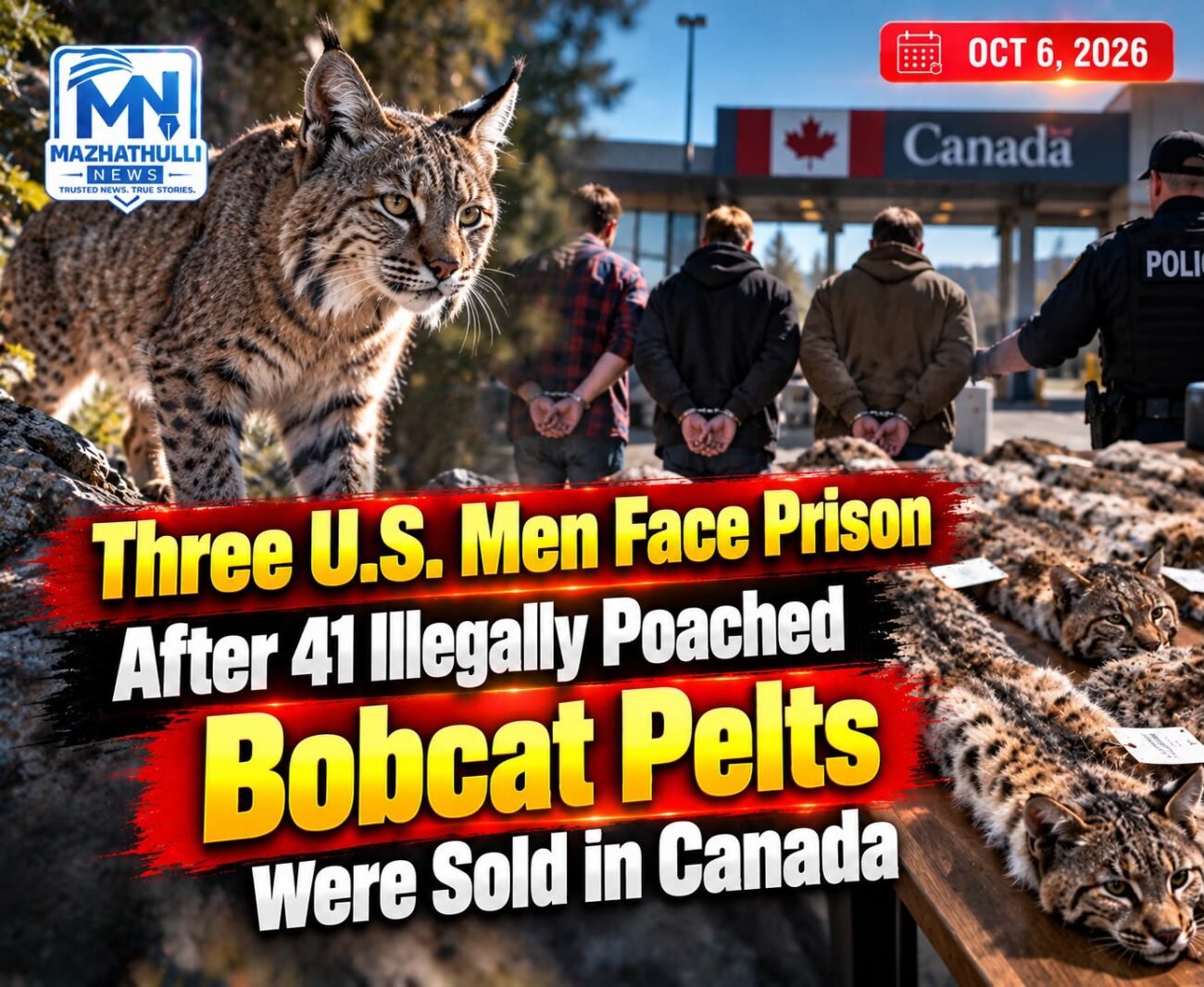
Three U.S. Men Face Prison After 41 Illegally Poached Bobcat Pelts Were Sold in Canada
Three New Hampshire men have pleaded guilty to federal charges after allegedly poaching at least 41 bobcats and arranging for their pelts to be shipped to Canada and sold at a fur auction. The case involved an illegal hunting operation that prosecutors say continued for more than four years and involved falsified wildlife tags and international trafficking. Sherwood Dubrey Jr., 48, and Randy Inman, 49, pleaded guilty to conspiring to violate the U.S. Lacey Act. Dubrey Jr.’s father, Sherwood Dubrey Sr., 72, pleaded guilty to violating the same federal wildlife law. All three are scheduled to be sentenced in January 2027. Dubrey Jr. and Inman are facing a maximum sentence of five years in prison and up to three years of supervised release. Dubrey Sr. faces a maximum prison sentence of one year and up to one year of supervised release. The maximum penalties do not mean the men will necessarily receive those sentences; the final punishment will be determined by the federal court. According to prosecutors, Dubrey Jr. and Inman repeatedly hunted bobcats in New Hampshire between 2018 and 2022. Bobcat hunting and trapping is illegal in the state, meaning the animals could not legally be harvested there for export. Investigators said the two men used bait piles on their property and on state land to attract bobcats before shooting them. They allegedly transported the pelts to New York, where bobcat hunting is legal during an established season. Prosecutors allege that Dubrey Sr. then obtained CITES tags from New York by falsely representing that the bobcats had been legally killed there. The Convention on International Trade in Endangered Species of Wild Fauna and Flora, commonly known as CITES, requires documentation for the international trade of certain wildlife and wildlife products. The falsely tagged pelts were subsequently transported through Wisconsin and exported to Canada, where they were sold through a fur auction. Court documents say at least 41 illegally obtained bobcat pelts were exported from the United States to Canada during the four-year period. The total auction value of the illegally obtained wildlife was approximately US$3,000, according to court records. Prosecutors say the men nevertheless continued the operation and divided the proceeds from the sales. Investigators uncovered text messages in which the defendants allegedly discussed the illegal hunting operation. In one exchange, Inman acknowledged killing a bobcat that had been illegally trapped. In another, Dubrey Jr. reportedly told his father that he did not want New Hampshire to establish a legal bobcat hunting season because it would create “competition.”The investigation also found that Dubrey Jr. and Inman used rifles equipped with scopes capable of recording photographs and videos of their kills. Prosecutors said the men shared some of those images and videos with others through text messages. The case highlights the role of the Lacey Act in preventing illegally obtained wildlife from being transported across state or international borders. The federal law makes it an offense to traffic in wildlife that was taken, possessed, transported or sold in violation of underlying laws. Authorities in both the United States and Canada participated in the investigation. The U.S. Fish and Wildlife Service Office of Law Enforcement and the New Hampshire Fish and Game Department led the investigation, with assistance from the FBI, New York environmental authorities, Canadian officials and other state and local agencies. Officials said the case also demonstrates why wildlife tagging systems are important to the international fur trade. False documentation can make illegally harvested animals appear to have been legally taken in another jurisdiction, allowing them to enter legitimate markets. Bobcats are native to North America and are managed under different hunting and trapping rules depending on the jurisdiction. While hunting bobcats is prohibited in New Hampshire, other states have regulated seasons and systems for documenting legally harvested animals. Canada has its own controls governing the import, sale and export of wildlife products. Bobcat pelts are subject to documentation and international trade requirements, including CITES-related controls. Canadian wildlife authorities also work with fur auction houses to ensure that pelts entering the market comply with applicable regulations. U.S. prosecutors said crossing state or international borders did not shield the defendants from accountability. Investigators emphasized that wildlife violations can continue to be prosecuted even when illegally obtained animals are moved through several jurisdictions before reaching an international marketplace. The three defendants have now admitted their roles through their guilty pleas, but their final sentences will not be determined until the scheduled hearings in January 2027. The case remains an example of how an illegal hunting operation can extend beyond state borders and eventually involve international wildlife trade.