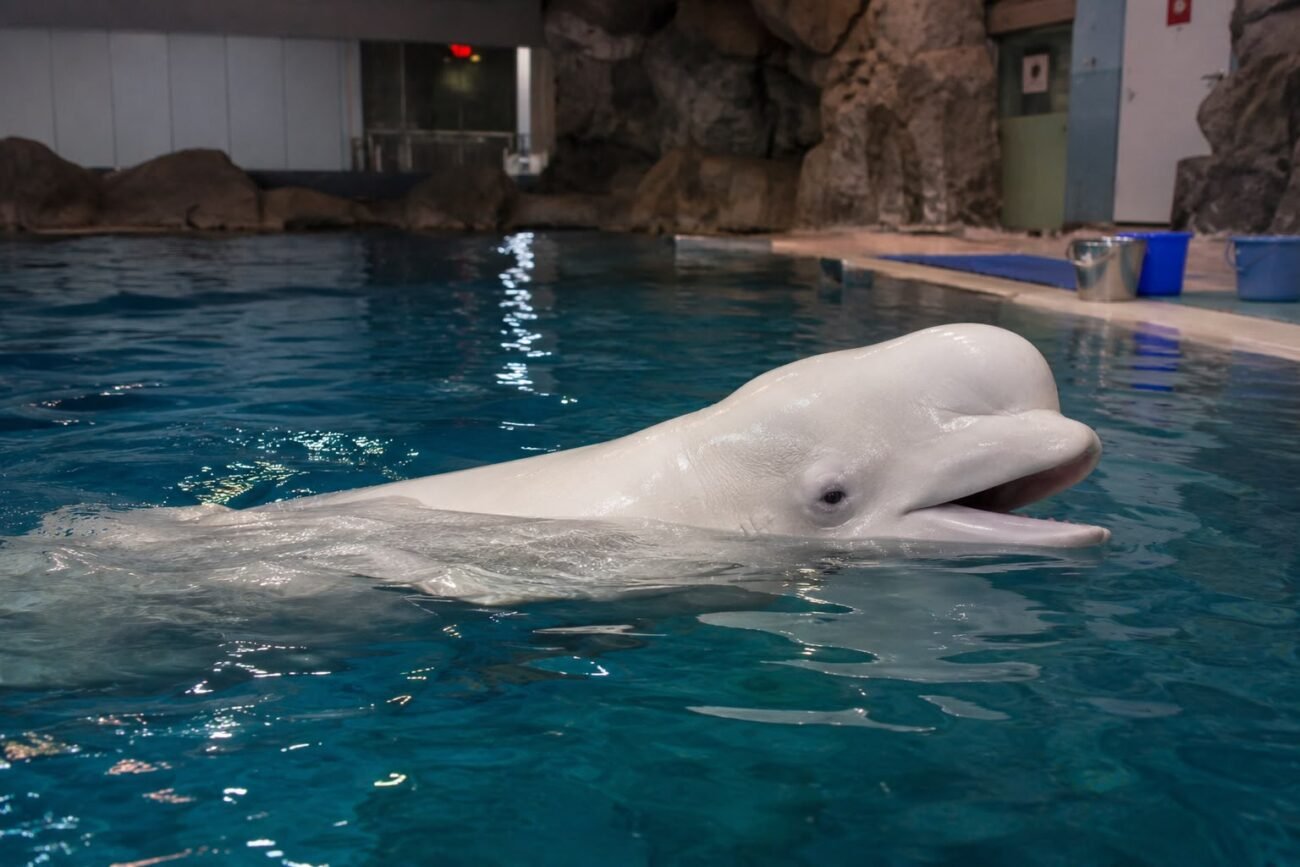
Beluga whale dies weeks after transfer from Marineland to U.S. aquarium
CHICAGO: A beluga whale transferred from the former Marineland in Niagara Falls, Ontario, to Chicago’s Shedd Aquarium has died just weeks after arriving in the United States, prompting renewed scrutiny over the relocation of captive marine mammals and their long-term welfare.
The 23-year-old female beluga, Peekachu, died unexpectedly after aquarium staff noticed a sudden decline in her health. According to Shedd Aquarium, she showed signs of dehydration and a reduced appetite, prompting veterinarians to begin intensive supportive care, including fluid therapy and medication. Despite those efforts, the whale died before responding to treatment. Officials said a comprehensive necropsy, along with laboratory testing, is being conducted to determine the exact cause of death.
Peekachu was among eight female beluga whales relocated to Shedd Aquarium as part of an international effort to rehome marine mammals following Marineland’s closure. Aquarium officials said she had initially adapted well to her new environment, was interacting with other whales, and had been eating normally. Staff described her as an experienced mother and a well-known member of the beluga pod.
The death has reignited criticism from animal welfare organizations, which argue that transporting whales over long distances can place significant physical and psychological stress on the animals. Advocacy groups have called for greater transparency surrounding Peekachu’s medical history, the relocation process, and the results of the ongoing investigation. They are also urging authorities to ensure the remaining transferred belugas receive close veterinary monitoring.
Marineland, once home to one of the world’s largest collections of captive beluga whales, has been gradually relocating its marine mammals to accredited facilities in the United States and Europe following years of public criticism, animal welfare investigations and changing regulations on keeping whales and dolphins in captivity. The transfer of the remaining animals is expected to continue under the supervision of Canadian authorities and veterinary experts.