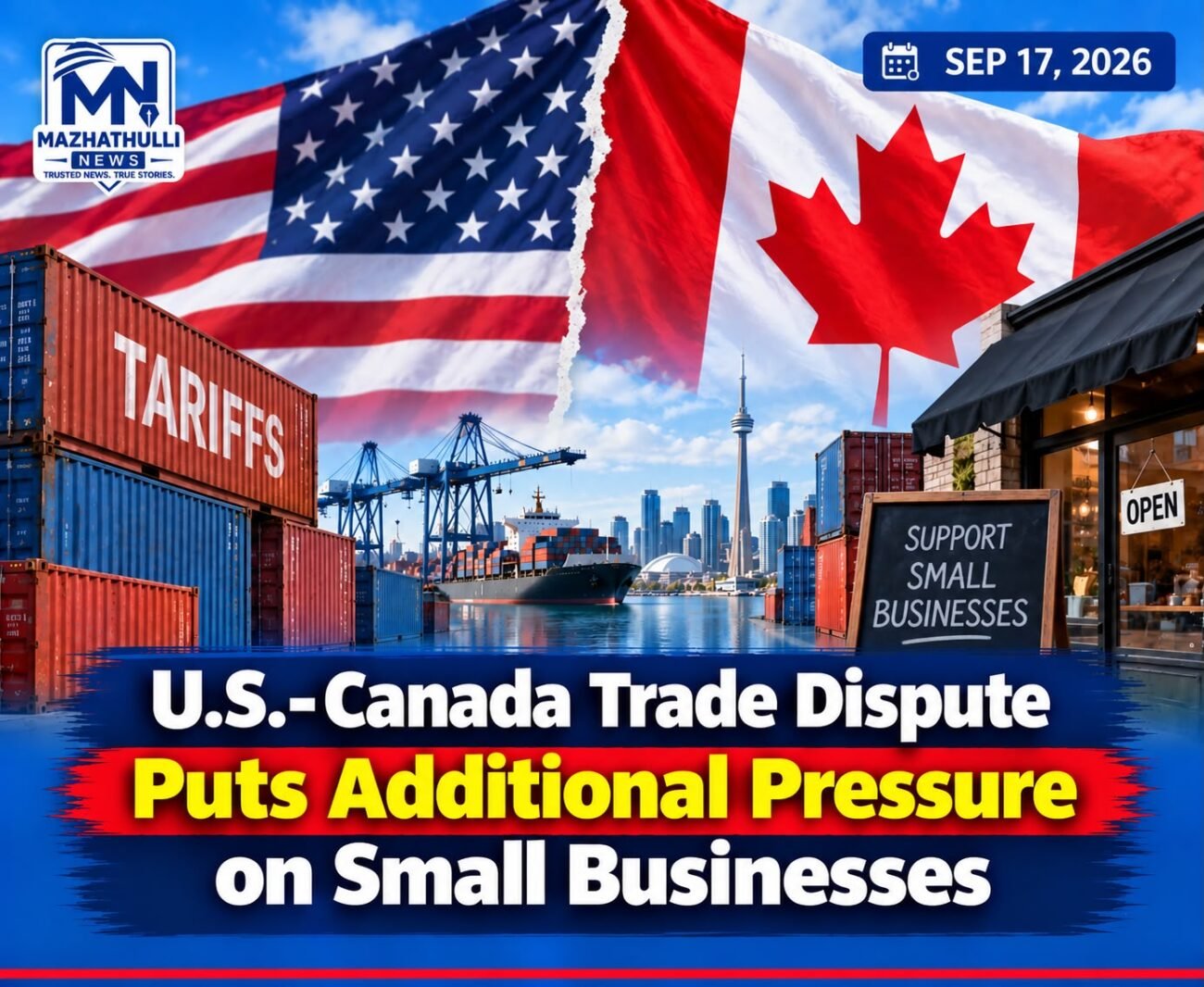
U.S.-Canada Trade Dispute Puts Additional Pressure on Small Businesses
Small businesses in Canada and the United States are facing growing financial pressure as trade tensions, tariffs and higher fuel costs increase the expense of operating across the border. Canada recently imposed reciprocal tariffs on approximately $20 billion worth of U.S. goods after the Trump administration introduced import taxes on Canadian products of a similar value. The measures have affected businesses that depend on cross-border sales, imported materials and integrated supply chains. Business owners say the impact extends beyond the direct cost of tariffs. Some are experiencing cancelled orders, reduced customer demand and delays in purchasing decisions. Others are facing higher prices for equipment, raw materials and transportation, making it harder to maintain profit margins.
The conflict involving Iran has added another layer of uncertainty. Disruptions in global energy markets have pushed up fuel and shipping expenses, affecting businesses that rely on trucks, machinery and regular deliveries. Higher diesel and gasoline prices can increase the cost of moving goods from farms and factories to wholesalers, retailers and customers. The Canadian Federation of Independent Business has warned that small businesses are being squeezed from both sides. Rising fuel prices are increasing operating costs, while households facing higher expenses have less money available for discretionary purchases such as dining, retail shopping, recreation and personal services. The organization estimates that fuel costs have increased by approximately $53 per vehicle each month. It also reported that 72 per cent of Canadians surveyed said higher fuel prices were negatively affecting their personal finances, with many reducing spending in other areas.
Trade uncertainty is creating additional challenges for exporters and importers. According to a CFIB survey, nearly half of Canadian small exporters and importers reported that their products were directly affected by the latest tariffs and counter-tariffs. The manufacturing, wholesale, retail and construction sectors were among those facing significant exposure. Some affected businesses are considering alternative suppliers or markets to reduce their dependence on U.S. trade. Others are delaying hiring, investment and expansion plans while waiting for clearer tariff rules and more stable commercial conditions. For smaller companies, the options are often limited. Large corporations may be able to negotiate better prices, absorb temporary losses or shift production, while small businesses frequently operate with limited cash reserves. Raising prices could protect profit margins but may also discourage customers, particularly as household budgets come under pressure.
Business groups have called for targeted assistance, tariff relief and renewed negotiations between Ottawa and Washington. They argue that a prolonged dispute could threaten jobs, investment and the financial viability of businesses that depend on predictable cross-border trade. The combined impact of tariffs, fuel prices and weaker consumer spending remains a concern for businesses on both sides of the border. Owners say greater certainty in trade policy and energy markets will be necessary to support planning and protect small-business operations.