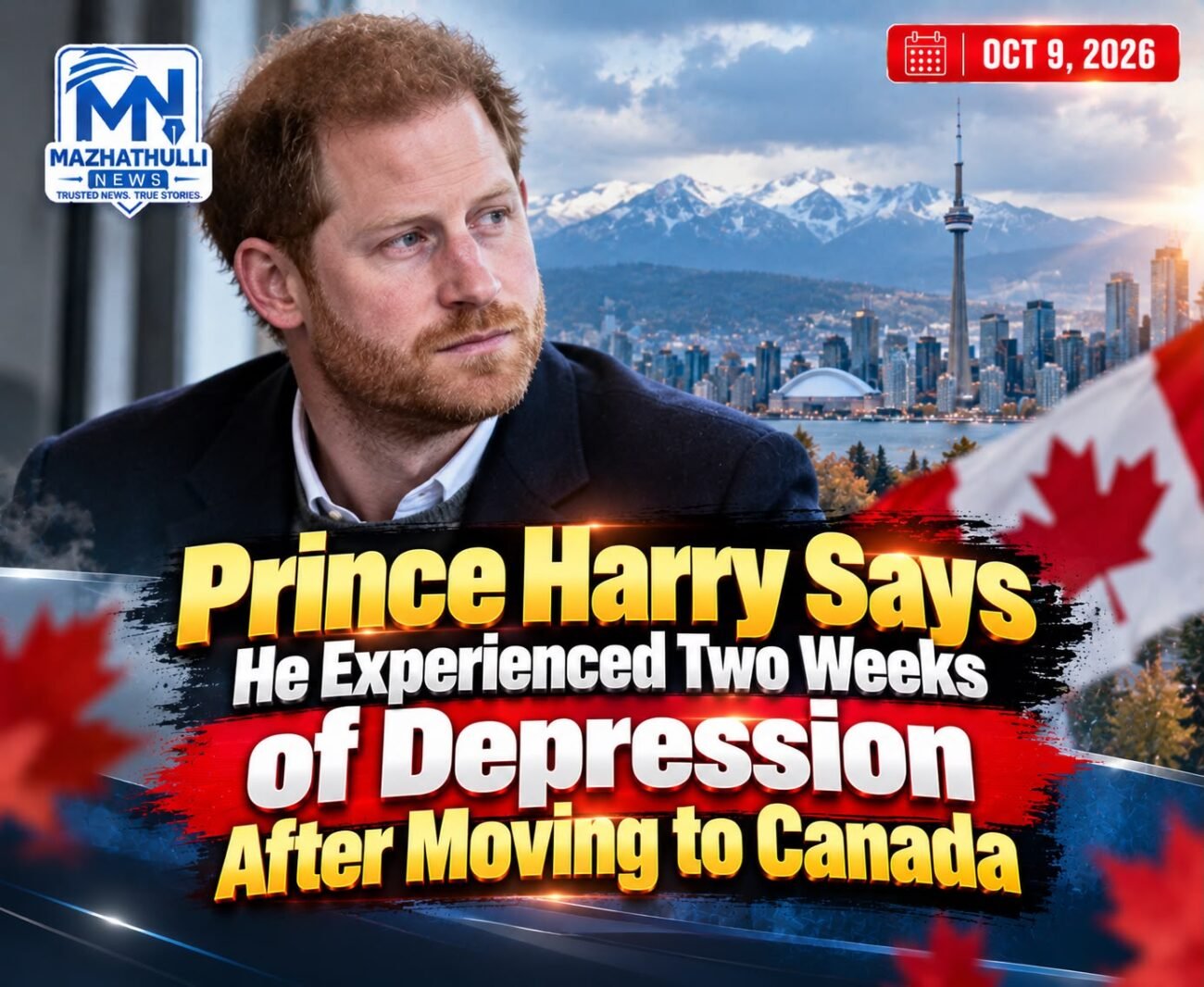
Prince Harry Says He Experienced Two Weeks of Depression After Moving to Canada
Prince Harry has revealed that he experienced a two-week period of depression shortly after moving to Canada with his wife, Meghan Markle, and their young son, Archie, in late 2019. The Duke of Sussex said the transition away from the stressful environment of royal life triggered an unexpected emotional and physical crash.
Harry shared the personal experience in a new MasterClass session titled Redefining Grief: Building Resilience Through Loss, released on October 8. The session features the prince in conversation with neuroscientist Dr. Mary-Frances O’Connor, exploring grief, emotional well-being and the lasting effects of losing a loved one. Harry explained that he and Meghan moved to Canada with Archie to gain some distance from the pressures surrounding their lives in the United Kingdom and to have time to reflect. However, within two or three days of arriving, he experienced what he described as an “adrenaline crash.” He said his body had seemingly become accustomed to operating under constant stress, leaving him struggling when that pressure suddenly disappeared. “It was as if I needed stress in order to get the adrenaline to make my brain function,” Harry explained, describing how he felt unable to function normally around the house. He said the experience left him feeling depressed for approximately two weeks. The revelation offers a glimpse into the emotional challenges Harry faced during a major turning point in his life. In January 2020, he and Meghan announced their intention to step back from their roles as senior working members of the British royal family. They subsequently established a more independent life, eventually relocating to California. During the MasterClass, Harry also discussed the grief he carried following the death of his mother, Princess Diana, who died in a Paris car crash in August 1997 when he was 12 years old. Harry said he spent many years suppressing his emotions and telling people he was fine whenever they asked about his well-being. Looking back, he described that period as one of emotional numbness and shutdown, explaining that adrenaline and constant activity had helped him avoid confronting painful feelings. He recalled that joining the British Army at the age of 20 provided a sense of purpose and a distraction from his grief. Military service gave him specific responsibilities and tasks to focus on, leaving little time to process the emotions he had carried since childhood. However, Harry said experiences during his military service, including his deployments to Afghanistan, appeared to trigger other unresolved trauma. Over time, he began recognizing that the emotional difficulties he had experienced for years required greater attention. He also described physical symptoms that made him realize something was wrong. Even the feeling of a shirt collar tightening around his neck could make him feel as though he was suffocating, while he experienced panic attacks during car journeys to work. Those experiences eventually encouraged him to look more deeply into his mental health and seek help. Dr. O’Connor, who specializes in the neuroscience of grief, explained during the session that prolonged stress can affect how the body and brain function. She compared a person who remains under constant stress to a driver who continually presses the accelerator, using energy without allowing the body sufficient time to recover. The discussion examines how grief is not exclusively an emotional experience but can also affect the body, concentration, energy levels and everyday functioning. Harry related to the discussion of exhaustion and brain fog, reflecting on how years of emotional suppression had affected him. Another important part of Harry’s account involved the guilt he associated with the possibility of being happy after his mother’s death. He said he had long felt that remaining sad was a way of demonstrating how much he missed her. With time and therapeutic support, he began to understand that remembering Diana did not require him to remain unhappy. He described how reconnecting with memories of his mother helped him reconsider his relationship with grief and recognize that she would have wanted him to find happiness. The MasterClass was developed to help people better understand grief and build resilience after loss. It was released ahead of World Mental Health Day on October 10 and supports bereavement charities Comfort Zone Camp and Scotty’s Little Soldiers, the latter of which works with children and young people who have lost a parent serving in the British Armed Forces. Harry’s account also sheds light on the emotional pressures surrounding his and Meghan’s decision to leave their senior royal roles. Their move to Canada was initially intended to provide space away from public scrutiny and allow the family to consider its future. The couple later settled in the United States and continued their charitable and media projects. By discussing his experiences publicly, Harry has brought renewed attention to the ways prolonged stress, unresolved grief and major life transitions can affect mental well-being. His account highlights the importance of recognizing emotional difficulties, seeking appropriate support and understanding that grief can influence people long after a loss has occurred.