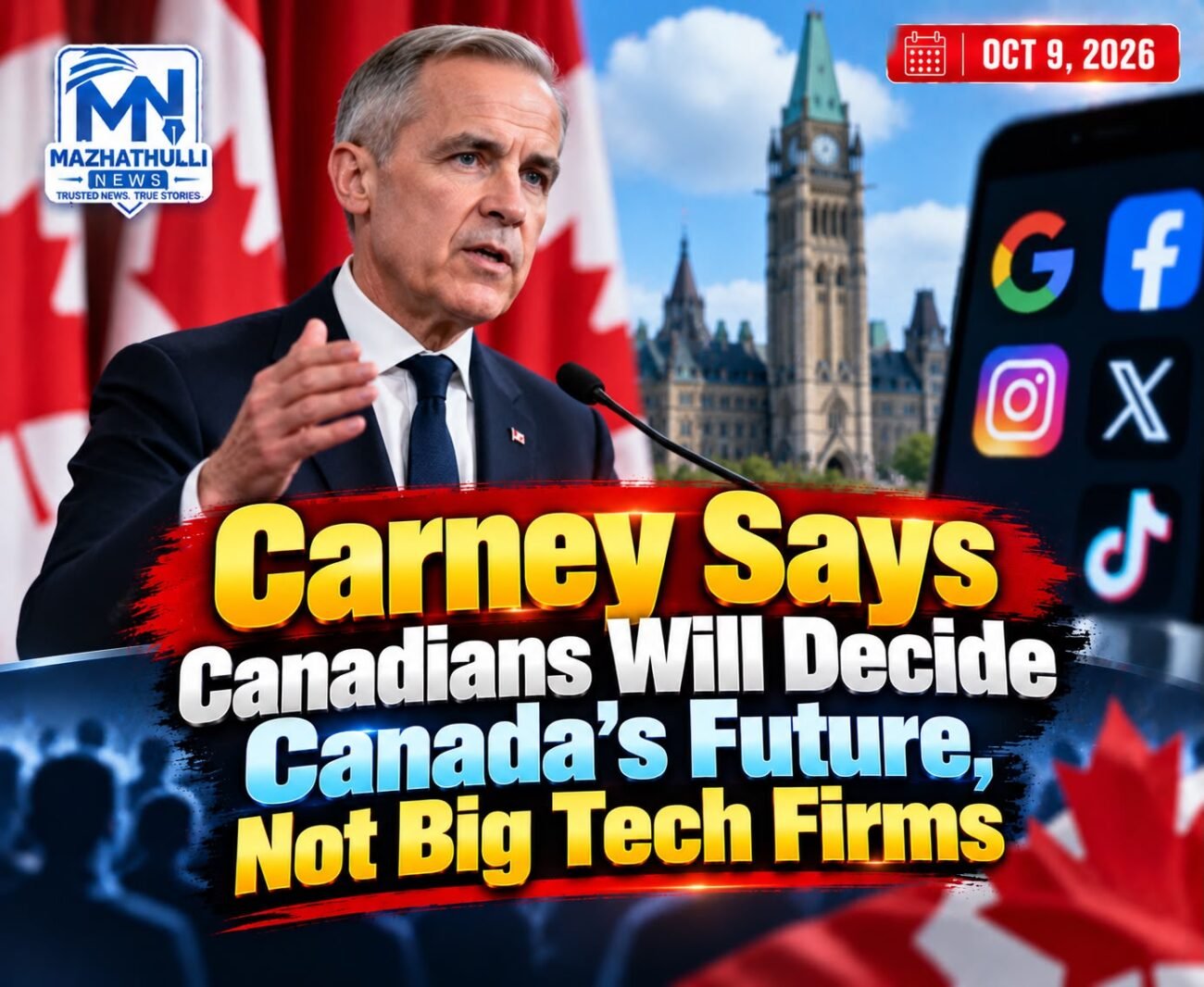
Carney Says Canadians Will Decide Canada’s Future, Not Big Tech Firms
Canadian Prime Minister Mark Carney has pushed back against Elon Musk’s calls for Quebec, Alberta and Saskatchewan to separate from Canada, saying the country’s future must be determined by Canadians rather than foreign governments or powerful technology companies. Speaking to reporters in Sherbrooke, Quebec, on Thursday, Carney responded to comments made by Musk on his social media platform X, where the billionaire endorsed the idea of the three provinces leaving the Canadian federation. “The future of Canada will be decided by Canadians and the priorities of Canadians, the priorities of the people of Quebec,” Carney said. He added that Canadians should be able to live according to their languages and cultures without interference from outside influences, including “foreign governments and large tech firms that think they can tell us what to do.” Musk entered the debate on Wednesday following the electoral victory of Quebec’s separatist Parti Québécois (PQ). The party, led by Paul St-Pierre Plamondon, won the provincial election but fell short of securing a majority of seats in the National Assembly. Commenting on the result, Musk wrote that Quebec should separate from Canada, adding that Alberta and Saskatchewan should do the same. “They would be better off,” Musk said in his post. His comments have drawn responses from political leaders across Canada, with some rejecting the idea of provincial separation and emphasizing the importance of national unity. Saskatchewan Premier Scott Moe responded directly to Musk’s remarks on social media with a brief message: “No.” Alberta Premier Danielle Smith also disagreed with Musk’s position, reiterating that she intends to vote for Alberta to remain part of Canada. Speaking in Edmonton on Thursday, Smith said separatist sentiment in Alberta had weakened as her government and Carney’s federal administration began addressing concerns that had fuelled frustration among some Albertans.
She argued that changes in the federal government’s approach and a greater willingness to work with Alberta had helped ease tensions between the two levels of government.
The comments come as Alberta prepares for an important vote on October 19. Voters will be asked whether the provincial government should begin the process toward another binding referendum on Alberta’s separation from Canada. A vote in favour of the proposal would not automatically make Alberta independent. It would instead support beginning a process toward a future referendum, with further political and legal steps required before separation could occur. The question of Alberta’s place within Canada has become increasingly prominent amid disagreements over federal policies, energy development, taxation and provincial autonomy. In Quebec, the election victory of the Parti Québécois has renewed debate about the province’s constitutional future. The party supports Quebec independence, although its electoral victory does not, by itself, constitute a public mandate for separation. The PQ won approximately 28 per cent of the popular vote and did not secure a majority of seats, reflecting a range of political concerns among Quebec voters beyond the question of sovereignty.
Carney has sought to strengthen Ottawa’s relationship with Quebec through economic investment and cooperation with the provincial government. His comments on Thursday reinforced the federal government’s position that decisions about the country’s future belong to its citizens. Musk’s intervention has also attracted attention because of his influence in the technology sector and his ownership of X, a platform used by millions of people worldwide. His comments come amid wider debates about the influence of wealthy business figures and technology companies on public affairs. The issue has additional significance for Canada’s technology and telecommunications sectors. Carney recently announced a $2.3-billion federal contract with Canadian satellite company Telesat to provide low-Earth-orbit satellite connectivity for military communications. Telesat’s ambitions also include competing in a market where Musk’s Starlink is a major provider. Although the satellite contract and the separatism debate are separate issues, Musk’s comments have brought renewed attention to the relationship between technological power, political influence and national sovereignty. For now, the positions of the three provincial governments differ in their responses to separatist sentiment, but their leaders have pushed back against Musk’s call for the provinces to leave Canada. With Alberta’s October 19 vote approaching and Quebec’s separatist party preparing to govern, the debate over national unity is likely to remain a significant political issue. Carney’s central message was clear: decisions about Canada’s constitutional future must emerge from Canadians and their democratic institutions, not from the declarations of influential figures outside the country’s political process.