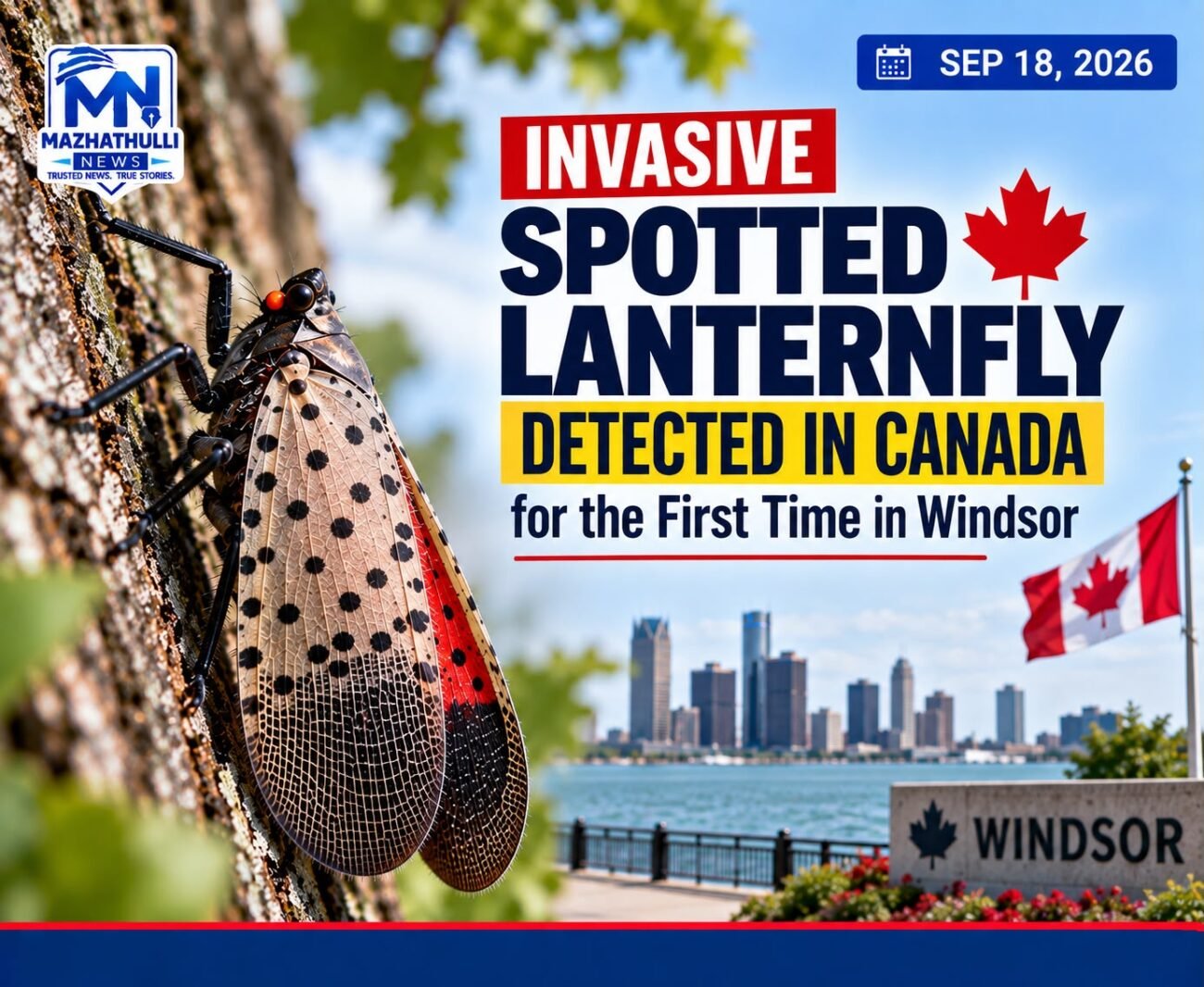
Invasive Spotted Lanternfly Detected in Canada for the First Time in Windsor
Canada has recorded its first confirmed detection of the invasive spotted lanternfly, with the Canadian Food Inspection Agency (CFIA) confirming the pest in Windsor, Ontario, raising concerns about its potential impact on agriculture, vineyards, forests and gardens.
The CFIA confirmed the first Canadian detection on September 15, 2026. The finding marks the first time the invasive insect, scientifically known as Lycorma delicatula, has been officially detected in Canada through agency surveillance. The spotted lanternfly is native to parts of Southeast Asia and became established in North America after being detected in Pennsylvania in 2014. Since then, it has spread across several U.S. states, creating concerns for agriculture and ecosystems.
The insect can feed on more than 100 species of plants and trees. Its most significant known agricultural impacts are associated with grapevines, where heavy feeding can damage or kill vines and potentially affect the grape and wine industry. It can also feed on trees such as black walnut and other woody plants. Officials are now conducting surveillance in and around Windsor to determine the extent of the detection and whether the insect has established a population in the area. Movement restrictions have also been introduced for certain regulated materials to help prevent the pest from spreading to other parts of Canada. The timing of the detection is particularly important because adult spotted lanternflies are active during September and October, when they mate and lay eggs. Their egg masses can be deposited on trees as well as outdoor objects and surfaces, including vehicles, patio furniture, equipment and other materials.
Officials are urging the public to remain alert, particularly people travelling from areas where spotted lanternfly is already established. The insect can spread by hitchhiking on vehicles, outdoor equipment, plant material, shipments and other goods. Residents who believe they have found a spotted lanternfly are being advised to take a photograph, safely capture the insect or preserve an egg mass in a sealed container, and report the sighting to the CFIA immediately. Early detection is considered important for limiting the pest’s potential spread. Despite the concern, officials emphasize that the detection in Windsor does not automatically mean that the spotted lanternfly has become established across Canada. Surveillance is continuing to determine whether there is an established population and what additional measures may be required. The spotted lanternfly does not bite or sting people or animals, and it is not known to transmit diseases harmful to humans. The primary concern is its potential impact on plants, agriculture and ecosystems if populations become established and spread. The first confirmed Canadian detection is now prompting increased vigilance among farmers, grape growers, horticultural businesses, travellers and homeowners. Authorities are encouraging Canadians to learn what the insect and its egg masses look like and to report suspected sightings rather than attempting unapproved treatments themselves. With Windsor located directly across the Detroit River from Michigan, where spotted lanternfly has been detected, authorities are paying close attention to the area as they work to determine how the insect arrived and whether it has spread beyond the initial detection. The coming weeks will be important for surveillance and response efforts as officials assess the potential threat to Canada’s agricultural and natural environments.