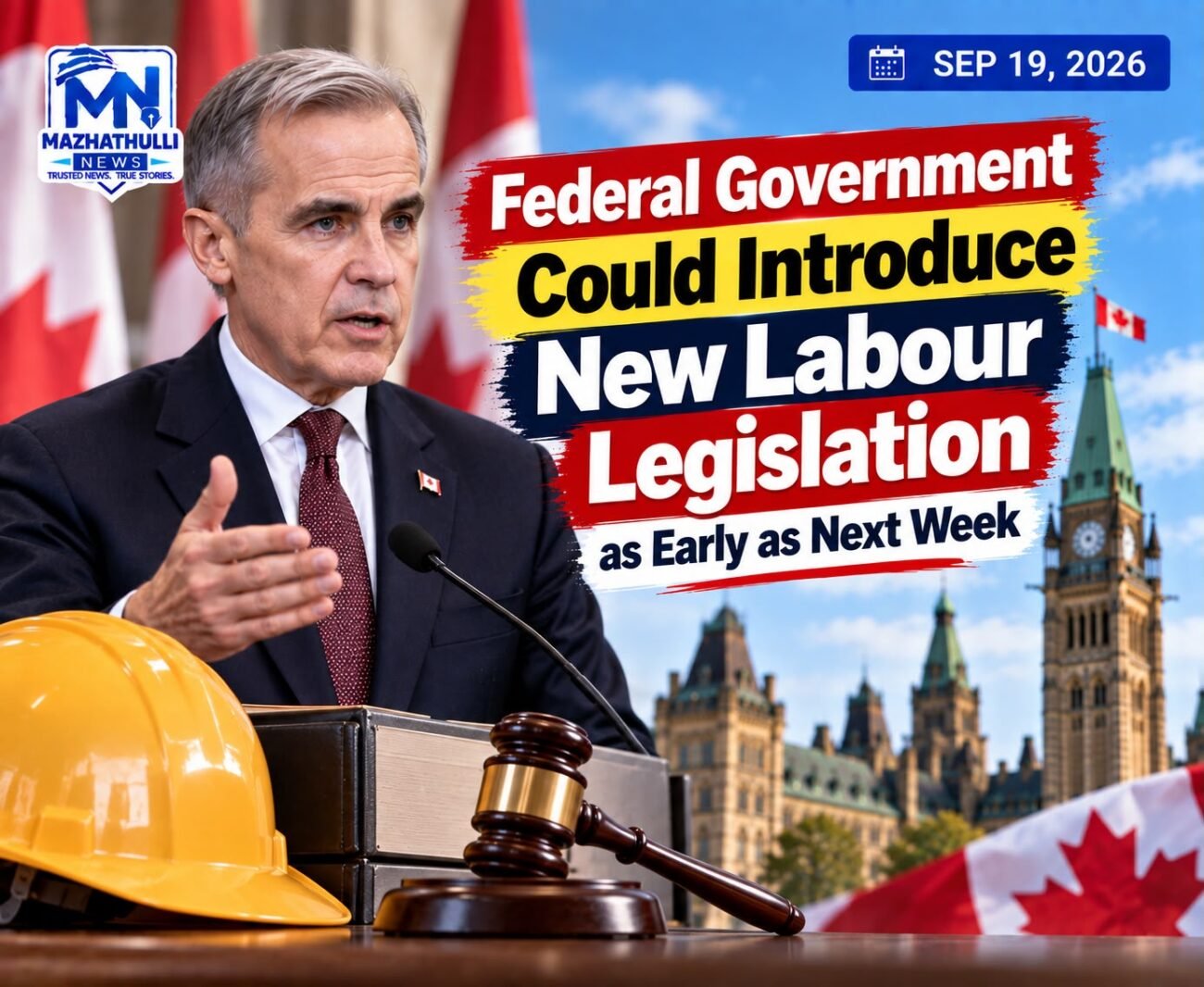
Federal Government Could Introduce New Labour Legislation as Early as Next Week
The federal government could introduce new legislation aimed at modernizing Canada’s labour relations framework as early as next week, according to sources familiar with the discussions. Parliament is scheduled to return for its fall sitting on Monday, with the government considering a number of proposed changes to the Canada Labour Code. The potential legislation follows months of consultations with unions, employers, labour organizations and other stakeholders. The federal government conducted two rounds of consultations this year to gather views on possible changes to labour relations and worker protections.
Among the measures considered during the consultations are changes to the collective bargaining process, expedited grievance arbitration, rules surrounding strikes and lockouts, protections against bad-faith bargaining, and changes related to first collective agreements. The government has also examined stronger protections against wage theft and worker misclassification, as well as additional workplace health and safety measures.
The government released a “What We Heard” report earlier this month outlining feedback gathered during the consultation process. The report said the feedback would help inform efforts to modernize the federal labour relations framework and strengthen protections and supports for workers. The government said legislation is expected to be introduced during an upcoming sitting of Parliament. Jobs and Families Minister Patty Hajdu said Friday that the federal government would not interfere with workers’ fundamental right to strike or bargain collectively. She did not confirm whether legislation would be introduced during the fall sitting, saying the government is still considering its next steps. The issue has attracted different views from labour groups and employers. Unions have called for stronger protections for collective bargaining and the right to strike, while concerns have also been raised about the impact prolonged labour disruptions can have on critical industries, supply chains and the broader economy.
Any legislation introduced by the federal government would still have to go through the parliamentary process, including debate and consideration by the House of Commons and Senate, before becoming law. The precise timing and content of any proposed legislation will depend on the government’s final decisions.