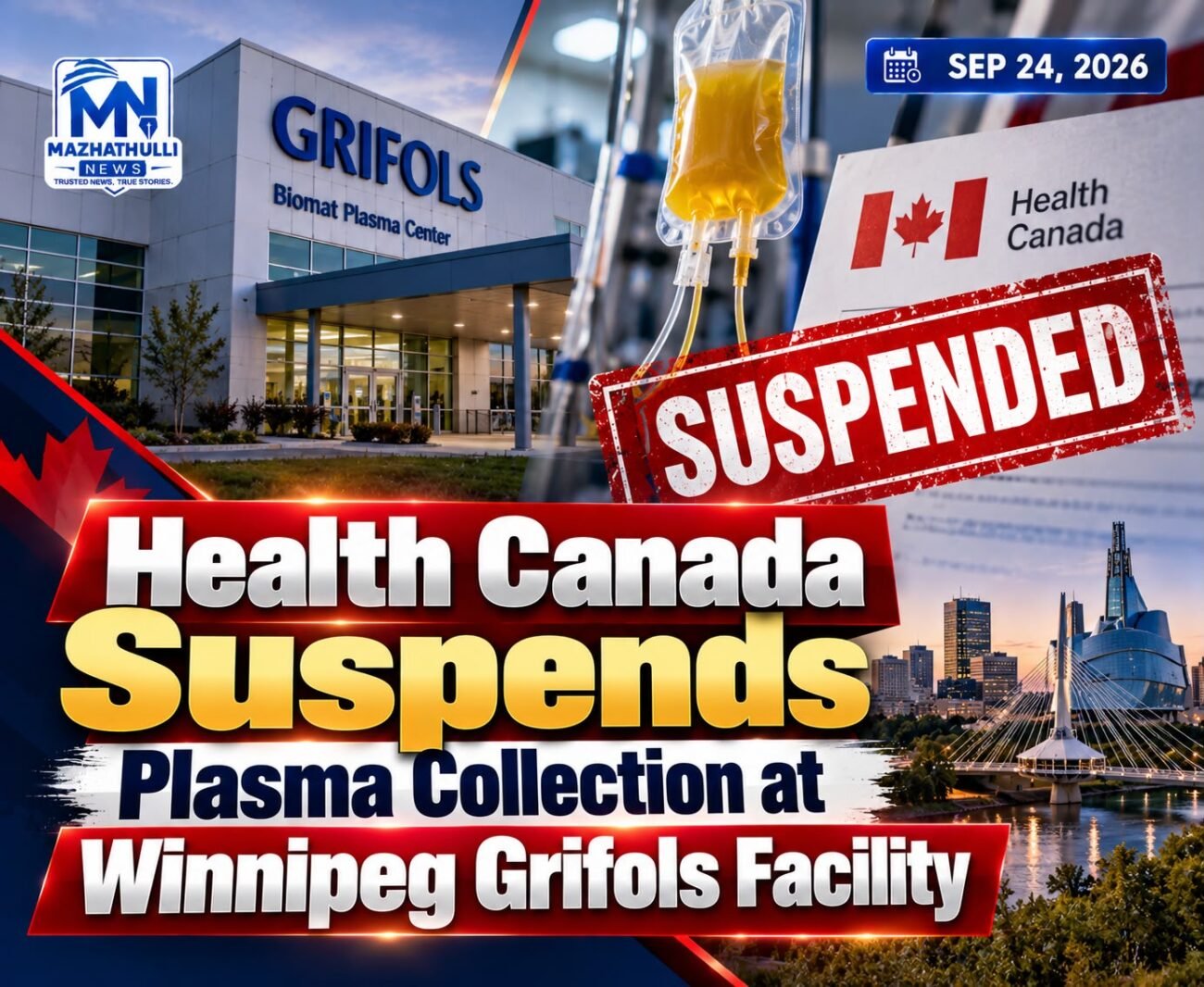
Health Canada Suspends Plasma Collection at Winnipeg Grifols Facility
Health Canada has suspended plasma collection at a Grifols donation centre on Taylor Avenue in Winnipeg, citing ongoing compliance concerns and the company’s failure to demonstrate that the facility has an effective quality management system.
The suspension took effect Wednesday, September 23, after Health Canada determined that Grifols had not adequately implemented required corrective and preventive measures at the facility. The federal regulator said the company had been given opportunities to address deficiencies identified during earlier inspections but had not fully resolved them. Health Canada said the Taylor Avenue facility was found to have deficiencies related to its operations and quality-management practices. The regulator had previously warned the company that its licence could be suspended if the identified problems were not corrected. The latest action follows a series of inspections that began after concerns were raised about the Winnipeg facilities. Health Canada conducted an initial compliance inspection at the Taylor Avenue location in November 2025, followed by additional inspections during the summer of 2026. The department subsequently determined that some corrective actions had not been effectively implemented.
The facility has also faced increased scrutiny after two people died following plasma donations at separate Grifols clinics in Winnipeg.
One of the donors was 22-year-old Rodiyat Alabede, who died in October 2025 after donating plasma at the Taylor Avenue location. A second donor died in January 2026 after donating at Grifols’ Innovation Drive facility. Health Canada has previously said it found no evidence linking the two deaths to the plasma donation process. An autopsy in Alabede’s case identified a pre-existing heart condition and cardiac arrest as the cause of death. Her family has disputed aspects of the findings and has called for further investigation.
Documents reviewed during the investigation indicated that the plasma collection machine used during Alabede’s donation generated an alert that should have prompted staff to stop the procedure. According to the Winnipeg Free Press, staff did not end the donation at that point. The circumstances surrounding the incident remain part of the broader scrutiny of the facility.
Grifols has defended its operations and said donor safety and the quality of collected plasma have not been compromised. The Spain-based company said it has implemented corrective and preventive measures, retrained staff and conducted an extensive review of its Canadian operations.
The company had already voluntarily paused plasma collection at all of its Canadian facilities on August 14, shortly after Health Canada issued a non-compliance rating for the Taylor Avenue site. Grifols described that nationwide pause as a proactive measure and said it was responding to what it called unfounded attention surrounding compensated plasma collection.
The latest suspension is different from the earlier voluntary pause because it is a formal regulatory action by Health Canada against the Taylor Avenue facility. Health Canada said the terms and conditions imposed on Grifols’ licences for its Canadian plasma centres remain in effect. The department will continue working with the company as it develops and implements corrective action plans. Before the Taylor Avenue centre can resume collection, Health Canada said it will verify that the facility meets all applicable regulatory requirements. The department also said it will take further action if necessary.
Grifols said it is working with Health Canada on a plan to reopen its facilities. The company said its goal is to maintain a safe and sustainable supply of plasma for Canadian patients while strengthening its operational oversight and compliance procedures.
The issue has also renewed debate over Canada’s system of paid plasma collection. Grifols operates private plasma donation centres where donors receive compensation. Advocacy groups have called for greater government oversight and, in some cases, for plasma collection to be conducted entirely through publicly operated and voluntary donation systems. Manitoba Health Minister Uzoma Asagwara said the province expects Grifols to address the deficiencies identified by Health Canada before any collection activities resume. The provincial government has also said that all options remain under consideration regarding how paid plasma collection operates in Manitoba.
The suspension does not mean that Canada’s blood supply has been declared unsafe. Health Canada has said the country’s blood and plasma supply remains secure, while Canadian Blood Services has emphasized that serious adverse events associated with blood and plasma donation are rare.
Grifols collects plasma that is used to manufacture plasma-derived medicines, including treatments made from proteins found in donated plasma. Health Canada has clarified that the plasma collected at these facilities is not directly transfused into patients. The federal regulator’s latest decision means the Taylor Avenue centre cannot resume plasma collection until Health Canada is satisfied that the identified deficiencies have been addressed and the facility is operating in compliance with federal requirements. The investigation and regulatory oversight remain ongoing as Grifols works to address the concerns raised by Health Canada.