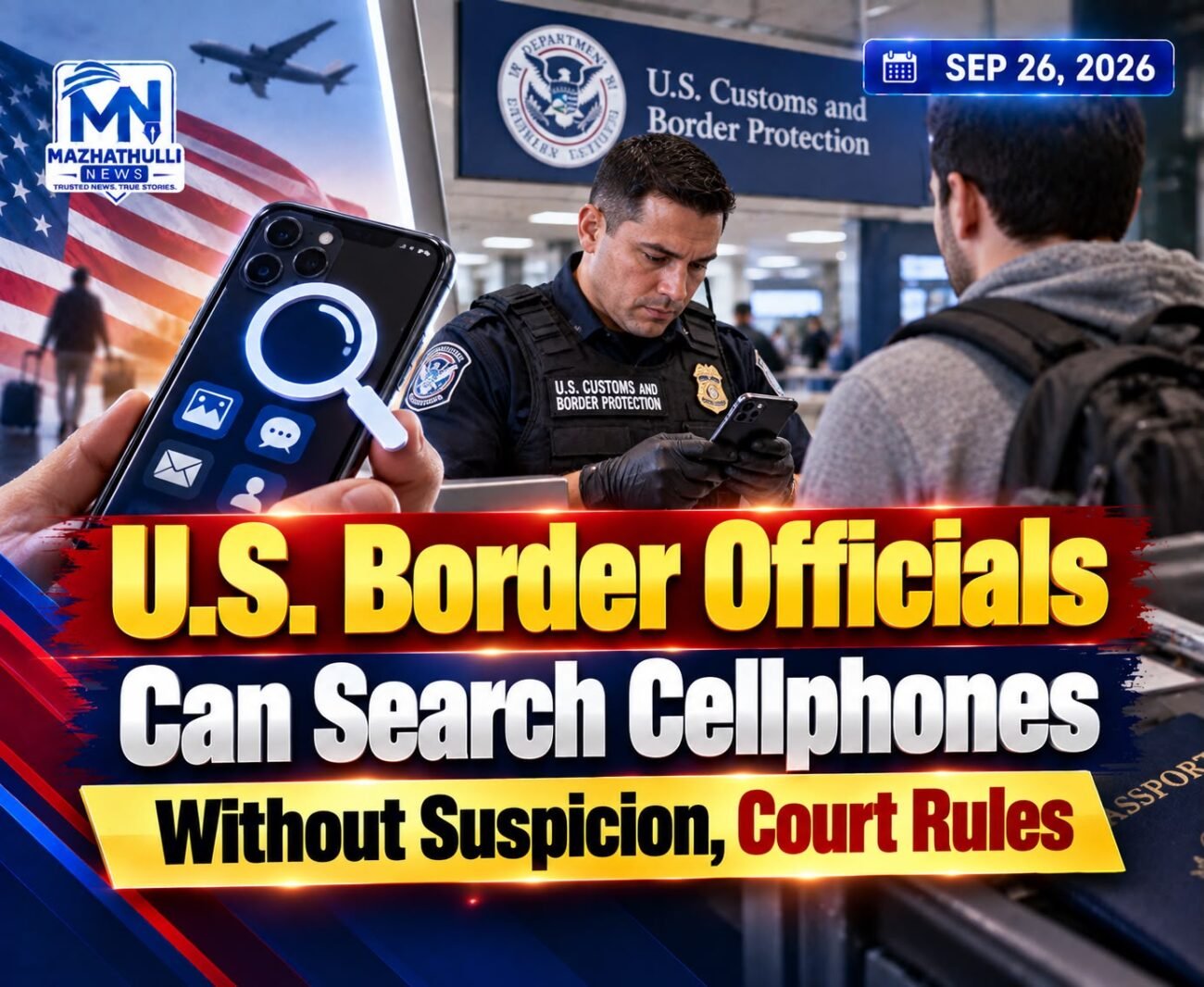
U.S. Border Officials Can Search Cellphones Without Suspicion, Court Rules
Canadians travelling to the United States are being reminded that U.S. border officials have broad authority to inspect electronic devices, including cellphones, following a recent federal appeals court ruling. On Sept. 17, 2026, the U.S. Court of Appeals for the Second Circuit ruled that border officials do not need a warrant or reasonable suspicion to conduct a manual search of a traveller’s cellphone. The decision came from a case involving searches conducted at New York’s John F. Kennedy International Airport. The court found that routine border searches of travellers’ property, including electronic devices, fall within the government’s longstanding border-search authority. The ruling also rejected an argument that the First Amendment creates a separate warrant requirement for cellphone searches at the border. The decision does not mean every traveller entering the United States will have their phone searched. U.S. Customs and Border Protection says electronic-device searches remain relatively uncommon compared with the hundreds of millions of travellers processed at U.S. ports of entry. CBP distinguishes between basic and advanced electronic-device searches. A basic search involves an officer manually examining information stored on the device. An advanced search involves external equipment being used to review, copy or analyse information. Under current CBP policy, advanced searches generally require reasonable suspicion of a violation of law enforced by CBP or a national-security concern, along with supervisory approval. Canada’s official travel advisory warns Canadians that U.S. border officers may search phones, computers and tablets when travellers are entering the United States. Officers do not have to provide a reason when requesting a password to access a device. Refusing to provide access can result in the device being seized, travel being delayed or, for people who are not U.S. citizens, entry being denied. The same rules can apply at Canadian airports where U.S. preclearance facilities operate. Travellers going through preclearance are subject to U.S. entry requirements before boarding their flights and may be interviewed or have their luggage and electronic devices inspected. The Office of the Privacy Commissioner of Canada also advises travellers that U.S. border officials have broad inspection powers over electronic devices. It notes that basic searches can be conducted without evidence of wrongdoing, while more intrusive advanced searches are subject to additional requirements under CBP policy. CBP reported that 55,424 electronic devices were searched among more than 419 million international travellers processed in 2025, according to figures cited in recent reporting. The agency has emphasized that device searches represent a very small proportion of overall traveller processing. For travellers concerned about privacy, Canadian government guidance recommends putting electronic devices in airplane mode before crossing the border. This can help prevent the device from automatically downloading or accessing information stored remotely in the cloud during an inspection. Travellers carrying confidential business information, legal documents or other sensitive material may also want to consider what information is stored locally on their devices before travelling. The legal treatment of privileged and sensitive information can involve additional procedures, but such information does not automatically prevent a border inspection. The recent court decision applies directly within the Second Circuit, which includes New York, Connecticut and Vermont, but it has broader significance because it adds to an ongoing U.S. legal debate over the government’s authority to examine digital information at the border. The ruling specifically addressed manual cellphone searches and did not settle every legal question surrounding more intrusive forensic examinations of electronic devices. For Canadians travelling south, the practical message from Canadian authorities remains that U.S. border inspections can include electronic devices and that travellers should be prepared for the possibility of a cellphone or laptop search.