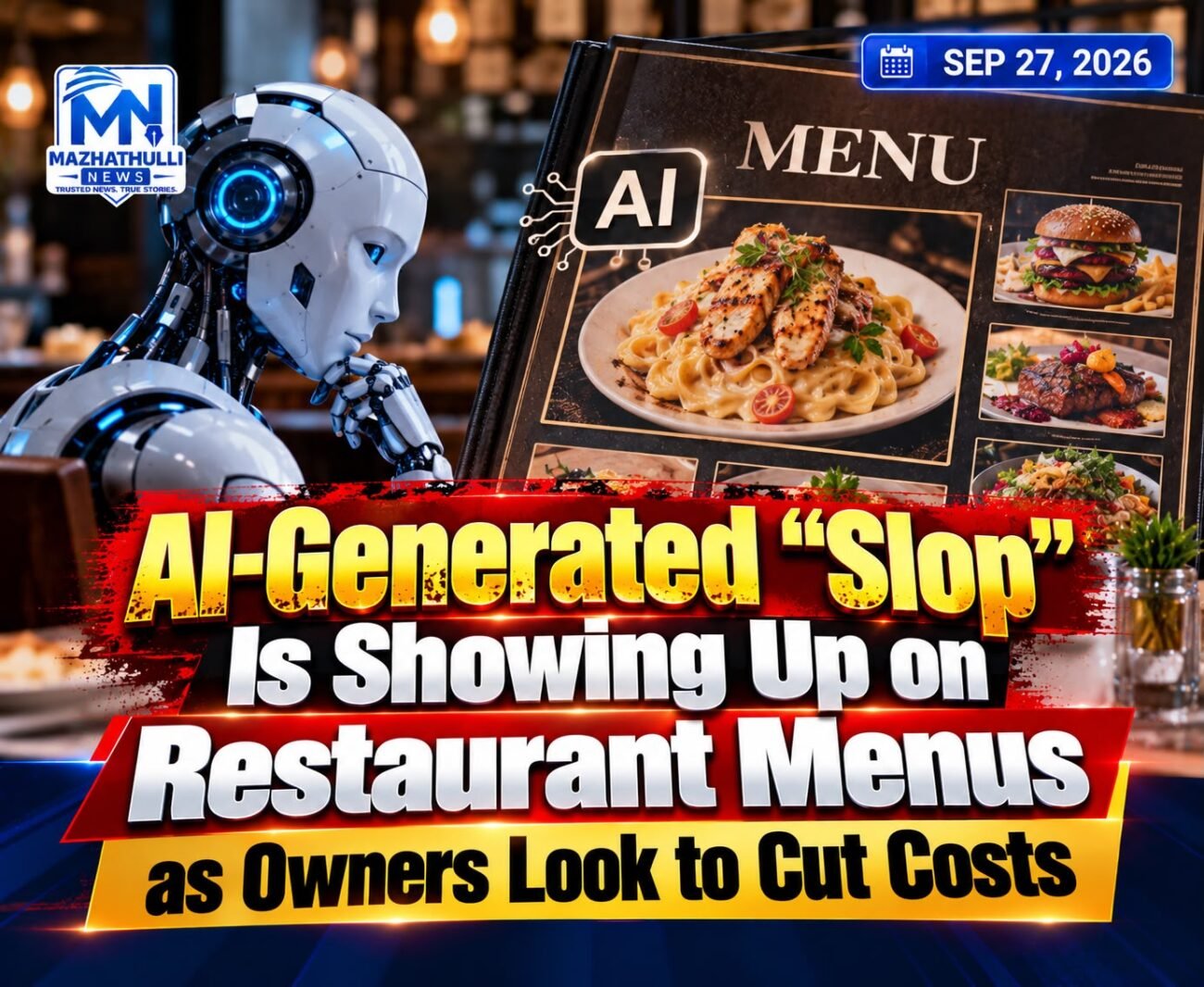
AI-Generated “Slop” Is Showing Up on Restaurant Menus as Owners Look to Cut Costs
Artificial intelligence is increasingly making its way into restaurants, with some owners using AI tools to create menu descriptions, dish names, promotional material and other content in an effort to save time and reduce operating costs.
The trend has also given rise to the term “AI slop,” a phrase commonly used to describe low-quality or generic AI-generated content produced quickly with minimal human editing.
Restaurants are turning to AI at a time when the industry is facing rising food prices, labour costs, rent and other operating expenses. For some independent restaurant owners, AI tools can provide a quick way to produce marketing copy and update menus without hiring professional writers or designers. AI-generated menu descriptions can be created within seconds. Restaurant operators can enter the ingredients or basic details of a dish and ask an AI system to produce a polished description designed to attract customers. Some businesses are also using AI to generate social-media posts, email promotions, advertisements and images for online ordering platforms. However, the growing use of AI has also raised concerns about authenticity and accuracy. Restaurant descriptions generated by AI can sometimes exaggerate ingredients, use unusual wording or describe dishes in ways that do not accurately reflect what customers receive.
Critics say this can make restaurant menus feel increasingly generic, particularly when businesses use similar AI-generated language and imagery. Customers may also have difficulty determining whether photographs used in online menus accurately represent the food. AI-generated images can make dishes appear more elaborate or visually appealing than the actual meals served. For restaurant owners, however, the attraction is largely financial. AI tools can perform tasks that previously required hours of staff time or outside services, allowing smaller businesses to create promotional material quickly and at relatively low cost. The technology is also being used behind the scenes. Restaurants are experimenting with AI for inventory management, demand forecasting, scheduling, customer-service chatbots and analysing sales data. Some operators see AI as an additional tool rather than a replacement for employees. They argue that automating administrative and marketing tasks can allow staff to spend more time preparing food and serving customers.
Others remain cautious, particularly when AI-generated information involves food allergies, ingredients or nutritional information. Errors in those areas could create serious risks for customers. Industry observers say human oversight remains important. AI-generated content can save time, but restaurant owners still need to check descriptions, prices, ingredients, photographs and other information before publishing them. The growing presence of AI on restaurant menus reflects a broader shift in the food-service industry as businesses look for ways to operate more efficiently. While some customers may appreciate clearer and more creative descriptions, others may prefer menus that reflect the restaurant’s own voice and identity rather than computer-generated wording. As AI becomes more common in the restaurant industry, the challenge for owners will be finding a balance between reducing costs and maintaining accuracy, originality and the personal experience that customers expect when dining out.