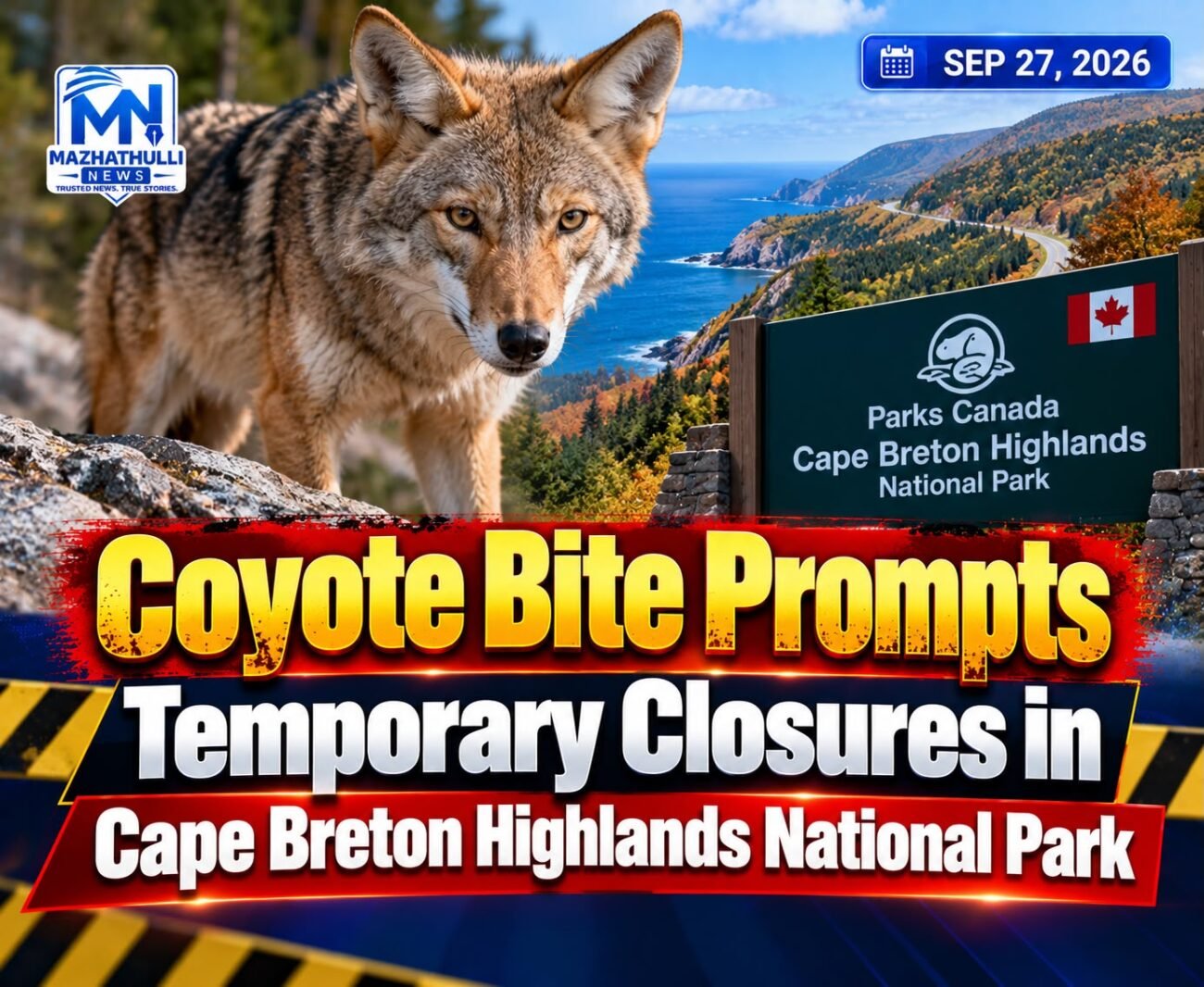
Coyote Bite Prompts Temporary Closures in Cape Breton Highlands National Park
Several areas of Cape Breton Highlands National Park in Nova Scotia have been temporarily closed after a visitor was bitten by a coyote. Parks Canada said the incident happened Thursday evening in the MacIntosh Brook area of the park. The agency has temporarily closed MacIntosh Brook, the Lone Shieling trail, and nearby pull-offs while staff assess the situation. The closures are a precautionary measure as Parks Canada investigates the circumstances surrounding the encounter and assesses wildlife activity in the area. Visitors have been asked to respect the closures and follow instructions from park staff.
Parks Canada has reminded visitors that coyotes are present throughout Cape Breton Highlands National Park and that encounters can occur, particularly around trails, roads and areas where animals may have become accustomed to people or human food. Visitors who encounter a coyote are advised not to run or turn their backs on the animal. Instead, they should remain calm, make themselves appear larger, make loud noises and slowly move away while maintaining distance. If a coyote approaches closely or attacks, Parks Canada advises people to defend themselves, make noise and use available objects to deter the animal. Any encounter should be reported to Parks Canada as soon as possible. The agency also warns visitors never to feed coyotes or leave food and garbage accessible. Animals that become accustomed to human food can lose their natural fear of people and may become more likely to approach visitors.
Parks Canada recommends that hikers travel in groups, keep children close and stay alert for wildlife. Dogs should also be kept on a leash, as they can trigger a chase response and potentially bring an aggressive animal back toward their owners. Coyotes are capable of running at speeds of up to about 65 kilometres per hour, making running away from one particularly dangerous. Visitors are encouraged instead to stand their ground, appear large and make themselves heard. The Cape Breton Highlands National Park is home to a range of wildlife, including coyotes, black bears and moose. Parks Canada says wildlife encounters are an inherent risk when visiting natural areas and encourages visitors to learn about wildlife safety before heading onto trails. The temporary closures will remain in place while Parks Canada staff assess the situation. The agency said further updates will be provided as more information becomes available. Visitors planning trips to the park are encouraged to check the latest Parks Canada notices before travelling and to follow all posted closure and wildlife-safety instructions.