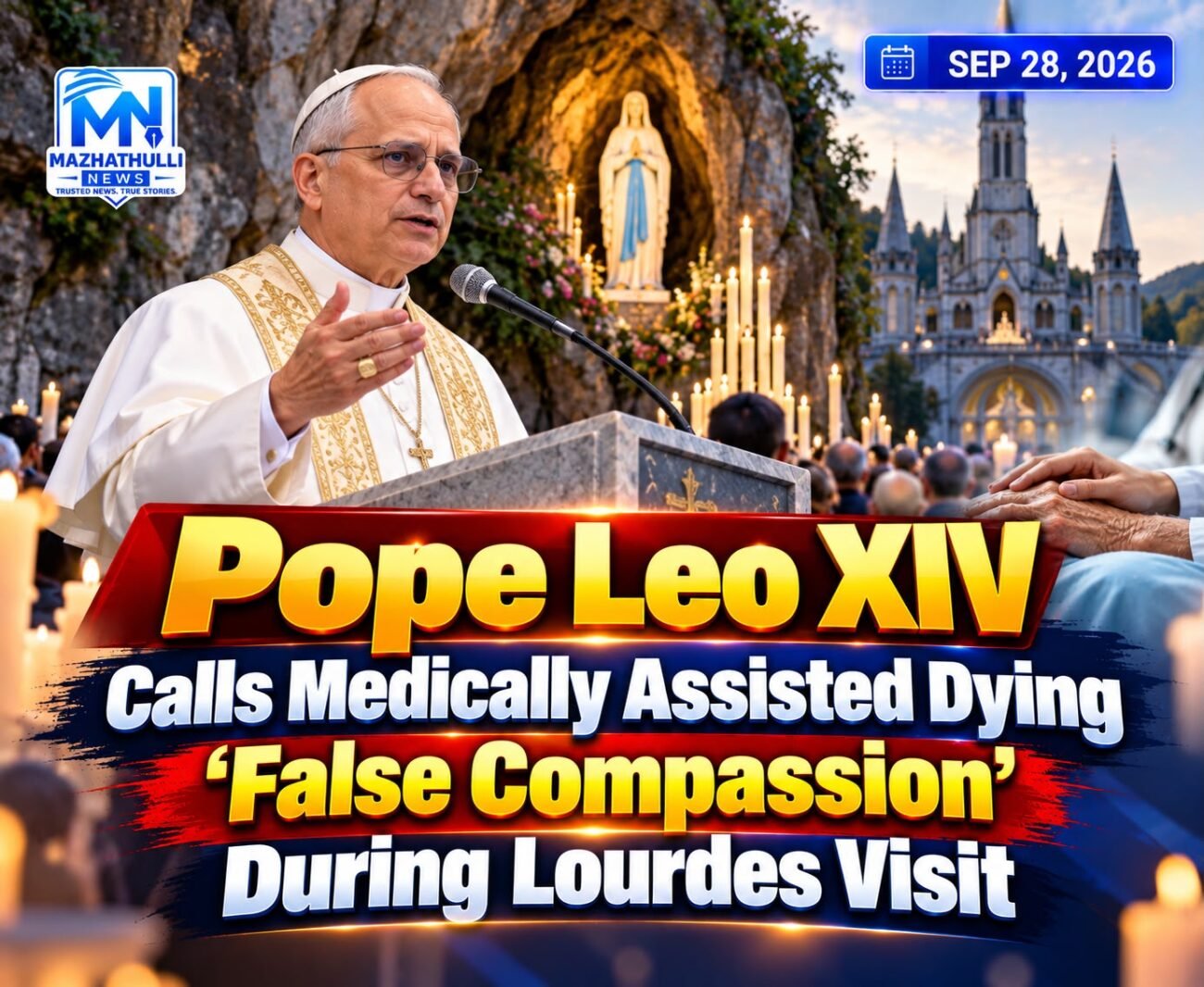
Pope Leo XIV Calls Medically Assisted Dying ‘False Compassion’ During Lourdes Visit
Pope Leo XIV has strongly criticized medically assisted dying, describing it as “false compassion” during his visit to Lourdes in France on Sunday, September 27. Speaking to sick and disabled pilgrims at the Sanctuary of Our Lady of Lourdes, the Pope said that the dignity of a human being cannot be determined by illness, disability, age or suffering. He urged society and the medical community to protect people who are vulnerable rather than treating death as a solution to their suffering. “No human law should ever make you lose the certainty of your dignity,” Leo said. He argued that, because human dignity is inherent, people should reject what he described as the temptation to cause death under the guise of compassion. The Pope also said that “what is legal is not necessarily moral,” directly addressing the debate surrounding laws that permit assisted dying. He called on healthcare professionals to remember what he described as the fundamental purpose of medicine: caring for people who are suffering and accompanying them through illness. Leo’s comments come only weeks after France legalized assisted dying under specific conditions. The legislation followed years of political and public debate over whether people with incurable and serious illnesses should have access to medication that can end their lives. The French legislation has remained controversial. Supporters have argued that it gives people facing unbearable and incurable suffering greater control over decisions at the end of life. Opponents, including the Catholic Church, have raised concerns about the protection of vulnerable people and the role of medical professionals in intentionally ending a person’s life. At Lourdes, Leo emphasized the importance of palliative care, medical support and personal accompaniment for people living with serious illnesses. He urged healthcare workers to become strong defenders of life and to ensure that sick and elderly people do not feel that they are a burden. “You are not a burden,” the Pope told sick pilgrims. “You are the beating heart of our humanity and a precious treasure for the Church.” His message was particularly significant because of the location. Lourdes is one of the world’s best-known Catholic pilgrimage sites and attracts large numbers of sick and disabled visitors each year. The shrine is associated with reported apparitions of the Virgin Mary to Bernadette Soubirous in 1858 and has become internationally known for prayers for healing. Around 150,000 people attended the outdoor Mass celebrated by Leo in Lourdes on Sunday, many of them sick or disabled pilgrims. The Pope used the gathering to emphasize the Catholic Church’s teaching that human life has dignity regardless of a person’s physical condition. Leo’s comments are consistent with the Catholic Church’s longstanding opposition to euthanasia and assisted suicide. The Church teaches that care for people approaching the end of life should include appropriate medical treatment, pain management, palliative care and emotional and spiritual support rather than intentionally causing death. The Pope’s visit to Lourdes is part of a four-day trip to France, during which he has addressed issues including human dignity, abortion, assisted dying, healthcare, peace and the future of Europe. His visit has also included a focus on the Catholic Church’s response to its clergy sexual-abuse crisis. Leo was scheduled to meet privately with seven survivors of clergy sexual abuse in Lourdes, as French survivors and advocacy groups continue to call for stronger accountability and reforms. The debate over medically assisted dying extends well beyond France. A growing number of countries and jurisdictions have introduced forms of assisted dying under different legal frameworks, while others continue to prohibit the practice. The laws vary considerably regarding eligibility, medical assessments, waiting periods and safeguards. Some systems permit physician-assisted suicide, some allow euthanasia, and others permit neither. Leo’s intervention in Lourdes therefore places the Catholic Church firmly on one side of an increasingly international debate about end-of-life care. His central message was that compassion should mean accompanying people through suffering, providing medical and palliative care, and affirming their dignity rather than intentionally ending their lives. The Pope is scheduled to continue his France visit before concluding the trip in Metz, where he is expected to speak about peace, European unity and the future of the continent.