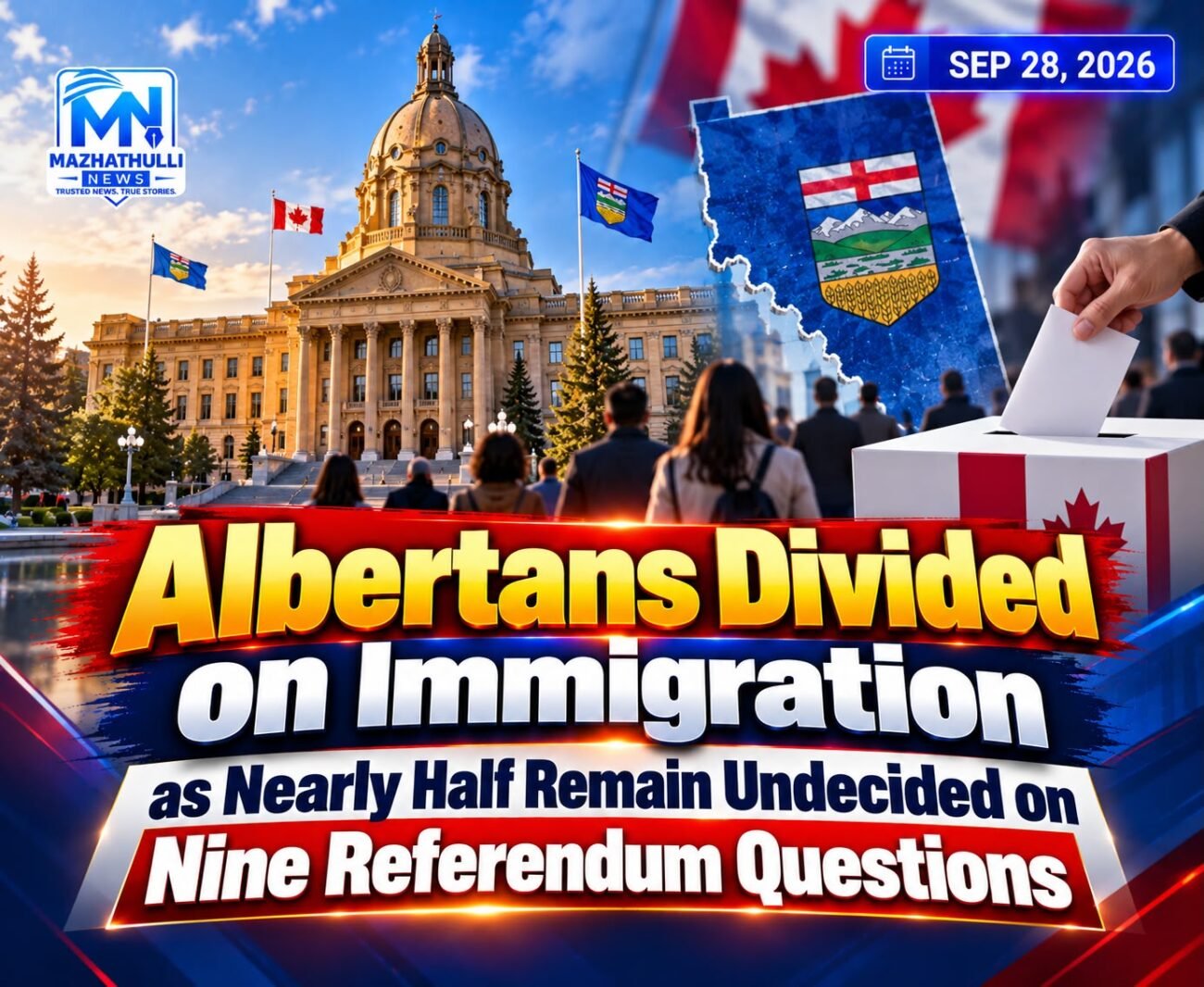
Albertans Divided on Immigration as Nearly Half Remain Undecided on Nine Referendum Questions
Albertans remain divided over immigration policy, while nearly half of voters have not yet decided how they will vote on nine of the 10 questions appearing on Alberta’s October referendum ballot, according to a new poll.
The survey of 1,200 Albertans, conducted between September 8 and 21 by Trend Research under the direction of Janet Brown Opinion Research, found that 54 per cent agree Alberta should take greater control over immigration. That figure is down three percentage points from April. However, the intensity of support has changed. The proportion who strongly agree with greater provincial control fell from 40 per cent to 33 per cent, while those who somewhat agree increased. Pollster Janet Brown described the overall position as a narrow consensus rather than a clear agreement on what specific immigration policies Alberta should adopt.
Five of the nine non-separation referendum questions deal with immigration, while the remaining four concern constitutional changes. The questions are separate from the 10th question, which asks voters whether Alberta should remain a province of Canada or whether the provincial government should begin the legal process required to hold a future binding separation referendum.
The poll found that 49 per cent of Albertans do not yet know how they will vote on the nine questions unrelated to separation.
That uncertainty comes less than a month before the October 19 referendum. At the same time, 75 per cent of respondents said they definitely intend to vote on all nine questions, while 11 per cent said they may skip some of them. The survey also found that 44 per cent of Albertans consider themselves either not at all familiar or not very familiar with the nine questions. The results suggest that many voters intend to make decisions before voting day but have not yet fully considered the wording and potential implications of the individual questions. Another question asked whether Alberta benefits overall from immigration from other countries. According to the poll, 63 per cent strongly or somewhat agreed that immigration benefits the province. However, that figure has declined compared with a similar question asked in 2021. Researchers cautioned that the two surveys were conducted in very different circumstances. In 2021, Alberta was actively promoting itself to newcomers during a period of labour shortages and efforts to attract workers and families to the province. The current debate is taking place amid concerns about housing affordability, population growth, public services and the broader economic environment. The survey also examined attitudes toward access to publicly funded services for temporary residents. About 45 per cent of respondents agreed with the idea of limiting temporary residents’ access to publicly funded health care and education. At the same time, opposition to such measures has also shown some movement, with the share strongly disagreeing increasing compared with the previous poll. The survey did not ask respondents to vote directly on the exact wording of the referendum questions. Instead, it tested broader attitudes surrounding the issues.
The ninth questions are not binding, according to Elections Alberta. They cover proposed changes related to immigration, voting requirements and constitutional matters. The 10th question is also non-binding, but it specifically asks voters to choose between Alberta remaining a province of Canada and the government beginning the constitutional legal process required to hold a future binding referendum on separation. Recent polling has found that voters are considerably more familiar with the separation question than with the other nine questions, which has made the level of uncertainty surrounding the remaining questions a significant feature of the campaign. An earlier Ipsos poll found that 76 per cent of Albertans were aware that the referendum contains multiple questions, while 62 per cent said they intended to vote on all 10.
The latest survey also found differences in familiarity with the nine questions depending on political affiliation. Among respondents who identified with the NDP, 69 per cent said they were very or somewhat familiar with the nine questions. Among those supporting the UCP, 45 per cent reported that level of familiarity. Pollster Janet Brown attributed part of the difference to the amount of public campaigning surrounding the questions. The survey found that only 11 per cent of UCP supporters said they planned to vote yes on all nine questions, while 61 per cent said they were still undecided. Among NDP supporters, 52 per cent said they planned to vote no on all nine. These figures measure current intentions and familiarity rather than final referendum results.
Albertans will vote on all 10 referendum questions on October 19, 2026.
Questions 1 through 9 require voters to select yes or no, while question 10 gives voters two choices concerning Alberta’s future within Canada and the possible start of a constitutional process toward a future binding separation referendum. The latest poll suggests that while many Albertans have formed views on immigration and separation, a substantial portion of the electorate has yet to make decisions on the other referendum questions. With the vote approaching, campaigns and political groups are expected to focus increasingly on explaining the individual questions and their potential implications to voters.