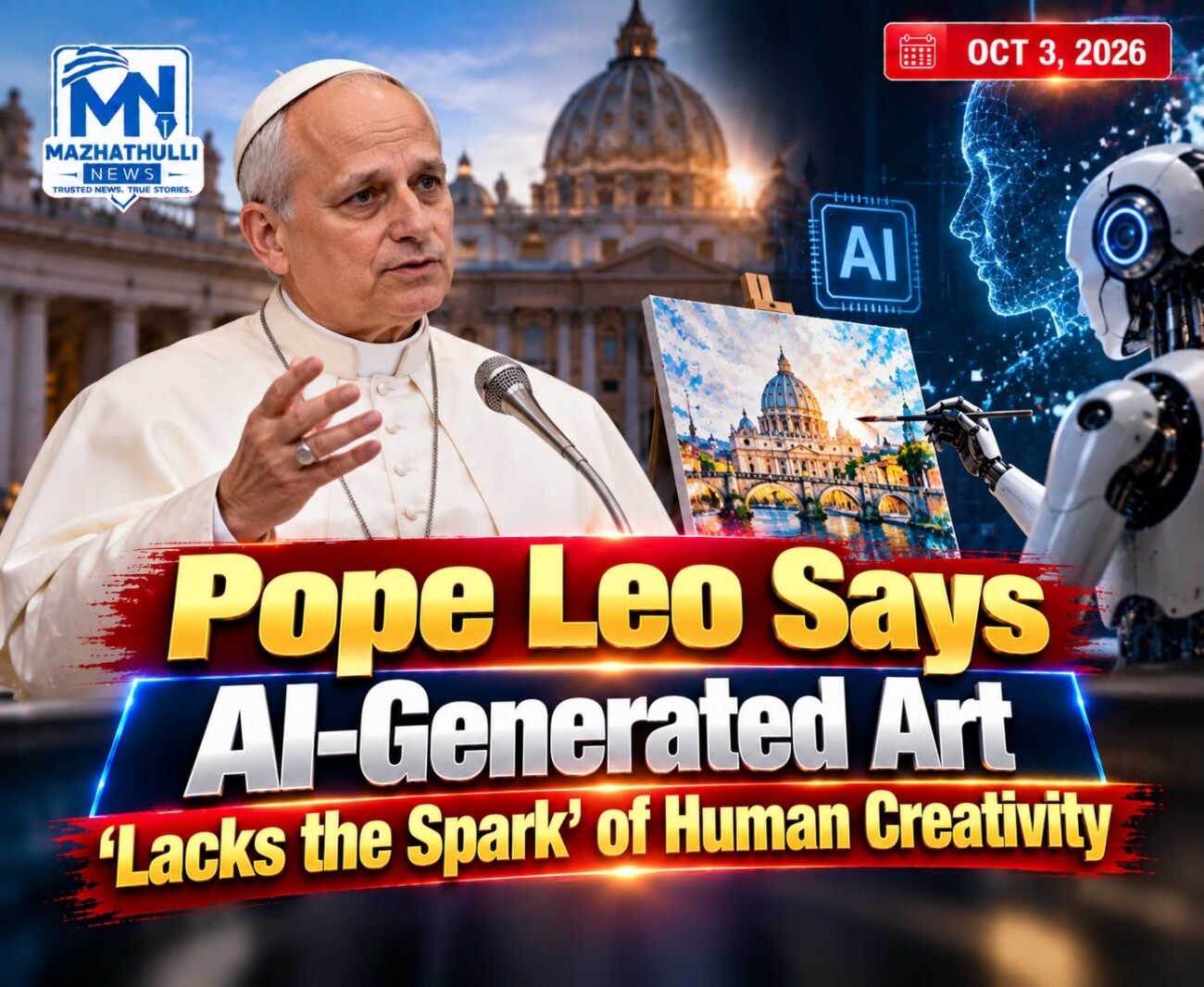
Pope Leo Says AI-Generated Art ‘Lacks the Spark’ of Human Creativity
Pope Leo has raised concerns about the growing influence of artificial intelligence in the creative world, saying that AI-generated content lacks the unique spark that makes human-created art meaningful. His remarks have brought renewed attention to the relationship between technology, imagination and human identity at a time when artificial intelligence is transforming how people create music, paintings, photographs, films and written content. The Pope highlighted the distinction between material generated by artificial intelligence and artistic work produced through human experience, emotions and personal reflection. Although AI tools can create impressive images, compose music and produce written material within seconds, he suggested that genuine creativity involves more than simply generating an attractive or technically impressive result. Human art often carries personal stories, memories, emotions, cultural influences and individual perspectives that give each creation its distinctive character. His comments come as generative AI becomes increasingly common across the global creative industry. Artists, designers, photographers, musicians, writers and filmmakers are experimenting with AI-powered platforms to develop concepts, edit their work and produce new forms of digital content. These technologies are making certain creative processes faster and more accessible, allowing people with limited technical experience to explore artistic ideas. However, the rapid growth of AI-generated material has also raised difficult questions about originality, ownership and the future of creative professions. Artists have expressed concerns about their work being used to train AI systems without permission or compensation. Others worry that businesses may increasingly choose automated content production over hiring human professionals, potentially affecting employment opportunities across the creative sector. One of the central questions is whether artificial intelligence can genuinely be considered creative or whether it is primarily reproducing patterns and styles learned from existing human-made material. AI systems can analyse vast collections of images, music and text to generate new combinations, but the relationship between those outputs and human imagination remains a subject of ongoing debate. The distinction is particularly important in areas such as painting, music and literature, where the meaning of a work often comes from the creator’s personal experiences and intentions. A painting may reflect an artist’s childhood, cultural background or response to a difficult life experience. A song may communicate feelings that are difficult to express through ordinary conversation. A written story may draw on memories, relationships and observations developed over many years. These human elements contribute to the emotional connection audiences often establish with creative work. At the same time, AI technology is not being rejected by all members of the artistic community. Many creators see it as a useful instrument that can support brainstorming, improve editing processes, generate early design concepts and help overcome technical barriers. When used responsibly, these tools can complement human skills and provide new opportunities for experimentation. The broader concern is how to ensure that technology strengthens creativity rather than diminishing the role of the people behind it. The discussion also extends beyond professional artists. Schools, universities and educational institutions are increasingly examining how students should use AI in assignments, research and creative projects. While AI can help learners understand difficult subjects and explore new ideas, educators are also concerned about independent thinking, originality and the development of essential skills. Encouraging students to use technology responsibly while continuing to develop their own ideas has become an important challenge. Pope Leo’s remarks also reflect wider questions about the place of technology in human life. Artificial intelligence is increasingly involved in decisions and activities that were once considered exclusively human, including communication, education, entertainment and creative expression. As these systems become more advanced, discussions about ethics, responsibility and human dignity are becoming increasingly important. The debate is expected to continue as technology companies develop more sophisticated tools capable of producing realistic images, videos, music and other forms of content. Governments and industry organisations are also facing pressure to address copyright protections, transparency and the rights of creators whose work may be used in AI training. Ultimately, the growing use of artificial intelligence does not necessarily mean the end of human creativity. Instead, it raises questions about how people will define originality and artistic value in the years ahead. Pope Leo’s comments underline the importance of preserving human imagination, emotion and individuality as society explores the possibilities of increasingly powerful technology.