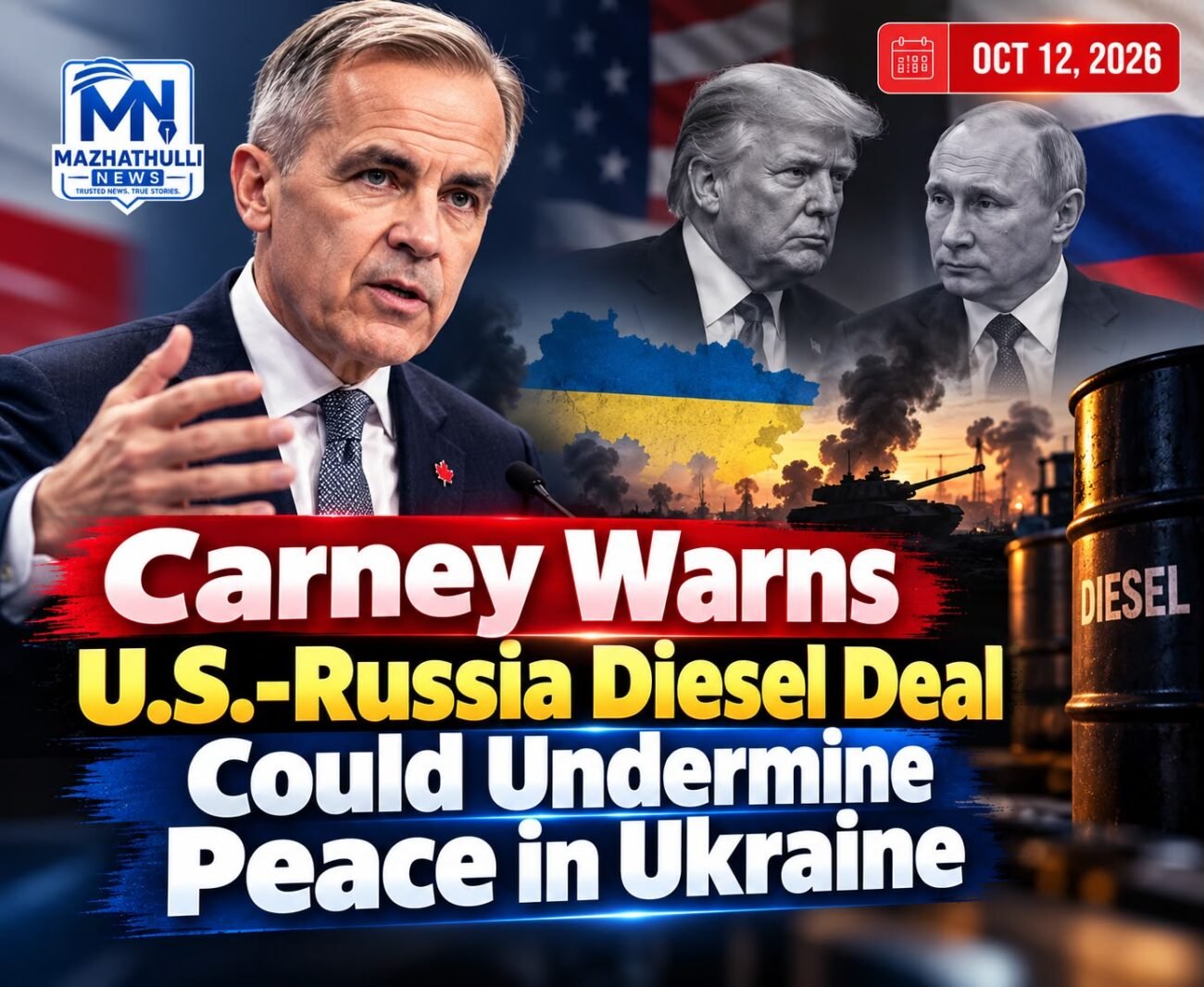
Carney Warns U.S.-Russia Diesel Deal Could Undermine Peace in Ukraine
Canadian Prime Minister Mark Carney has criticised a new diesel supply agreement between the United States and Russia, warning that the deal could undermine international efforts to end the war in Ukraine by providing Moscow with additional revenue to finance its military campaign. Carney raised the issue during a telephone conversation with Ukrainian President Volodymyr Zelenskyy on Sunday, October 11. According to the Prime Minister’s Office, Carney made clear that the agreement runs directly counter to the efforts of Canada, Ukraine and their allies to establish peace and stability in Europe. The agreement was announced by U.S. President Donald Trump following discussions with Russian President Vladimir Putin. Trump said Russia would immediately supply more than 300,000 metric tonnes of diesel to the United States and global markets, with additional shipments expected in the coming months. The Trump administration has temporarily eased sanctions affecting Russian fuel exports to facilitate the arrangement. The move represents a significant shift in U.S. policy, as Washington and its allies have imposed extensive economic restrictions on Russia following its full-scale invasion of Ukraine in February 2022. Trump has defended the agreement as a way to increase fuel supplies and bring down diesel prices for American consumers and businesses. Diesel is essential to trucking, agriculture, construction and freight transportation, meaning high prices can increase operating costs and put additional pressure on household budgets. However, Carney argued that the financial benefits Russia receives from the arrangement could weaken efforts to pressure Moscow to end the war. Canada has maintained that restricting Russian revenues is an important part of its strategy to support Ukraine and encourage a just and lasting peace. Zelenskyy has also criticised the agreement, warning that additional revenue from diesel exports could help Russia sustain its military operations. The Ukrainian president has argued that easing sanctions without meaningful steps toward peace risks strengthening Moscow rather than encouraging it to stop the fighting. The diesel agreement was announced while U.S., Ukrainian and European representatives were holding discussions aimed at developing a common proposal to end the war. The timing has raised questions about coordination among the countries involved in the negotiations and whether economic arrangements with Russia could complicate diplomatic efforts. During his conversation with Zelenskyy, Carney reaffirmed Canada’s support for Ukraine’s sovereignty, independence and territorial integrity. The two leaders also discussed strengthening coordination with international partners to improve Ukraine’s air defences as Russian attacks on Ukrainian energy infrastructure continue. Canada has imposed more than 3,500 sanctions in response to Russia’s actions against Ukraine. Carney said Ottawa would maintain those measures and tighten them where effective to support efforts to secure a lasting peace. Canada has also committed billions of dollars in military assistance and additional funding for Ukraine’s recovery and reconstruction. The dispute has also prompted criticism within the United States. A bipartisan group of U.S. senators has urged Trump to reverse the decision, arguing that the agreement could provide financial support for Russia’s war effort and conflict with existing restrictions on Russian energy trade. The administration has defended its authority to ease the sanctions temporarily, citing the need to address high fuel prices. The agreement’s impact on global diesel prices remains uncertain. Although additional supplies could help increase availability, energy analysts have questioned whether the shipments will be large enough to produce a substantial and lasting reduction in prices. Market conditions are also being influenced by geopolitical tensions, shipping disruptions and broader changes in global energy demand. Trump has separately claimed that Russia and Ukraine had agreed to what he described as an “energy ceasefire.” Zelenskyy said Ukraine supported a halt to attacks on energy infrastructure but was awaiting details of the proposed arrangement. He stressed that Russia would also need to stop its strikes for any such agreement to be meaningful. The disagreement highlights the challenge facing Western governments as they attempt to balance domestic economic pressures with support for Ukraine. While Washington is seeking to ease fuel costs for American consumers, Canada and Ukraine have warned that allowing Russia to earn additional energy revenue could undermine the pressure needed to achieve peace. Carney and Zelenskyy agreed to remain in close contact as discussions with allies continue. The central question now is whether the diesel agreement will remain a limited energy arrangement or become a wider source of tension among countries working to end the war in Ukraine.