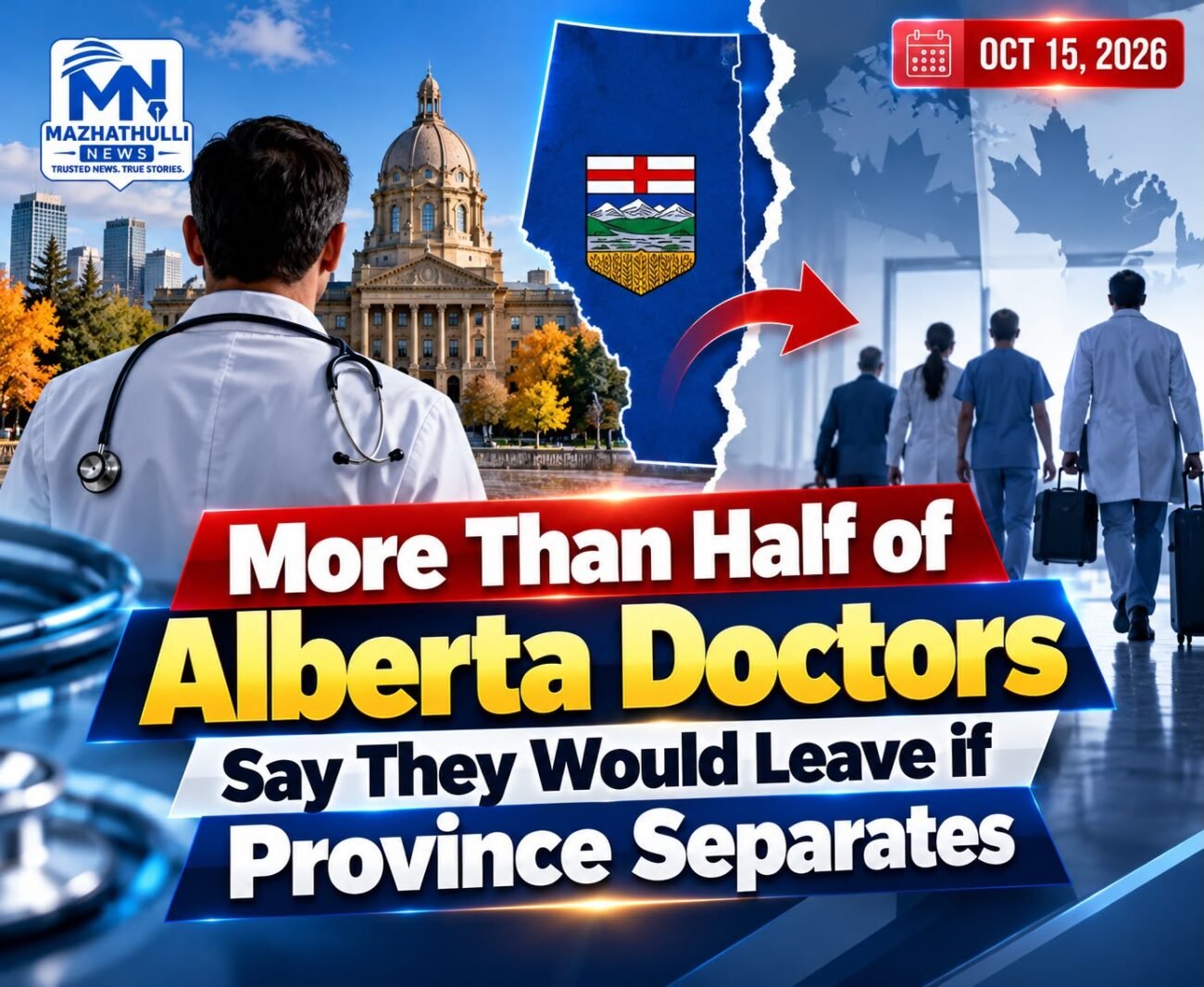
More Than Half of Alberta Doctors Say They Would Leave if Province Separates
More than half of the Alberta doctors who responded to a recent survey say they would leave the province and stop practising there if Alberta separated from Canada, raising concerns about the future of the province’s health-care system. The survey, conducted by the Alberta Medical Association (AMA), found that 55 per cent of the 1,649 physicians who responded said they would move to another Canadian province or territory and discontinue practising in Alberta if the province became independent. The findings were highlighted in a letter from AMA president Dr. Heidi Fell on October 13, amid growing debate over Alberta’s political future. According to the survey, only 15 per cent of respondents said they would continue living and practising in Alberta after separation, while 18 per cent were uncertain about their plans. Another eight per cent said they would retire or leave medical practice earlier than planned, and smaller proportions indicated that they would reduce their practice or move elsewhere. The association stressed that the findings represent doctors’ stated intentions in response to a hypothetical situation rather than a prediction of how many physicians would actually leave if Alberta became independent. Nevertheless, the results have raised questions about the province’s ability to retain its medical workforce during a major political and economic transition. Alberta already faces challenges involving access to family doctors, hospital capacity, specialist appointments and the distribution of physicians between urban and rural communities. A substantial departure of doctors could place additional pressure on hospitals, emergency departments, medical clinics and other essential services, potentially increasing wait times and making it more difficult for patients to receive timely treatment. Rural and remote communities could be particularly vulnerable because recruiting and retaining physicians in those areas is already challenging. The potential impact would depend on how many doctors actually left, how quickly replacements could be recruited and whether an independent Alberta could continue attracting medical professionals from other provinces and countries. The AMA has also raised concerns about the future of health-care funding, access to medicines, medical equipment and services currently supported through federal-provincial arrangements. Alberta is expected to receive approximately $7 billion through the Canada Health Transfer in the 2026–27 fiscal year. If the province separated from Canada, the future of that funding would need to be addressed through negotiations and new financial arrangements. An independent Alberta would have to determine how to fund its health-care system, maintain existing services and manage costs currently shared with the federal government. Questions could also arise regarding pharmaceutical purchasing, medical supply chains, professional licensing, health regulations and cooperation with other provinces. The association has called for greater clarity about how these issues would be handled, emphasizing that health-care planning must account for both funding and the availability of qualified professionals. The AMA has also raised concerns about proposed changes to health-care eligibility for newcomers and temporary workers, as well as the responsibilities doctors could face when a patient’s residency status or insurance coverage cannot immediately be confirmed. Physicians need clear procedures to ensure that administrative uncertainty does not unnecessarily delay medically necessary treatment. The survey comes amid debate over Alberta’s future relationship with Canada and referendum-related questions concerning separation, constitutional arrangements and immigration policy. The association says its objective is to ensure that Albertans understand the possible implications for health services, regardless of the political outcome. While the survey does not establish that all respondents would ultimately leave, it highlights the uncertainty many physicians associate with a potential separation. Their eventual decisions would depend on factors such as the terms of any transition, employment opportunities, professional licensing arrangements, economic conditions and the future organization of the health-care system. If a significant number of physicians were to leave, Alberta could face difficulties maintaining services, recruiting replacements and ensuring continuity of care for patients. The findings underline the importance of physician retention and workforce planning in discussions about the province’s future. The Alberta Medical Association is urging provincial officials to provide clear information about health-care funding, eligibility rules and staffing plans so physicians and patients can understand how medical services would be maintained under different possible outcomes.