Bank of Canada Governor Says Atlantic Canada Is Less Exposed to U.S. Tariffs
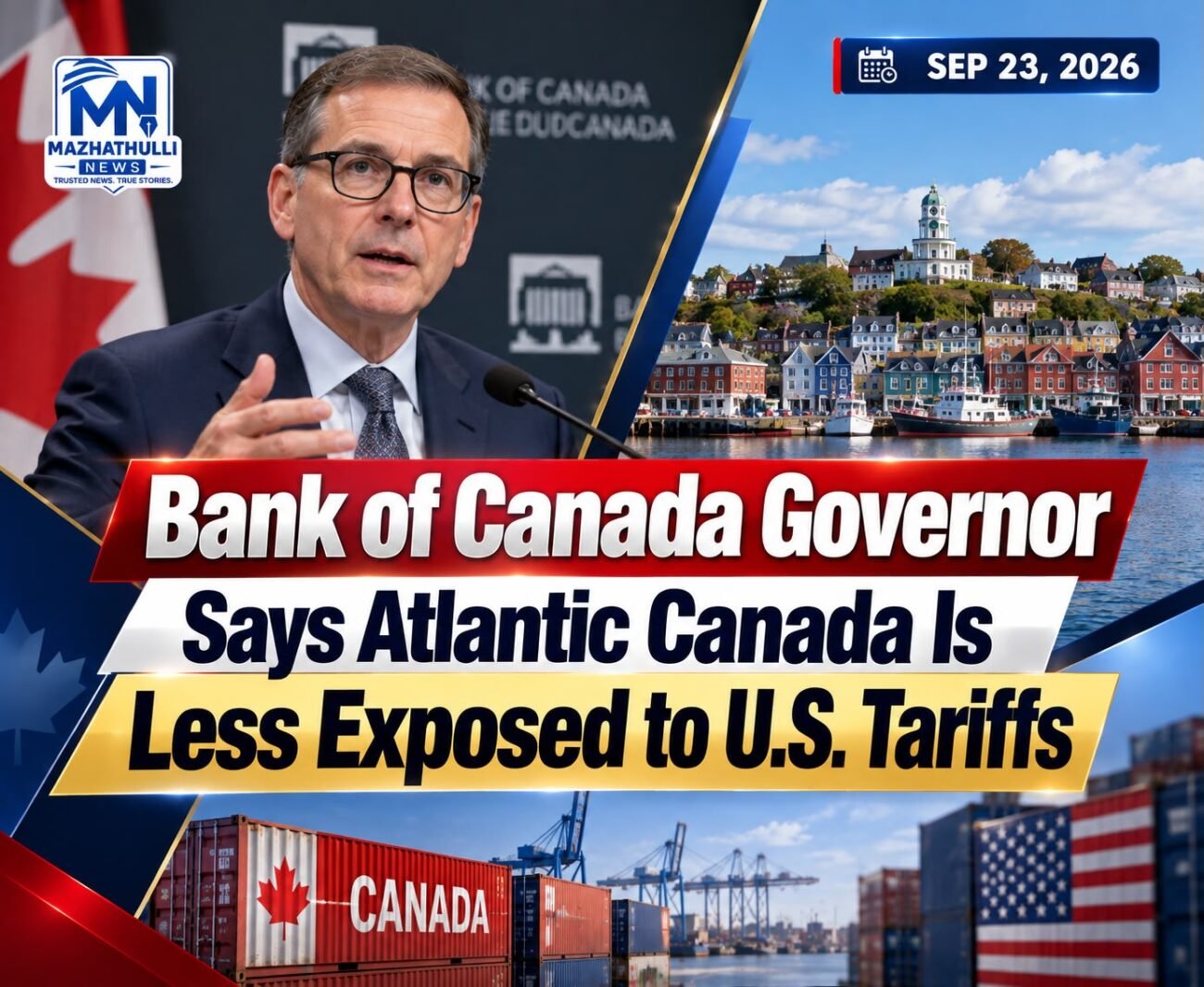
Bank of Canada Governor Tiff Macklem says Atlantic Canada is facing less direct economic exposure to U.S. tariffs than some of the country’s larger central provinces, although residents in the region are experiencing greater pressure from rising energy costs. Speaking in Halifax on Monday, Macklem said provinces such as Nova Scotia are not immune to the effects of renewed Canada-U.S. trade tensions, but their economies are generally less exposed to tariffs than provinces such as Ontario and Quebec.
Macklem said the impact of tariffs varies significantly across Canada depending on the structure of provincial economies and their reliance on exports to the United States. Businesses across the country have been adjusting supply chains, changing sourcing strategies and looking for opportunities in markets outside the U.S. as trade uncertainty continues.
The Bank of Canada says Canadian businesses have already begun adapting to the changing trade environment. In his Halifax speech, Macklem noted that non-energy exports increased significantly in the second quarter, while businesses have also been looking beyond the United States for new customers and markets. Despite the relatively lower tariff exposure, Macklem highlighted another economic challenge facing Atlantic Canada: higher energy prices.
Nova Scotia in particular is being affected by rising oil prices because many households rely on furnace oil to heat their homes. Higher oil and fuel costs can increase household expenses while also adding costs for businesses that depend on transportation and energy. The Bank of Canada is currently dealing with competing economic pressures. Macklem said renewed trade tensions are creating uncertainty that could weigh on economic growth, while higher energy prices are pushing inflation upward. The central bank’s challenge is to assess how long those pressures will last and whether they could have more persistent effects on inflation.
Macklem also pointed to signs of improvement in Atlantic Canada’s economy. He said Nova Scotia’s unemployment rate is below its pre-pandemic level and remains lower than the national average.
The governor also identified several areas where the Atlantic region could see increased investment, including shipbuilding, defence and energy. Major investments in these sectors could contribute to employment, business activity and long-term economic growth across the region.
However, Macklem stressed that attracting investment will require sustained efforts from governments and businesses. He said economic transformation would depend on multi-year commitments and investment rather than short-term measures. The comments come as Canada continues to navigate a more uncertain trade relationship with the United States. Macklem said the latest escalation in trade tensions could cause businesses to delay investment and hiring decisions, potentially slowing economic growth.
At the national level, the Bank of Canada estimates that the products affected by the latest U.S. tariffs represent about five per cent of Canada’s goods exports to the United States. Macklem said the direct impact on the overall Canadian economy is expected to be limited, although sectors directly affected by the tariffs could face significant challenges.
Atlantic Canada is not completely insulated from the trade dispute. Federal government data has previously highlighted the region’s substantial dependence on U.S. markets, with about 73 per cent of Atlantic Canada’s exports going to the United States in 2024. Energy, seafood, forest products, tires and food are among the sectors identified as particularly exposed to changes in U.S. trade policy. Macklem said Canadian businesses are responding by diversifying their markets and supply chains. While the United States is expected to remain Canada’s largest trading partner because of geography and deeply integrated supply chains, he said expanding relationships with other international markets can provide businesses with greater resilience.
The Bank of Canada has kept its focus on maintaining inflation close to its two per cent target while monitoring the effects of trade uncertainty and higher energy prices. Macklem said monetary policy cannot eliminate tariffs or control global oil prices, but the central bank can respond to the broader effects these developments have on Canadian inflation and economic activity.
For Atlantic Canada, the outlook therefore remains mixed. The region may be less directly exposed to U.S. tariffs than some provinces, but households and businesses continue to face higher energy costs and other affordability pressures. At the same time, investment in defence, shipbuilding and energy could create opportunities for the region if governments and businesses maintain long-term investment plans.