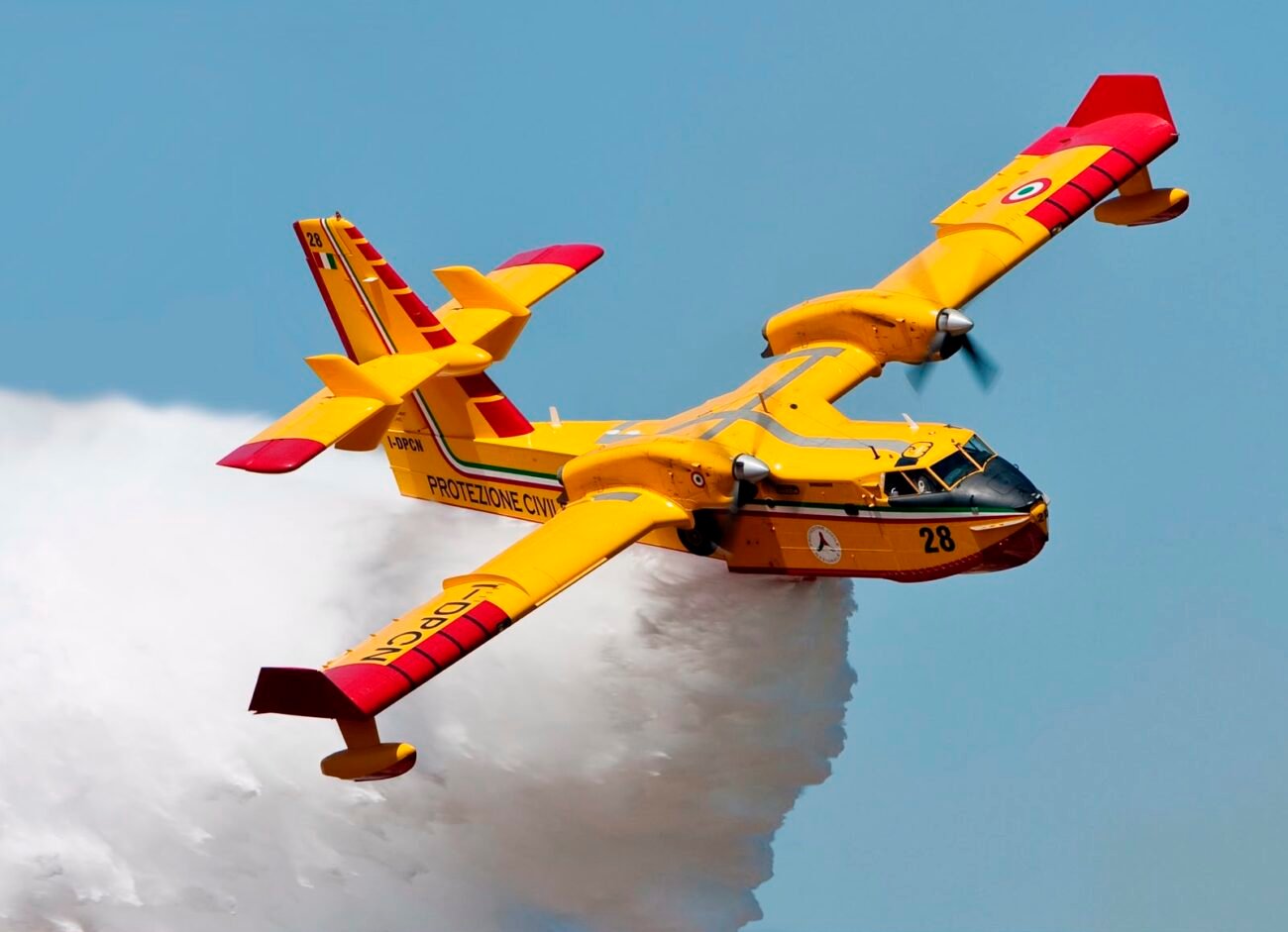
Canadair Water Bombers in High Demand as Global Wildfires Intensify
The escalating number and intensity of wildfires across the globe are fueling unprecedented demand for Canadair water bombers, putting pressure on the manufacturer to increase production as governments race to strengthen their aerial firefighting capabilities.
The aircraft, produced by De Havilland Aircraft of Canada, are among the world’s most effective firefighting planes. Designed specifically for battling wildfires, they can scoop up to 6,000 litres of water from nearby lakes or reservoirs in about 12 seconds before returning to fire zones for repeated drops. Their ability to operate in rugged terrain and rapidly reload makes them a critical asset during large-scale wildfire emergencies.
Demand has surged as countries including Canada, the United States, Greece, France, Portugal, Spain, Australia and several Mediterranean nations continue to experience longer, hotter and more destructive wildfire seasons. Many governments are either expanding their existing fleets or placing new orders to improve emergency preparedness amid worsening fire conditions.
The newest model, the DHC-515 Firefighter, is expected to replace aging Canadair aircraft that have been in service for decades. However, building each aircraft is a complex process that can take several years. Manufacturers continue to face challenges including supply chain disruptions, shortages of specialized components, rising production costs and a limited pool of skilled aerospace workers.
Industry officials say production cannot be increased overnight because these aircraft require highly specialized engineering, rigorous safety testing and certification before delivery. As a result, customers placing new orders may face lengthy waiting periods before receiving their aircraft.
Climate scientists say rising global temperatures, prolonged droughts and increasingly frequent heatwaves have significantly increased wildfire risks in many parts of the world. In recent years, record-breaking fires have destroyed millions of hectares of forest, forced mass evacuations, damaged infrastructure and caused billions of dollars in economic losses.
Experts believe aerial firefighting aircraft will play an increasingly important role in future wildfire response. However, they stress that water bombers alone cannot control large fires and must be used alongside ground crews, improved forest management, early detection systems and wildfire prevention strategies to effectively combat the growing threat.