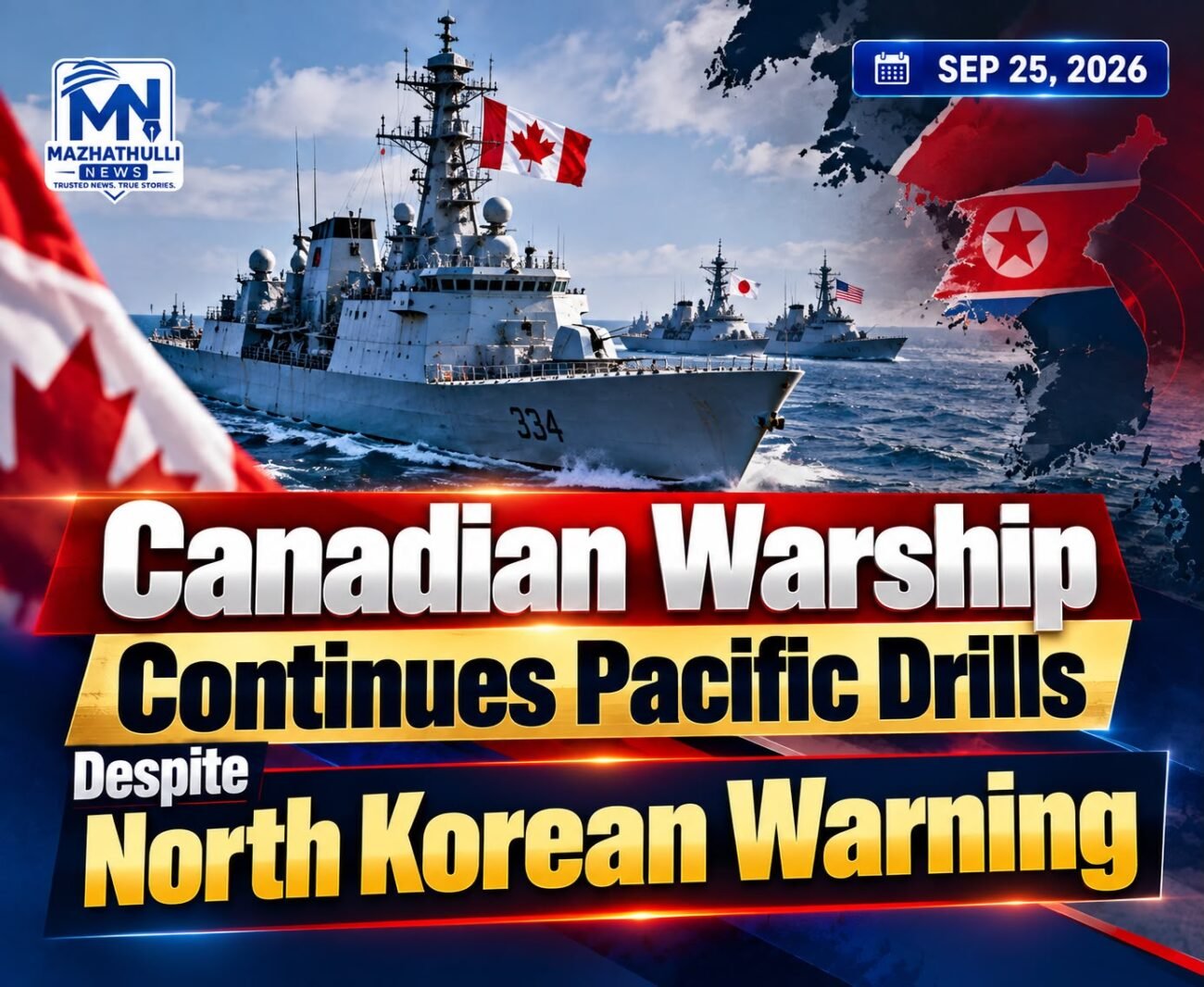
Canadian Warship Continues Pacific Drills Despite North Korean Warning
A Canadian warship is continuing its Indo-Pacific deployment despite a warning from North Korea over multinational military exercises in the region. The Royal Canadian Navy’s HMCS Regina, a Halifax-class frigate, recently completed Exercise Pacific Vanguard 2026, a multinational naval exercise involving Canada, the United States, Japan, Australia and South Korea. The exercise was conducted in the Indo-Pacific as part of efforts to strengthen cooperation and interoperability among participating forces. North Korea has strongly criticized U.S.-led military exercises in the region, describing them as preparations for conflict. Pyongyang has warned that continued military activities by the United States and its allies could trigger what it calls countermeasures. North Korea has also increased its military activity in recent days. On September 20, the country launched two short-range ballistic missiles from its eastern coastal area toward the sea. South Korean authorities said the missiles travelled approximately 450 kilometres and more than 600 kilometres before landing in waters off the Korean Peninsula.
Despite the warnings, the Canadian naval deployment is continuing. Following Pacific Vanguard, HMCS Regina is scheduled to participate in Exercise Keen Sword, a major Japan-U.S. military exercise designed to strengthen cooperation and operational readiness between the two countries and participating partners. The Canadian ship is also expected to support Canada’s broader Indo-Pacific military activities. Canada has maintained a regular military presence in the Indo-Pacific under Operation HORIZON, which involves naval deployments, exercises and engagements with regional partners. The Canadian Armed Forces has said the expanded presence is intended to strengthen relationships with allies and contribute to regional security and stability. Canada also has a separate role in monitoring North Korea-related sanctions through Operation NEON. The operation contributes to an international effort to identify and monitor maritime activities that may violate United Nations sanctions, including suspected ship-to-ship transfers involving prohibited goods. Canadian warships have previously conducted surveillance and enforcement-support activities in the East China and Yellow seas as part of Operation NEON. HMCS Vancouver, for example, carried out maritime surveillance operations during a previous deployment, working with allied aircraft and ships to identify vessels of interest.
The latest deployment comes at a time of heightened military tensions on the Korean Peninsula. North Korea has repeatedly objected to joint military exercises involving the United States and its allies, while South Korea, Japan, Canada and other participating countries maintain that their exercises are intended to improve defensive capabilities and coordination.
The Pacific Vanguard exercise itself involved forces from several Indo-Pacific partners and focused on maritime cooperation and operational coordination. Canada’s participation reflects Ottawa’s broader effort to increase its military presence in the region.
For HMCS Regina and its crew, the current deployment is part of a wider Canadian commitment to maintaining a persistent presence in the Indo-Pacific. The ship’s continued activities demonstrate that Canada’s planned exercises with regional partners are proceeding despite North Korea’s public warnings. The developments also come as North Korea continues to expand its missile and nuclear capabilities. Pyongyang has said it considers strengthening its military deterrence a sovereign right, while the United States and its allies have repeatedly called on North Korea to comply with United Nations Security Council resolutions.