Carney Calls for Canadian Unity Ahead of Alberta Separation Vote
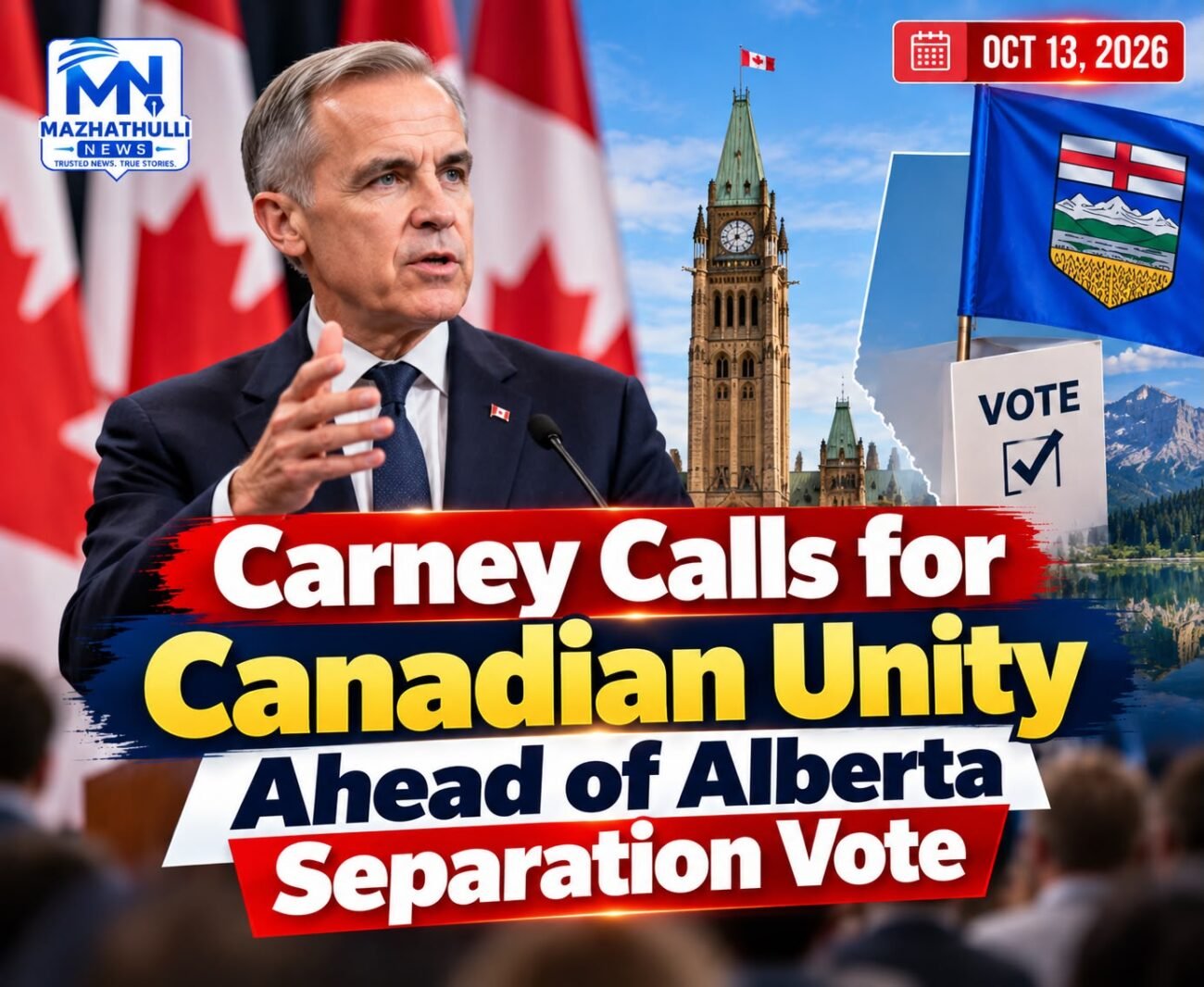
Canadian Prime Minister Mark Carney has urged Albertans to remain part of Canada, warning that pursuing separation would trigger a long and uncertain process at a time when the country faces significant economic and security challenges. In his Thanksgiving message on Monday, October 12, Carney highlighted the importance of national unity ahead of Alberta’s October 19 vote. The ballot will ask voters whether the provincial government should begin the legal process required to hold a future binding referendum on Alberta’s possible separation from Canada. “This year, Thanksgiving is a bit different,” Carney said, noting that Albertans were approaching an important decision about the province’s future. He warned that moving towards separation would create uncertainty for Alberta and the country as a whole. The prime minister stressed that Canada faces mounting challenges, including trade tensions with the United States, economic uncertainty and broader security concerns. He argued that cooperation between provinces and the federal government would be essential to addressing these issues and maintaining Canada’s economic strength. “We can’t achieve any of this if we’re divided. You can’t build big things on fault lines,” Carney said, referring to major infrastructure and economic development projects. He added that Canada must remain strong and that the country is stronger when its provinces work together. Carney pointed to proposed major projects, including a pipeline connecting Alberta’s oil-producing region to the West Coast, as examples of what cooperation could achieve. The proposed infrastructure is intended to expand export opportunities and reduce Canada’s dependence on the United States as its principal oil market. He also highlighted housing construction and plans for high-speed rail as examples of projects that require cooperation and long-term planning across provincial boundaries. According to Carney, political division could make it more difficult to advance initiatives intended to strengthen the national economy. “Generations of Albertans helped build this country,” Carney said in his message, adding that Canada was worth fighting for. The prime minister grew up in Edmonton and has repeatedly emphasized Alberta’s role in the country’s economic development. The October 19 vote follows years of growing frustration among some Albertans over federal energy and environmental policies, fiscal arrangements and what separatist supporters describe as unfair treatment of the province by Ottawa. Supporters of separation argue that Alberta needs greater control over its natural resources and economic decisions. However, Alberta Premier Danielle Smith has said she supports the province remaining in Canada, even as her government proceeds with the vote. She has acknowledged the concerns driving the independence movement while arguing that Alberta can pursue its interests through negotiations with the federal government. The upcoming ballot will not itself make Alberta independent. Instead, voters will decide whether the provincial government should initiate the legal process for a future binding referendum on separation. Any attempt by a province to leave Canada would involve significant constitutional and legal questions. In its 1998 ruling on Quebec secession, the Supreme Court of Canada determined that a province could not unilaterally separate from the country. A clear vote on a clear question in favour of separation would require negotiations within the Canadian constitutional framework, rather than automatically resulting in independence. The debate is taking place against the backdrop of strained Canada-U.S. relations, including trade disputes and repeated statements by U.S. President Donald Trump about making Canada the 51st American state. Carney has argued that national unity is particularly important as Canada works to protect its economic interests and sovereignty. As the vote approaches, Alberta’s political future has become a central issue in the national debate. The result could shape relations between Edmonton and Ottawa, influence discussions about resource development and federal policy, and determine whether the province moves towards a more extensive constitutional confrontation. Carney’s Thanksgiving message was a direct appeal for cooperation, presenting national unity as essential to Canada’s future economic and security priorities. Albertans will make their decision at the polls on October 19, with the outcome determining whether the province begins the process of considering a future separation referendum.