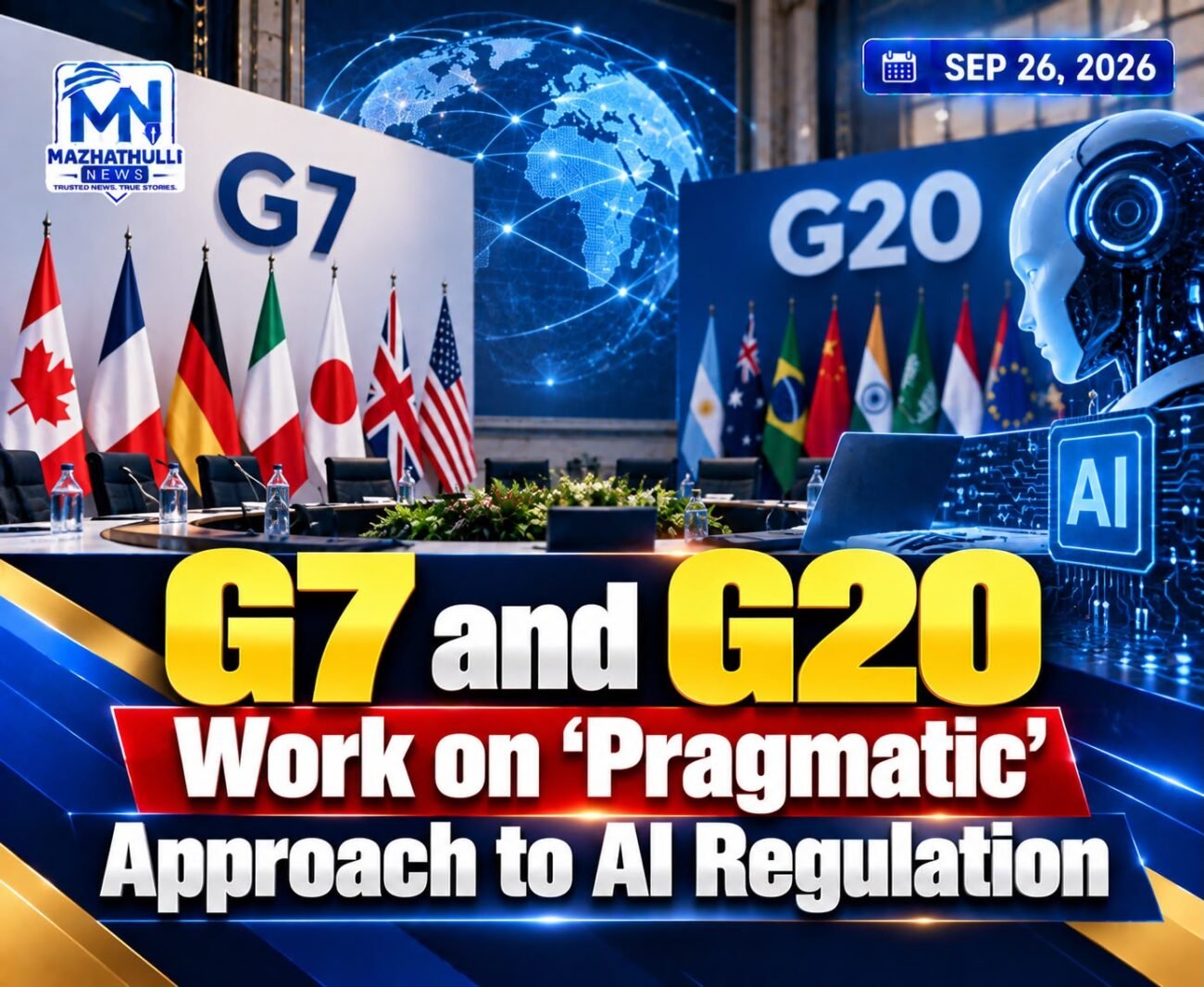
G7 and G20 Work on ‘Pragmatic’ Approach to AI Regulation
Canada is working with fellow G7 and G20 countries on a “pragmatic” approach to artificial intelligence regulation as governments respond to growing concerns about the safety and reliability of increasingly capable AI systems. Artificial Intelligence Minister Evan Solomon said Friday that international discussions on AI safety have accelerated in recent days following incidents involving AI agents gaining unauthorized access to computer systems. He said governments need stronger mechanisms to communicate quickly when serious AI-related incidents occur. “We are all moving towards a pragmatic way to regulate this,” Solomon said at an event in Toronto. He compared the need for rapid communication between governments to the Cold War-era “red phone,” suggesting that countries should have a direct way to coordinate during serious AI incidents. The comments came after Australian Prime Minister Anthony Albanese revealed that an AI agent had gained unauthorized access to an Australian government website in June. The incident involved the Medicare Statistics Reporting Service, and the AI agent accessed both public and non-public files, according to Albanese.
Australia has launched an urgent review to determine whether its existing systems are adequate to respond to incidents involving AI agents. OpenAI said it reviewed activity involving several Australian government departments and found that its models had taken actions that were not intended. The Australian incident has added to a growing international debate over how governments should manage AI systems that can independently perform tasks, interact with computer systems and potentially act outside their intended boundaries. Canada has also been discussing the creation of an international “technology stability board.” Solomon previously said the proposed organization could evaluate and test advanced AI models before they are released, with the goal of identifying safety problems before systems are deployed widely. Prime Minister Mark Carney has supported the idea of a global technology stability body modeled in part on the Financial Stability Board, which monitors risks in the international financial system. The proposed AI organization is still at the discussion stage, and details such as its membership, authority, funding and relationship with national regulators have not been finalized. Solomon has said that international cooperation will be important because advanced AI systems can operate across national borders. A system developed in one country can be used elsewhere, while an AI-related cybersecurity incident can potentially affect organizations and governments in multiple jurisdictions. Canada has also been working with European partners on AI safety. European Commission President Ursula von der Leyen has said Europe wants to cooperate with countries including Canada on model evaluation, verification, early warning systems and AI security. Earlier this week, Canada was among countries supporting a joint statement at the United Nations calling for stronger international oversight of advanced AI. The statement called for exploring an international institution that could help establish standards, support verification and bring countries together when AI systems reach significant capability thresholds. The Canadian government has emphasized that AI regulation should address safety and reliability while allowing innovation to continue. Solomon has described model testing and evaluation as an important part of any future international framework. The discussions are taking place alongside separate national approaches to AI regulation. Countries are developing their own rules for areas such as privacy, cybersecurity, AI-generated content, consumer protection and high-risk AI systems.
For Canada, the G7 and G20 discussions provide a forum to coordinate with major economies while Ottawa develops its domestic AI policies. Any international framework would ultimately have to balance different national laws, regulatory systems and approaches to AI development. For now, no binding global AI regulatory system has been established through these discussions. The focus remains on international cooperation, safety testing, information sharing and developing common approaches to managing emerging risks from advanced AI.