Higher gas prices pushed inflation up to 2.8% in April, says StatCan
Consumer inflation surged last month to 2.8 per cent compared to a year earlier, with higher gas prices being the primary driver, according to Statistics Canada.
The latest Consumer Price Index (CPI) for April was up 0.4 per cent compared to the March report of 2.4 per cent for year-over-year inflation.
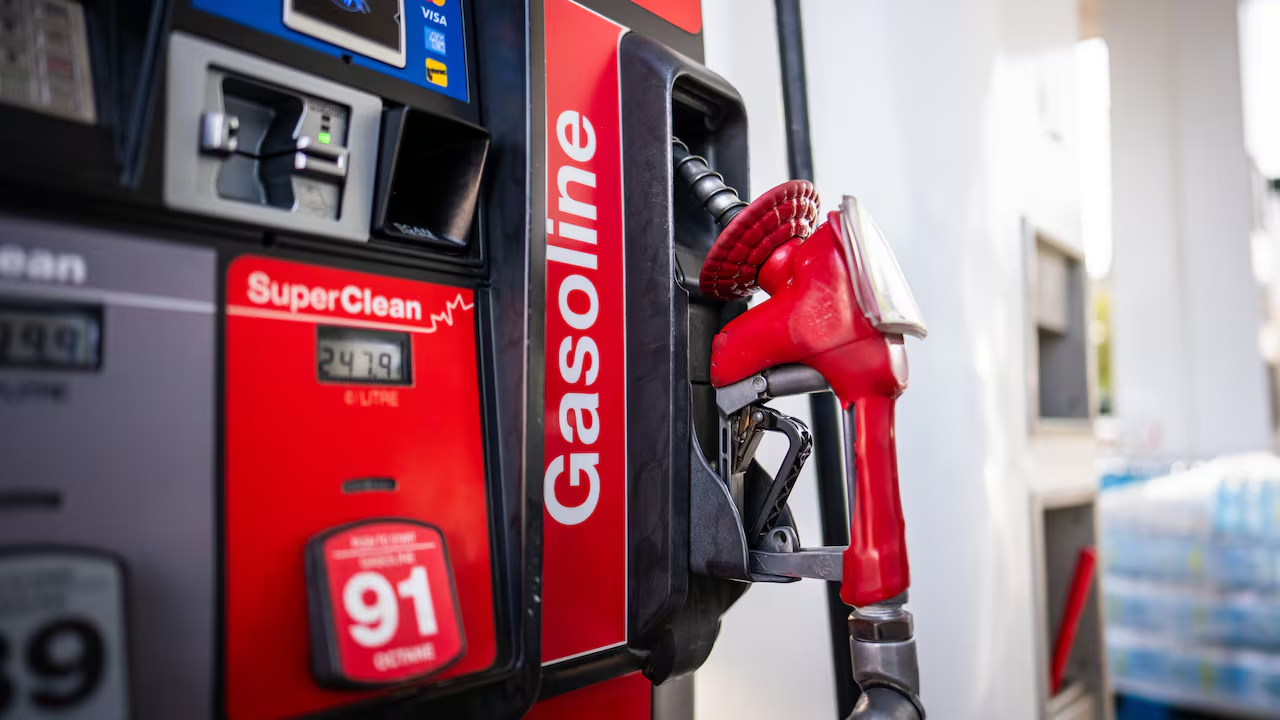
This comes as the war in Iran, and specifically the closure of the Strait of Hormuz, has led to several months of global uncertainty for oil markets. Consumer gas prices in Canada have spiked since the conflict began, and are close to breaking all-time highs.
Statistics Canada notes that consumer prices for fuel and oil increased sharply last month “amid higher [crude] oil prices linked to the conflict in the Middle East.”
Finance Minister François-Philippe Champagne said Tuesday that he understands how affordability continues to be a challenge for Canadians amid the Iran war.
“We understand that all of these challenges that are affecting the world economy also have an impact on Canadians and on affordability,” Champagne told reporters while attending a meeting of G7 finance ministers and central bank governors in France.
“You can talk about the world economy and balances, the challenges in the Strait of Hormuz. If you talk to people on the street, that translates to them into affordability.”
Champagne added: “I can say my colleagues [at the G7 meeting] understood that, because it’s translating into the daily lives of people where they’re concerned about the end of the week and the end of the month.”
A higher inflation reading could also put pressure on the Bank of Canada to raise borrowing costs in the months ahead, as the central bank’s target range for CPI is between one and three per cent.
Some experts believe the underlying trend for inflation in Canada should keep the Bank of Canada on pause.
“Inflation of 2.8 per cent will be the headline today, but when you peel out rising gas costs, inflation in Canada is still right where the Bank of Canada wants it to be,” said personal finance expert Clay Jarvis at NerdWallet Canada in a statement.
“There’s fear that high fuel costs will bleed into other prices, but that hasn’t happened to a significant degree.”
All measures of core inflation, which excludes volatile sectors like food, gas and energy prices, actually showed slight year-over-year declines in April.
For example, Statistics Canada says when stripping away gasoline from the report, CPI was two per cent in April compared to a year ago, and that’s lower than the March reading of 2.2 per cent. It adds that April saw gas prices increase by 28.6 per cent after a 5.9 per cent gain in March.
The bank tends to focus on core measures of inflation when updating monetary policy and interest rates because they highlight key underlying trends in consumer prices.
“So long as inflation is largely gas-related, the Bank of Canada is likely to look through it and keep interest rates at their current levels when they make their overnight rate decision in June,” said Jarvis.