Magnitude 7.7 Earthquake Strikes Off Indonesia, Killing at Least Two and Damaging Buildings
A powerful 7.7-magnitude earthquake struck off Indonesia’s eastern coast on Friday, killing at least two people, injuring several others, and damaging buildings across multiple communities, according to Indonesian authorities.
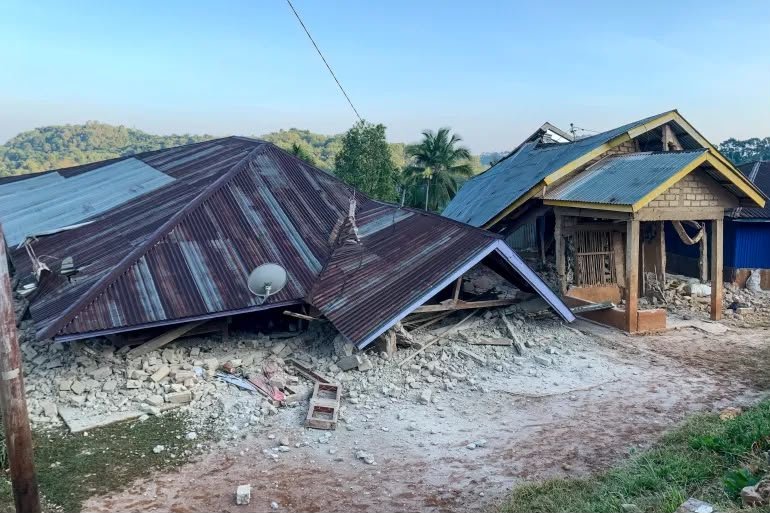
The earthquake struck offshore in the early afternoon at a shallow depth, generating strong tremors that were felt across several islands in eastern Indonesia. Panicked residents fled homes, schools, hospitals, offices, and shopping centres as the ground shook for several seconds. Videos shared on social media showed damaged buildings, fallen debris, cracked roads, and people gathering in open spaces as emergency sirens sounded.
Indonesia’s National Disaster Management Agency (BNPB) said at least two people were confirmed dead, while a number of others sustained injuries. Rescue teams, police, military personnel, and medical workers were immediately deployed to the affected areas to search for victims, provide emergency medical assistance, and assess the extent of the destruction. Authorities warned that the casualty figure could rise as communication is restored with remote communities.
The earthquake also caused structural damage to homes, public buildings, and other infrastructure, with power outages and temporary disruptions to telecommunications reported in several districts. Engineers have begun inspecting schools, hospitals, bridges, and government buildings to determine whether they are safe for public use.
Following the quake, the Indonesian Meteorology, Climatology and Geophysics Agency (BMKG) issued a tsunami warning for parts of the eastern coastline and urged residents in low-lying coastal areas to move to higher ground. The warning was lifted several hours later after sea-level monitoring indicated there was no significant tsunami threat.
Indonesia sits on the Pacific Ring of Fire, one of the world’s most active seismic zones where several tectonic plates meet. The country experiences frequent earthquakes and volcanic eruptions, making it one of the most disaster-prone nations in the world. Officials have urged residents to remain vigilant, avoid damaged buildings, and be prepared for possible aftershocks while emergency response and damage assessment operations continue.