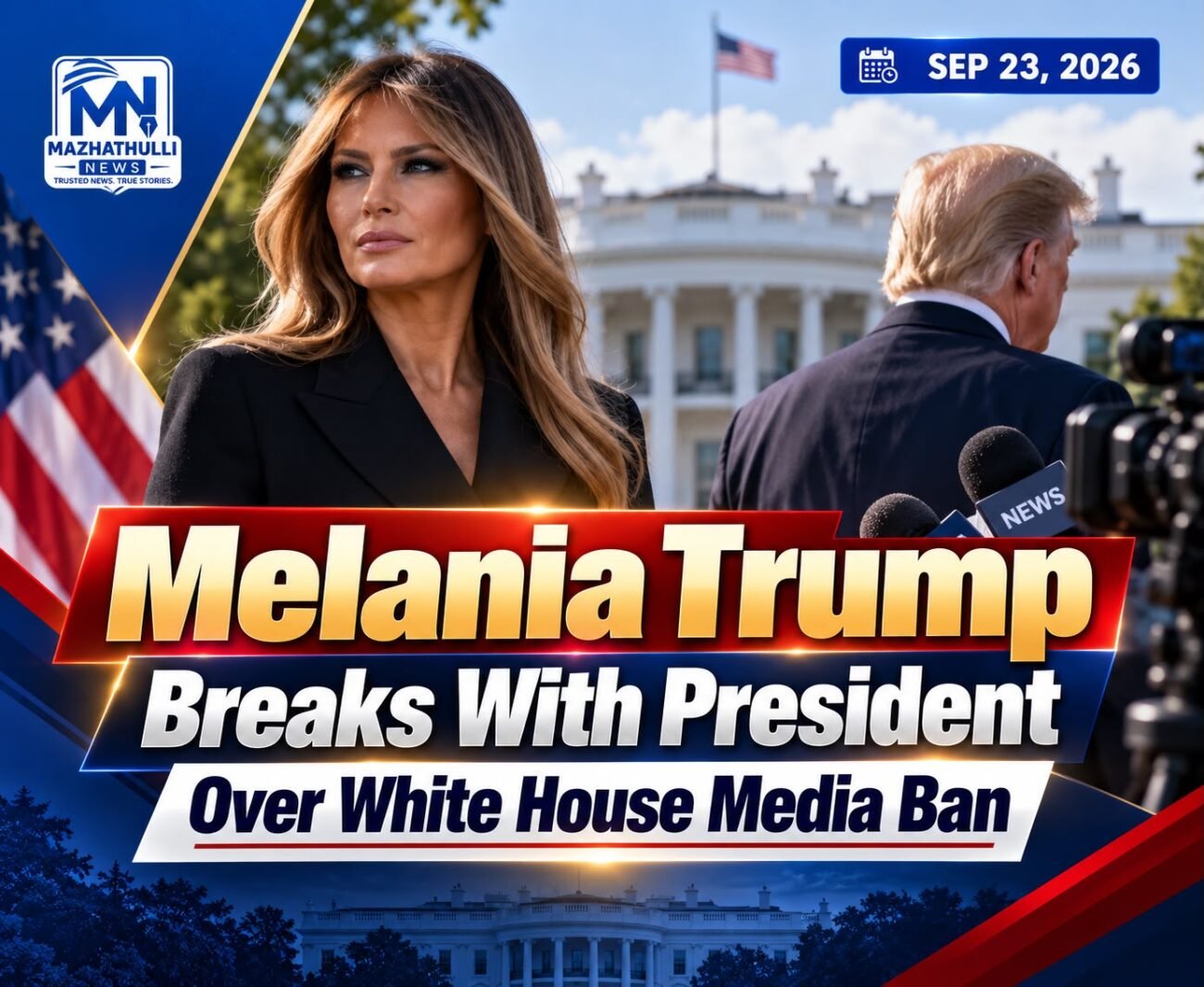
Melania Trump Breaks With President Over White House Media Ban
First Lady Melania Trump’s office has taken a different approach from President Donald Trump’s White House by granting press credentials to reporters from CNN and Politico for her event in New York, despite the president’s recent decision to bar those organizations from the White House.
The first lady’s office approved CNN senior White House correspondent Betsy Klein and Politico journalists to cover a Tuesday event held on the sidelines of the United Nations General Assembly. The event focused on the expansion of Melania Trump’s “Fostering the Future Together” initiative, which promotes children’s well-being through education and technology.
The approval came just days after President Trump announced that CNN, MS NOW and Politico would no longer be permitted to access the White House. Trump accused the organizations of producing what he described as unfair or false coverage of his administration. The three organizations have rejected those allegations and filed a federal lawsuit challenging the restrictions on their access.
CNN’s credential was reportedly approved on Sunday evening, shortly after the president’s restrictions took effect. The decision allowed the network to cover Melania Trump’s event even though its reporters were unable to enter the White House under the administration’s new access policy.
The situation has created a notable distinction between the White House press policy and the first lady’s own public events. Melania Trump’s office controls credentials for events organized by her office, meaning the approval did not automatically change the broader White House policy toward the three news organizations.
Melania Trump’s event brought together representatives from several countries and organizations to discuss initiatives involving children, education and technology. The White House said the first lady unveiled new technology partnerships and announced upcoming international events connected to the Fostering the Future Together coalition. Representatives from countries including Canada, the United Kingdom, South Korea, the Philippines, Poland, Ukraine, Türkiye, the United Arab Emirates and Panama attended or were represented.
The first lady has increasingly focused her public initiatives on children and young people, including education, technology and opportunities for children transitioning out of foster care. The latest expansion of the coalition includes partnerships intended to help address gaps in educational technology and support young people internationally.
The media dispute involving the president has meanwhile intensified. CNN, MS NOW and Politico have argued in their lawsuit that removing their White House access because of their reporting violates constitutional protections for the press. A federal court hearing on their request to restore access is scheduled for Wednesday.
The dispute also affected coverage of President Trump’s appearance at the United Nations. Although CNN journalists were barred from the White House, the network was able to cover the president at the UN using credentials issued by the United Nations. Trump confronted CNN reporter Kaitlan Collins about her presence at the event, questioning why the network was covering him after being barred from the White House.
The White House has defended the restrictions, arguing that journalists do not have an unlimited right to access the White House and that the affected organizations can continue reporting from outside the building. The administration has also maintained that the outlets were restricted because of concerns about their coverage rather than an attempt to prevent them from operating as news organizations.
The dispute has also prompted other major media organizations to take action. Several television networks suspended participation in the White House television press pool following the ban, while other news organizations withheld some pool-generated material in solidarity with the outlets that lost access. The changes have affected how presidential events are covered and distributed to the public.
Legal experts cited by Reuters have questioned whether the administration can restrict access based on disagreement with a news organization’s reporting. The legal dispute is expected to examine whether the restrictions amount to unconstitutional viewpoint discrimination and whether the administration followed appropriate procedures when the journalists’ credentials were revoked.
Melania Trump’s decision to allow CNN and Politico journalists into her New York event does not appear to represent a formal reversal of the president’s White House policy. However, it has highlighted the fact that the first lady’s office can make separate credentialing decisions for events under her control.
The episode comes as the Trump administration and major U.S. news organizations face an increasingly contentious dispute over press access, presidential coverage and the constitutional limits on government control of journalists’ access to public officials.