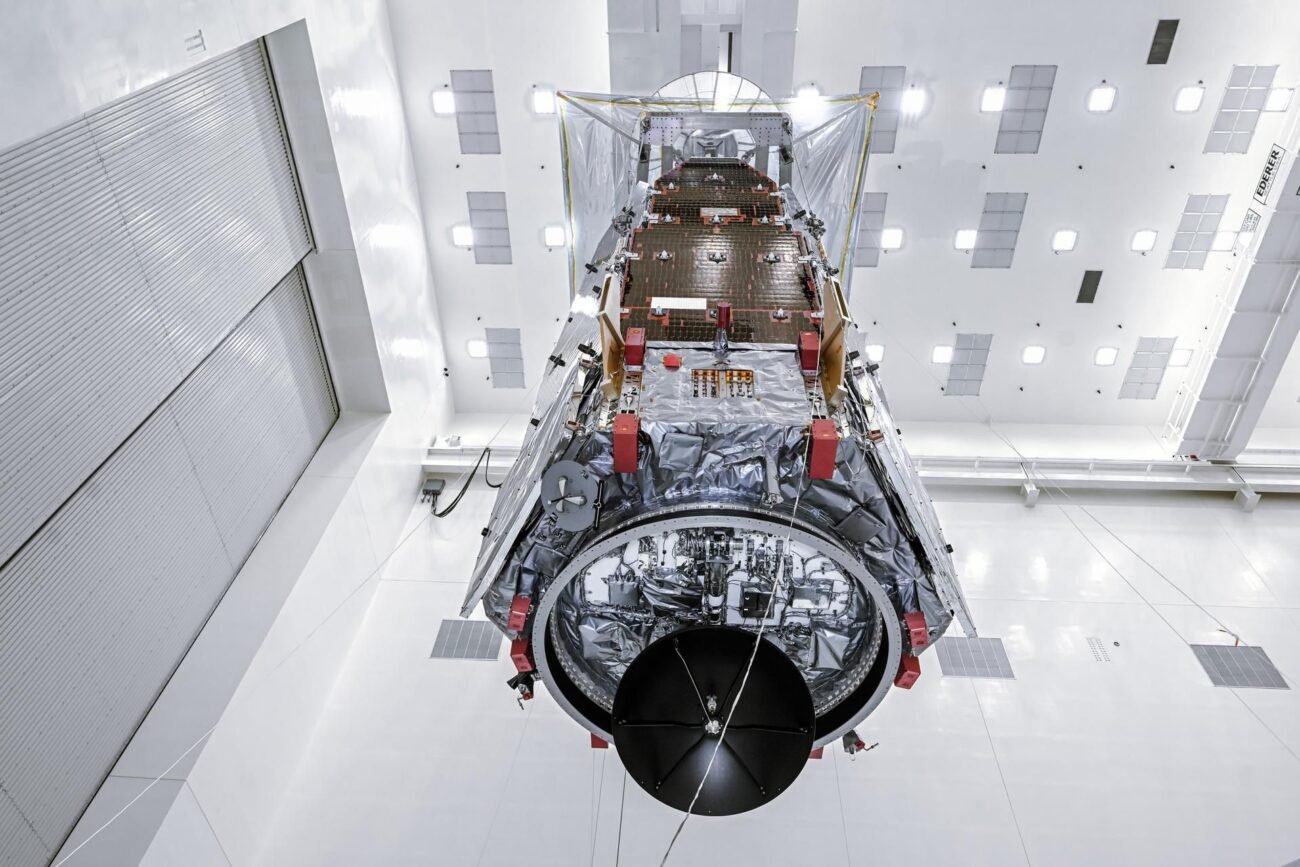
NASA’s Roman Space Telescope Set for Landmark Cosmic Mapping Mission
NASA is preparing to launch its Nancy Grace Roman Space Telescope on a landmark mission expected to revolutionize humanity’s understanding of the universe. The next-generation space observatory will create one of the most detailed and comprehensive maps of the cosmos ever produced, enabling scientists to study billions of galaxies, investigate the nature of dark energy and dark matter, and search for thousands of previously undiscovered planets beyond our solar system.
Named after pioneering NASA astronomer Nancy Grace Roman, often referred to as the “Mother of Hubble,” the telescope is designed to answer some of the biggest unanswered questions in modern astronomy. Researchers hope its observations will provide new clues about how the universe formed, how it has evolved over billions of years, and what its future may look like.
The Roman Space Telescope is equipped with an advanced Wide Field Instrument, capable of capturing images approximately 100 times larger than those taken by the Hubble Space Telescope in a single observation while maintaining comparable image quality. This remarkable capability will allow astronomers to survey enormous regions of the sky far more efficiently than ever before, dramatically increasing the pace of scientific discoveries.
A major focus of the mission will be the study of dark energy, the mysterious force believed to be accelerating the expansion of the universe. Scientists will also investigate dark matter, the invisible material that makes up most of the universe’s mass but cannot be observed directly. By mapping the distribution of galaxies across billions of light-years, researchers hope to better understand how these mysterious components shape the structure and evolution of the cosmos.
The telescope will also conduct one of the largest searches ever undertaken for exoplanets using a technique known as gravitational microlensing. Scientists expect the mission to discover thousands of new planets, including rocky worlds and planets orbiting far from their stars, providing valuable insights into how planetary systems form and whether Earth-like worlds may be common throughout the Milky Way.
NASA says the Roman mission will work alongside the James Webb Space Telescope and the Hubble Space Telescope, with each observatory serving a unique scientific role. While Webb is designed to examine specific celestial objects in extraordinary detail, Roman will scan vast areas of the sky to identify new galaxies, star clusters, black holes, and planetary systems for future investigation.
Scientists believe the mission could transform astronomy by generating an unprecedented volume of scientific data over its operational lifetime. The observations are expected to support thousands of research projects worldwide and could lead to discoveries that reshape current theories about the origins, composition, and ultimate fate of the universe. NASA officials say the Roman Space Telescope represents one of the agency’s most ambitious space science missions and is expected to remain a cornerstone of astronomical research for many years after its launch.