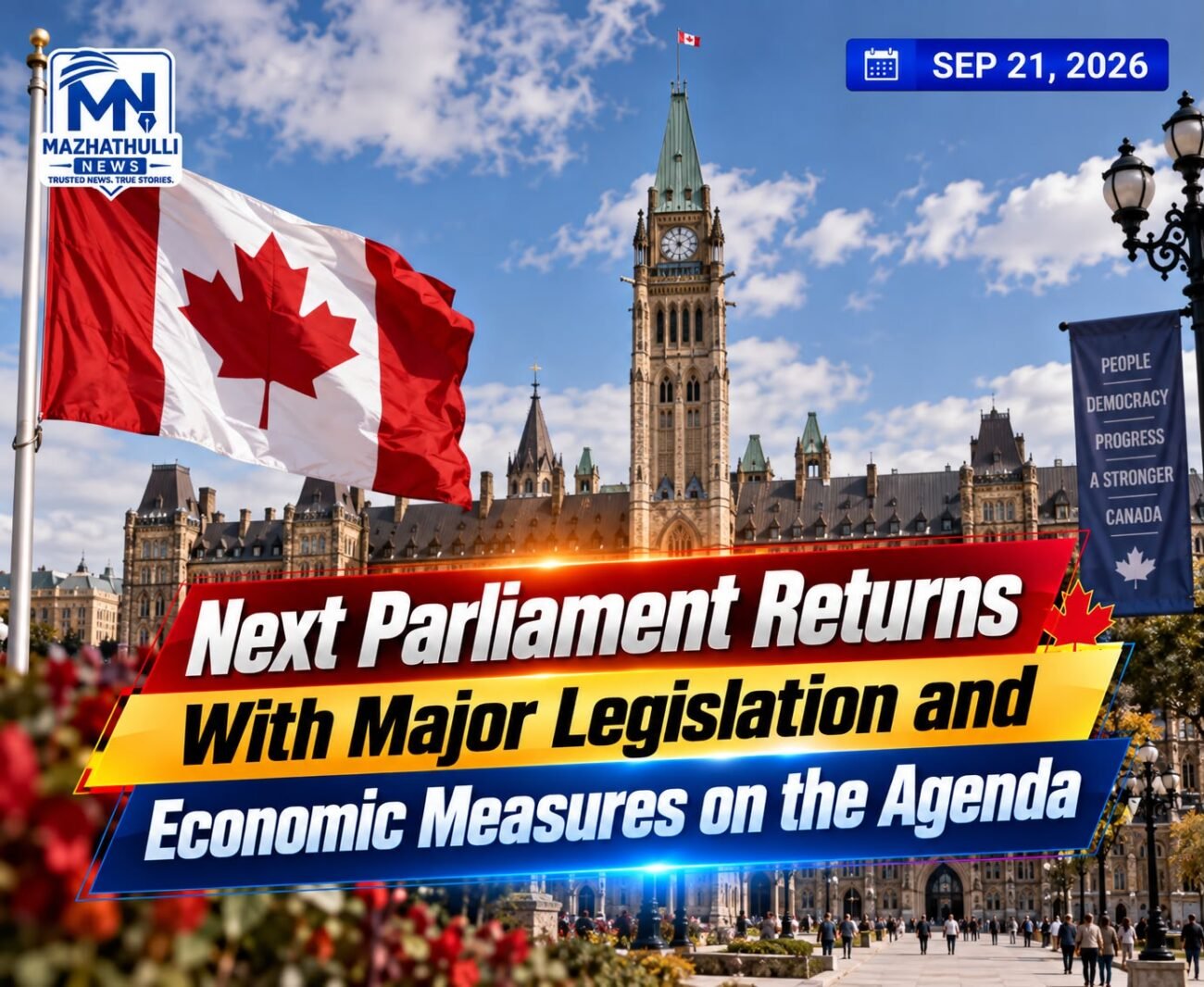
Parliament Returns With Major Legislation and Economic Measures on the Agenda
Canada’s House of Commons is set to return Monday after its summer break, with the federal government preparing to introduce major legislation focused on accelerating major projects, strengthening the economy and changing federal labour rules.
The fall sitting comes as Prime Minister Mark Carney’s government faces a range of economic and political challenges, including ongoing trade tensions with the United States and efforts to attract investment and expand Canada’s trade relationships.
One of the first major pieces of legislation expected this fall is aimed at speeding up approvals for major projects. The government has proposed a “one project, one review, one year” approach, which would establish clearer and faster timelines for federal assessments and decisions once project proponents have provided the required information.
The proposed changes are intended to reduce regulatory delays while maintaining environmental standards and respecting Indigenous rights. The government says faster approvals could help unlock investment in areas such as energy, mining, transportation and other major infrastructure projects.
Federal Labour Code reforms are also expected to be part of the government’s early fall agenda. The proposed changes follow consultations with workers, unions, employers and other stakeholders about modernizing labour rules for federally regulated workplaces.
Supply-chain and transportation reforms are another area under consideration. The government has said it wants to improve the movement of goods within Canada and to international markets while reducing regulatory barriers and strengthening the country’s ability to respond to disruptions.
The legislation comes after a summer in which the government consulted Canadians and businesses on reforms involving major projects, trade, transportation and labour relations. The government released its “What We Heard” reports earlier this month, outlining feedback gathered during consultations held from May through July.
The return of Parliament also comes as Canada continues to deal with uncertainty in its relationship with the United States. Ottawa has been pursuing measures designed to strengthen Canada’s domestic economy and diversify trade relationships as tariff disputes with Washington continue.
Carney has also spent much of the summer strengthening Canada’s relationships with Europe and other international partners. During a recent European tour, he promoted greater cooperation with the European Union in areas including critical minerals, defence, energy, artificial intelligence and digital trade.
The government has already highlighted major projects and investment as central parts of its economic strategy. In June, Carney said the government had referred 23 nation-building projects to its Major Projects Office, representing more than $130 billion in potential investment.
The fall parliamentary agenda is therefore expected to focus heavily on economic growth, infrastructure, trade and regulatory reform. The government will need to move its proposed legislation through the House and Senate before the measures can become law.
Opposition parties are expected to scrutinize the government’s proposals, particularly over issues such as labour protections, environmental assessments, major-project approvals and the government’s response to trade tensions.
With Parliament returning after a roughly three-month recess, MPs are also expected to debate a wide range of issues affecting Canadians, including affordability, housing, immigration, public safety and national defence.
The government has indicated that it wants to maintain the momentum from the spring sitting, during which 19 pieces of legislation received Royal Assent in 14 weeks.
The coming weeks will provide more details about the legislation and determine how quickly the government’s proposed economic and regulatory changes can move through Parliament.