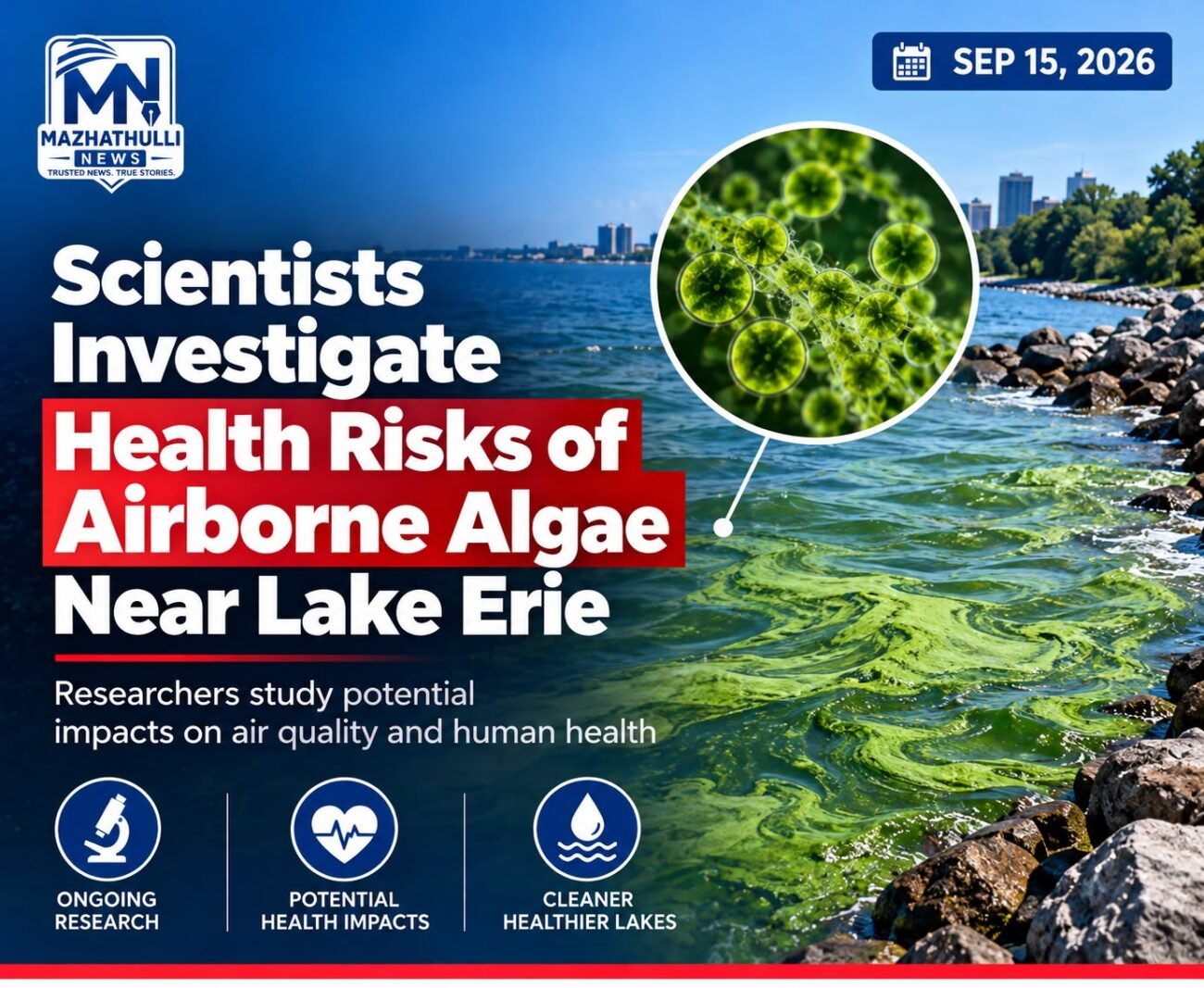
Scientists Investigate Health Risks of Airborne Algae Near Lake Erie
Scientists near Lake Erie are studying whether toxins released into the air from harmful algal blooms could affect human health. The research focuses on understanding how algae-related particles and toxins become airborne and whether people living, working or spending time near the lake may be exposed by breathing them in.
Researchers at the University of Toledo and the University of Michigan are investigating the potential health effects of airborne microcystin, a toxin produced by certain types of cyanobacteria, commonly known as blue-green algae. The study aims to determine whether these toxins can enter the human body through inhalation and contribute to respiratory or other health problems.
The research is being conducted as part of the Great Lakes Aerosol Monitoring Research Study, which follows residents in communities near western Lake Erie. Participants undergo health surveys and lung-function tests, while researchers collect air and biological samples to examine possible links between exposure and health outcomes. Scientists are also examining how wind, waves and water movement may generate aerosols containing algal toxins. These airborne particles could potentially travel away from the water’s surface, raising questions about whether people can be exposed even without directly swimming in or drinking contaminated water.
Harmful algal blooms have become a recurring environmental concern in western Lake Erie. Excess nutrients from agricultural runoff, including phosphorus and nitrogen, contribute to the growth of cyanobacteria. Some blooms produce toxins that can affect humans, animals and aquatic ecosystems. Previous research has linked exposure to harmful algal bloom toxins with skin irritation, gastrointestinal symptoms and respiratory problems. However, the health effects of inhaling airborne algal toxins remain less well understood, and scientists say more evidence is needed to determine the extent of the risks. The findings could help public health officials develop better guidance for communities near Lake Erie, particularly during the summer bloom season. Researchers hope the study will improve understanding of airborne exposure and support efforts to protect the health of people living near the Great Lakes. The research is part of broader efforts to understand the connection between water quality, environmental pollution and human health. Scientists continue to emphasize the importance of monitoring harmful algal blooms and reducing nutrient pollution that contributes to their formation.