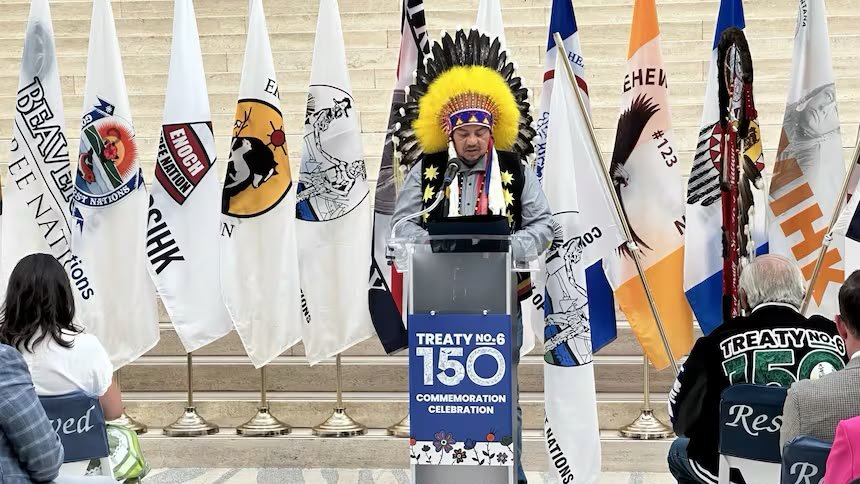
Treaty 6 Anniversary Event Proceeds Without Alberta Government Representation
Alberta government officials did not attend this year’s Treaty 6 anniversary commemoration, prompting criticism from First Nations leaders, who said the absence undermined efforts to strengthen the government-to-government relationship and demonstrate respect for treaty commitments.
Leaders from Treaty 6 First Nations described the annual gathering as an important opportunity to recognize the historic agreements that continue to shape the relationship between Indigenous Peoples and the Crown. They said participation by elected officials carries symbolic and practical significance, reflecting a commitment to reconciliation and ongoing dialogue.
One First Nations chief said the issue extends beyond attendance at a single event, emphasizing that treaties are living agreements with enduring legal and constitutional importance. According to Indigenous leaders, government participation at treaty commemorations reinforces mutual respect and acknowledges the obligations established under the treaties.
The Alberta government acknowledged that no provincial representatives were present at the ceremony and said it remains committed to working with Indigenous communities. Officials reiterated the province’s commitment to maintaining constructive relationships with First Nations and advancing discussions on issues of shared interest.
Signed in 1876, Treaty 6 covers a large area of present-day central Alberta and Saskatchewan and includes dozens of First Nations. The treaty established commitments related to land sharing, education, health care, and other responsibilities between First Nations and the Crown. More than a century later, it remains a cornerstone of Indigenous-Crown relations in Canada and continues to influence discussions on treaty rights, reconciliation, and self-government.
The incident has renewed debate over the importance of government participation in treaty events, with Indigenous leaders stressing that meaningful reconciliation requires consistent engagement, respect, and recognition of treaty relationships—not only through policy, but also through public acts of acknowledgment.