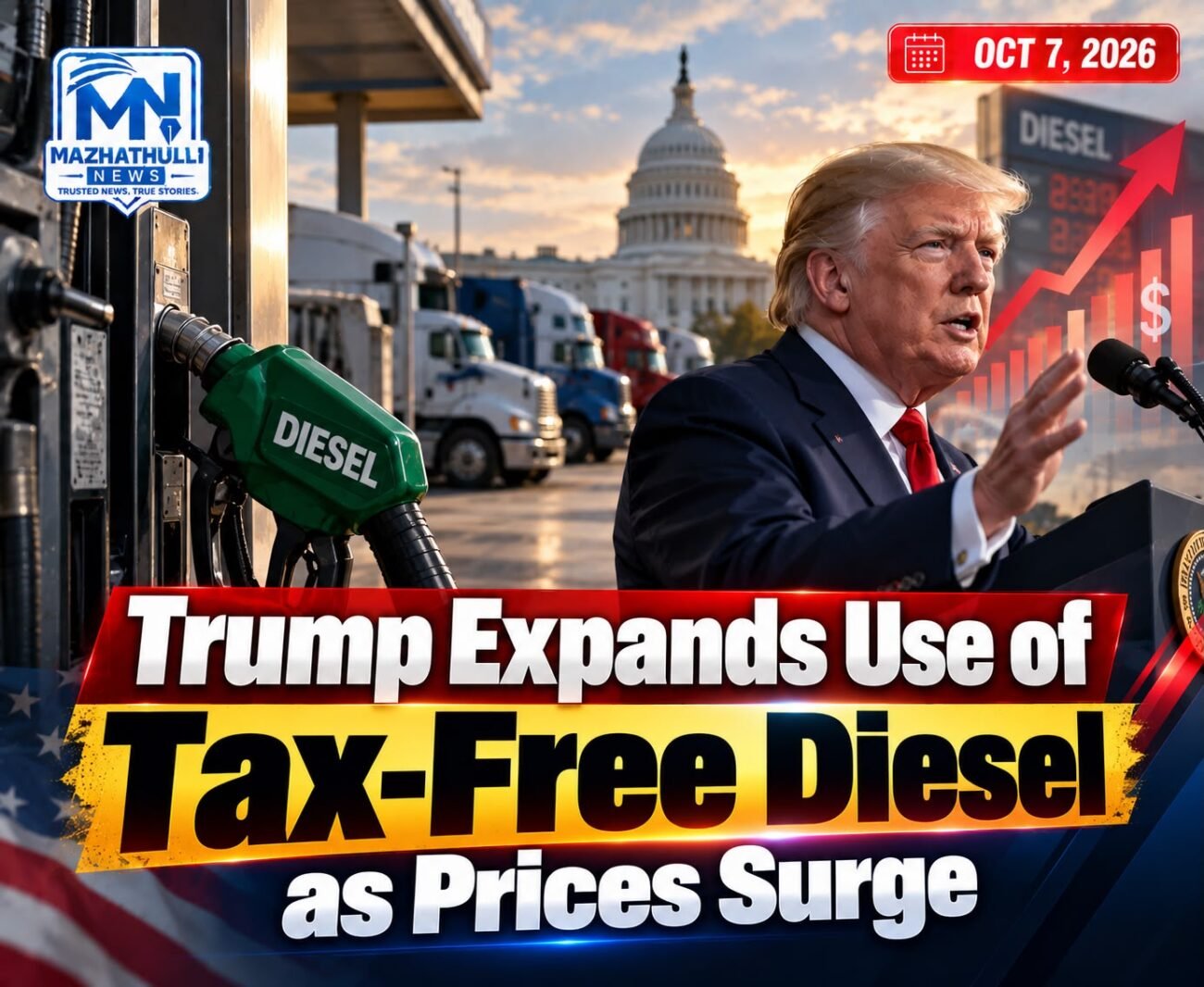
Trump Expands Use of Tax-Free Diesel as Prices Surge
U.S. President Donald Trump has signed an executive order temporarily expanding the use of red-dyed diesel on American roads as diesel prices climb to record levels and put increasing pressure on truckers, farmers and businesses.
The order, signed Monday during a campaign event in Nebraska, allows dyed diesel, which is normally reserved for off-road uses such as farming, construction and heating, to be used more broadly in highway vehicles. Red-dyed diesel is essentially the same fuel as regular diesel but is normally exempt from federal highway fuel taxes because it is intended for off-road use. The red dye allows authorities to identify fuel on which highway taxes have not been paid. Under Trump’s order, the federal excise tax normally associated with using the fuel on public roads will be deferred through the end of 2026 without interest or penalties. The administration will also explore whether the deferred tax obligation can ultimately be eliminated. The order directs the Treasury Department to implement the tax deferral while the Transportation Department works with states, trucking and transportation companies and labour organizations to expand access to dyed diesel. The Agriculture Department has also been directed to help ensure farmers can obtain the fuel in areas where demand is particularly high. The White House says the move could save truckers more than US$100 on a typical fill-up. Trump has argued that lowering diesel costs could also reduce transportation expenses and eventually put downward pressure on the prices of consumer goods, including groceries. Diesel prices have surged dramatically in recent weeks. U.S. diesel prices reached roughly US$6.50 per gallon last month, according to energy-market data, as global fuel supplies have tightened. The increase has created significant challenges for industries that depend heavily on diesel. Trucking companies face higher operating costs, while farmers are dealing with increased expenses for tractors, combines and other machinery during the harvest season. The transportation sector is particularly sensitive to diesel prices because much of the food, agricultural products, industrial goods and consumer merchandise sold across the United States is transported by diesel-powered trucks. However, energy analysts have questioned how much the executive order will actually reduce prices. Because the policy changes the tax treatment of diesel rather than increasing the amount of fuel available in the market, experts say it may provide savings for some users without addressing the underlying supply shortage.
The measure could also have an uneven impact because individual states have their own rules concerning dyed diesel. The federal government is encouraging states to relax restrictions, but not every state is necessarily required to adopt identical policies. The administration says the fuel crisis has been driven by global supply disruptions, reduced refining capacity and geopolitical conflicts. The war involving Iran and ongoing disruptions linked to the Russia-Ukraine conflict have contributed to uncertainty in international energy markets. The Trump administration has also been pressing European countries to release emergency diesel reserves. G7 countries recently agreed to release large quantities of oil and refined fuel from strategic reserves in an effort to increase global supply. The United States has also been considering additional measures to address diesel shortages, including possible restrictions on diesel exports. Officials have been weighing different options as the administration faces growing pressure over fuel prices. The increase in diesel prices is also affecting heating-oil markets because diesel and heating oil are produced from the same refining stream. Higher diesel costs can therefore contribute to higher heating expenses in regions where households rely heavily on heating oil. For farmers, the timing of the policy is particularly important because harvest operations require large amounts of diesel. Higher fuel costs can increase the cost of operating combines, transporting crops and running other agricultural equipment. Truckers are also facing higher expenses at a time when fuel represents one of the largest operating costs for many transportation companies. Any reduction in taxes could therefore provide immediate savings for some operators, even if it does not bring down the underlying wholesale price of diesel.
The administration has presented the measure as a temporary response to an extraordinary increase in fuel costs. The tax deferral is currently scheduled to remain in effect through the end of the year. Whether the policy produces substantial savings for consumers remains uncertain. Analysts say the biggest factor affecting diesel prices is the balance between fuel supply and demand, meaning tax relief alone may not be enough to reverse the recent price surge. For American consumers, the broader concern is the potential impact of expensive diesel on the cost of everyday goods. Higher transportation and agricultural costs can eventually move through supply chains and contribute to higher prices for food and other products. The Trump administration is therefore facing pressure to address both the immediate cost of diesel and the underlying supply problems driving prices higher. The expanded use of dyed diesel is one of several measures being pursued as the government attempts to provide relief to farmers, truckers and businesses.