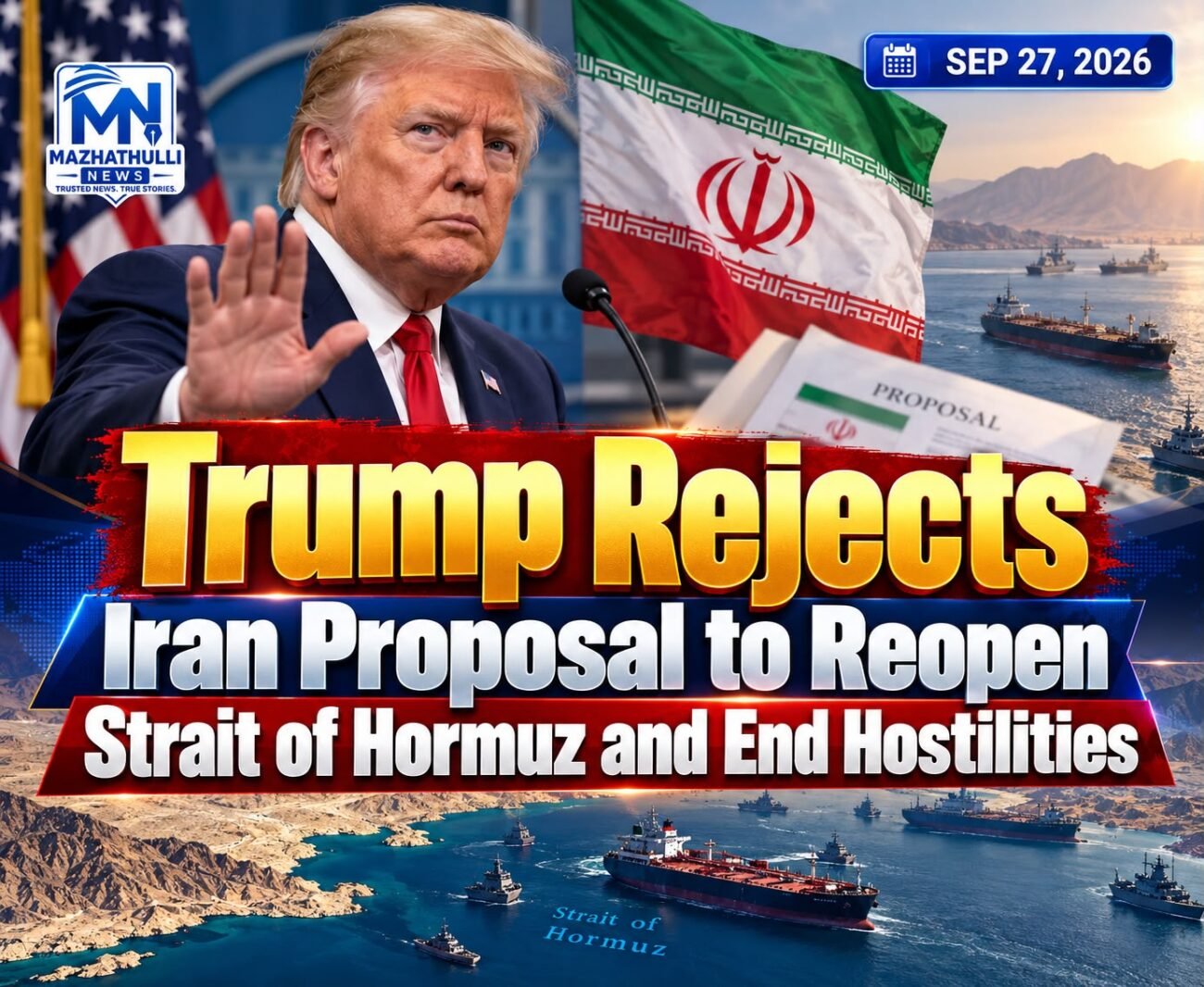
Trump Rejects Iran Proposal to Reopen Strait of Hormuz and End Hostilities
U.S. President Donald Trump has rejected an Iranian proposal to reopen the Strait of Hormuz and move toward ending the ongoing conflict in the Middle East. Iran presented the proposal through mediators during the United Nations General Assembly in New York. Under the plan, Tehran said the strategically important waterway could be reopened within seven days as part of a broader process to halt hostilities and restart negotiations with the United States.
Trump confirmed Saturday that he had rejected the proposal. Speaking to reporters outside the White House, he said Iran had made an offer but that the proposed agreement was not acceptable to him. Iran’s proposal reportedly included several conditions, including an end to the U.S. naval blockade of Iranian ports, easing sanctions affecting Iranian oil exports and a ceasefire covering the wider regional conflict. Iran has also indicated that it does not want to make concessions on its nuclear program as part of the proposed arrangement. The Strait of Hormuz is one of the world’s most important energy shipping routes. The narrow waterway connects the Persian Gulf with the Gulf of Oman and the Arabian Sea, making it a critical route for oil and other energy shipments from the region.Restrictions on shipping through the strait have already disrupted energy markets and contributed to concerns about global oil supplies. The prolonged conflict has also affected tanker movements and increased pressure on countries and businesses dependent on energy imports. Iranian officials have described the proposal as an opportunity to return to diplomacy. Foreign Minister Abbas Araghchi said Tehran had communicated its plan through mediators and that the country was seeking a negotiated solution to the conflict. The proposal followed several days of indirect contacts involving U.S. and Iranian officials through intermediaries. U.S. officials had described some of those discussions as positive and constructive, although no formal agreement had been reached. Trump’s rejection leaves the diplomatic process uncertain. Iran has not yet publicly received a formal response through the mediators, according to Iranian officials, even though Trump has publicly confirmed that he rejected the proposal. The Strait of Hormuz has become a central issue in the conflict because of its importance to global energy markets. Any prolonged disruption could affect crude oil prices, shipping costs and fuel prices in countries far beyond the Middle East.
The United States and Iran remain divided over several major issues, including sanctions, military operations, Iran’s nuclear program and the conditions required for a broader ceasefire.
For now, the Iranian proposal has not produced an agreement to reopen the waterway. The future of the Strait of Hormuz and the possibility of renewed diplomatic negotiations remain uncertain as tensions between Washington and Tehran continue.