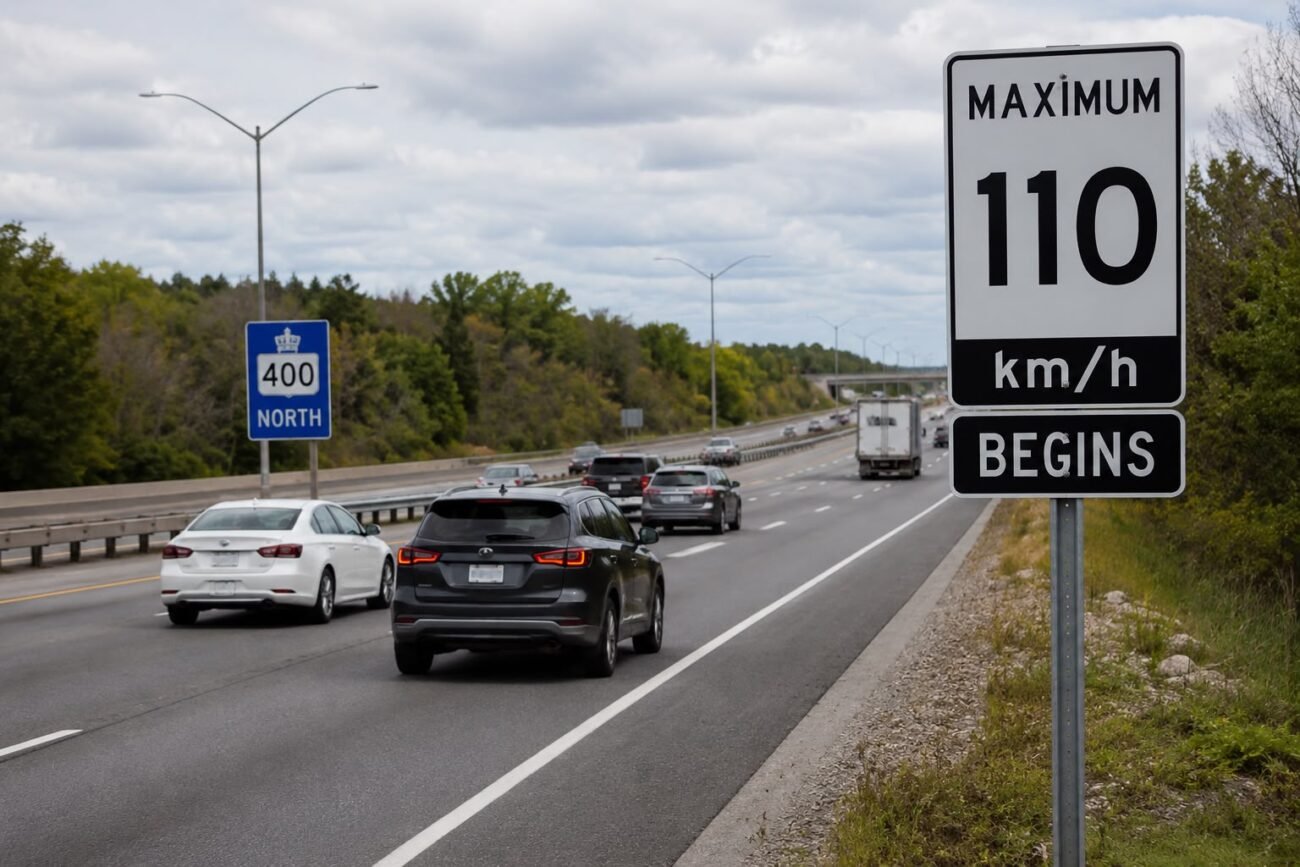
Ontario Increases Speed Limits on Several Highways, Including Parts of Hwy. 400
Higher speed limits officially came into effect across several Ontario highways on Friday, with the provincial government raising the maximum speed limit from 100 km/h to 110 km/h on selected highway sections, including parts of Highway 400.
The change also applies to designated stretches of Highways 11, 69, 401, 402, 404, 416 and 417, making it one of the province’s largest expansions of higher speed limits since Ontario first introduced pilot projects in 2022.
According to the Ontario government, the decision follows extensive monitoring of previous pilot programs, which found no significant increase in collision rates on highways where the speed limit had already been increased to 110 km/h. Officials say the selected highways were chosen after detailed engineering reviews that considered road design, lane width, visibility, traffic volumes, and historical safety records.
Transportation Minister Prabmeet Sarkaria said the updated speed limits reflect improvements in modern highway infrastructure and vehicle safety technologies. He added that many drivers were already travelling close to 110 km/h on these highways, and aligning the legal speed limit with actual traffic speeds could improve traffic flow and reduce unnecessary speed differences between vehicles.
Despite the increase, the government emphasized that 110 km/h is the maximum permitted speed—not a recommended driving speed under all conditions. Motorists are expected to slow down during rain, snow, fog, heavy traffic, construction zones, or any situation where road conditions make higher speeds unsafe.
The new limits apply only to specific highway sections marked with updated speed limit signs. Other provincial highways and highway segments not included in the expansion will continue to have a maximum speed limit of 100 km/h, and existing lower limits in urban areas, construction zones, and other restricted locations remain unchanged.
Road safety advocates have offered mixed reactions to the move. Supporters argue that increasing speed limits on modern, well-designed highways reflects current driving behaviour and may improve traffic efficiency. However, some safety experts warn that higher speeds reduce drivers’ reaction time and increase both stopping distance and the severity of collisions when crashes occur.
The Ontario Provincial Police (OPP) reminded drivers that enforcement will continue regardless of the higher speed limits. Officers will continue targeting dangerous driving behaviours such as excessive speeding, distracted driving, impaired driving, aggressive lane changes, and tailgating. Drivers exceeding the posted limits could still face fines, demerit points, or stunt driving charges where applicable.
The Ontario government said it will continue monitoring collision statistics, traffic flow, and public safety on the affected highway sections. Officials noted that the performance of the expanded 110 km/h zones will help determine whether similar speed limit increases could be introduced on additional highways in the future.