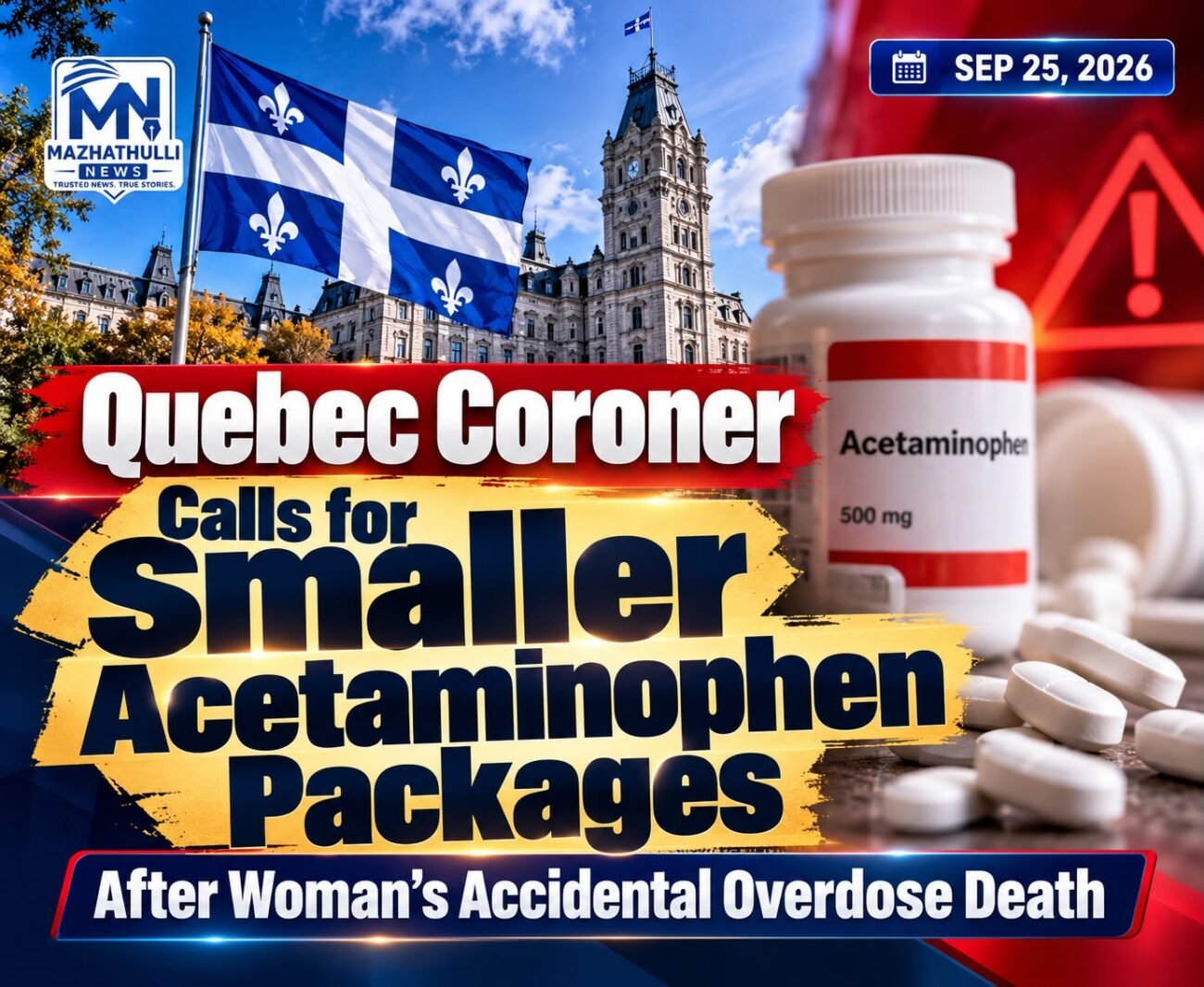
Quebec Coroner Calls for Smaller Acetaminophen Packages After Woman’s Accidental Overdose Death
A Quebec coroner is calling on Health Canada to study whether smaller package sizes for acetaminophen, commonly sold under the brand name Tylenol, could help reduce accidental and intentional overdoses.
The recommendation follows the death of an 81-year-old Montreal woman who died on July 5, 2026, after developing severe liver damage caused by acetaminophen poisoning. Coroner Edgard Nassif concluded that the death was accidental and recommended that Health Canada examine whether limiting the amount of acetaminophen available in a single package could reduce poisoning cases. According to the coroner’s report, the woman lived alone and had experienced memory loss and occasional confusion in the years before her death. A relative became concerned after noticing that she was confused during a telephone conversation on July 1 and contacted emergency services. She was taken to the Centre hospitalier de l’Université de Montréal (CHUM), where doctors found severe liver damage and developing hepatic encephalopathy. Her condition continued to deteriorate, and she died four days later.
A bottle of acetaminophen was found empty at her home. The coroner said it was highly likely that she had taken multiple doses without realizing or remembering how much time had passed between them. Her memory problems and alcohol use may also have contributed to the accidental overdose, according to the report. The case has renewed concerns about the availability of large quantities of acetaminophen in over-the-counter packages. The medication is widely used to treat pain and reduce fever and is considered safe when taken according to the recommended directions. However, taking too much can cause serious liver damage and, in severe cases, liver failure and death. Data cited in the coroner’s report show that acetaminophen-related poisonings remain a significant concern in Quebec. The Centre antipoison du Québec recorded approximately 3,562 acetaminophen poisoning cases in 2025, along with 5,696 cases of multiple-drug poisoning involving acetaminophen. Of the poisoning cases recorded that year, 1,037 were considered intentional. The coroner noted that poisoning cases have continued to increase despite public awareness and education efforts. In his view, information campaigns alone may not be sufficient to reduce the risks associated with having access to large quantities of the medication. Nassif has therefore recommended that Health Canada investigate whether reducing the size of acetaminophen containers sold over the counter and through pharmacies could help lower both accidental and intentional poisoning incidents. Health Canada had not yet responded to the recommendation at the time of the report. Health Canada currently advises adults and children aged 12 and older not to exceed 4,000 milligrams of acetaminophen from all sources in a 24-hour period. The department also warns that people should avoid taking multiple medications containing acetaminophen at the same time without carefully checking the labels. The coroner’s recommendation does not mean that acetaminophen products are being recalled or that package-size restrictions have been introduced. Instead, it asks the federal health regulator to examine whether changing package sizes could be an effective additional measure to prevent overdoses. The recommendation comes as health authorities continue to emphasize careful dosing, medication tracking and consultation with pharmacists or other health professionals, particularly for people who take several medications or may have difficulty remembering when and how much medication they have taken.