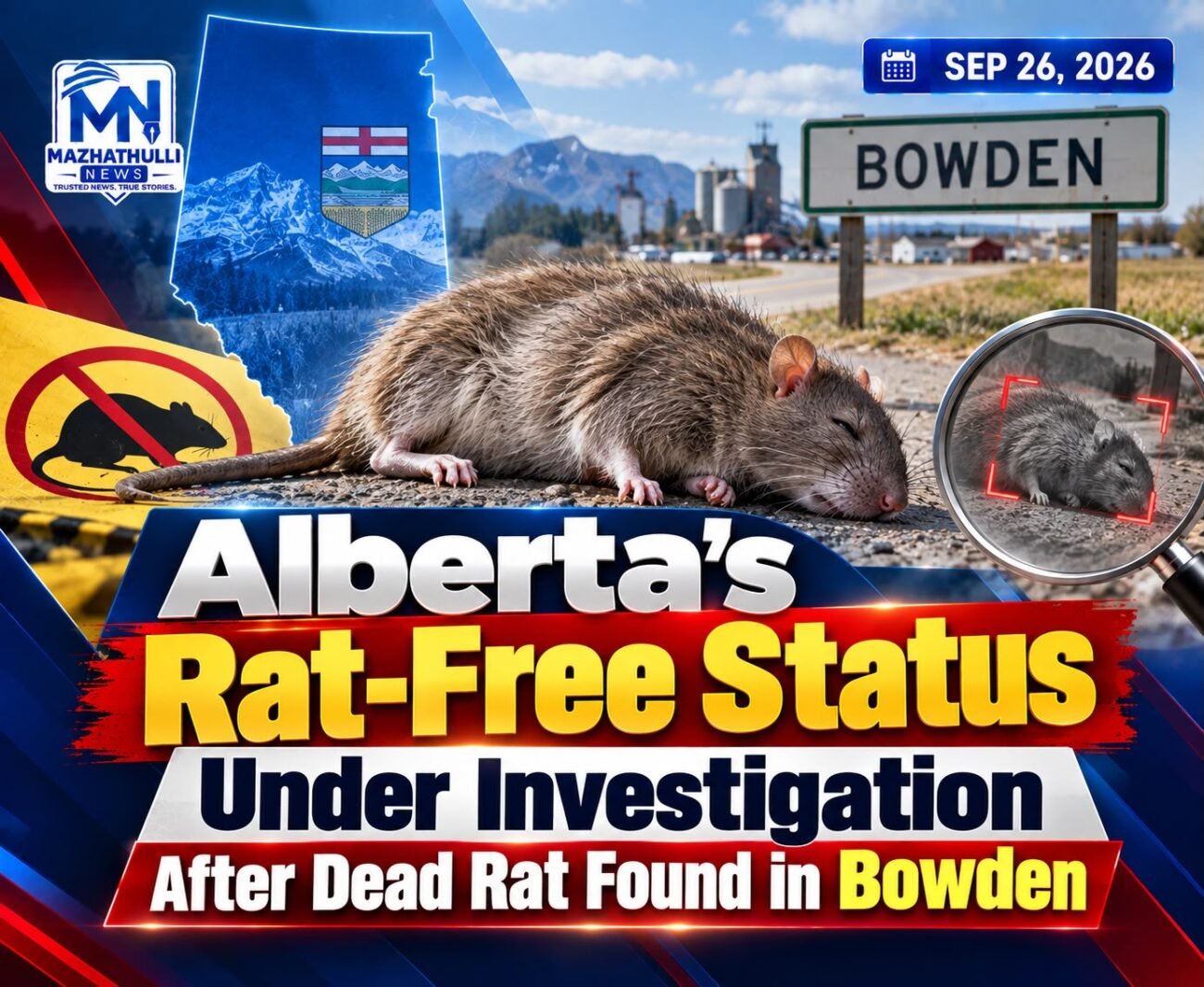
Alberta’s Rat-Free Status Under Investigation After Dead Rat Found in Bowden
Alberta’s long-standing reputation as a rat-free province is drawing attention after a dead rat was discovered in the Bowden area, prompting the province’s Rat Control Program to investigate. The Town of Bowden announced the discovery on Thursday, Sept. 24, and called on residents to remain alert for additional signs of rat activity. The town said the provincial Rat Patrol had been contacted to investigate and dispose of the animal. Officials have not disclosed exactly where the dead rodent was found. Residents have been asked to report any suspected rat sightings, droppings or other signs of rat activity. Alberta’s Rat Control Program relies heavily on public reports to identify potential incursions and determine whether further investigation or control measures are required. Despite the discovery, Alberta has not officially lost its rat-free status. The provincial government defines that status as having no established, resident population of rats. It does not mean that an individual rat can never be found in Alberta. Small infestations have occasionally occurred, but the province says they are isolated and eradicated when discovered. Alberta has maintained its Rat Control Program since 1950. The program was created to prevent Norway rats from becoming established in the province and continues to operate under Alberta’s agricultural pest-control legislation. One of the province’s key defences is the Rat Control Zone along Alberta’s eastern border with Saskatchewan. The zone stretches about 600 kilometres from the Cold Lake area in the north to the Montana border in the south and is designed to monitor and control possible rat movement into Alberta. Geography also plays an important role. Alberta’s Rocky Mountains to the west, boreal forests to the north and relatively sparsely populated areas along much of the eastern approach create natural barriers to rat movement. Norway rats depend heavily on people, buildings and accessible food sources, making populated areas particularly important for their survival and spread. The province receives hundreds of suspected rat reports each year, but most turn out to involve other rodents. Alberta says muskrats, voles, mice, pocket gophers, ground squirrels and other animals are sometimes mistaken for rats. Officials investigate reports to confirm the species and determine whether control measures are necessary. When genuine rats are found, provincial officials work to isolate and eradicate them before they can establish a breeding population. Alberta says all reported rat sightings are investigated to verify identification, determine possible sources and establish appropriate control measures. Rats can sometimes enter Alberta by travelling with people or goods. The province notes that rats are capable of hitchhiking in transport trucks and personal vehicles. Residents returning from outside Alberta are encouraged to check vehicles for signs of rodents and to avoid leaving accessible food, garbage or potential shelter around their properties. Property owners can also reduce the risk by keeping garbage and food secured, cleaning up spilled grain or animal feed, removing piles of materials that could provide shelter and sealing openings around buildings, barns, sheds and other structures. The Norway rat is considered a declared pest under Alberta’s Agricultural Pests Act, and the province says both individuals and municipalities have responsibilities to prevent rats from becoming established. It is also illegal to import, sell or keep rats as pets in Alberta.
The Bowden discovery comes as a reminder of the unusual approach Alberta has taken for more than seven decades to keep an established rat population out of the province. While the presence of a single dead rat does not by itself indicate a wider infestation, authorities are investigating to determine whether there are any additional signs of rat activity in the area.
For residents who believe they have spotted a rat, Alberta recommends safely taking a photograph, noting the location and reporting the sighting to the Rat Control Program. Reports can be made through the provincial rat-control reporting channels or through local municipal authorities. The investigation in Bowden will help determine whether the discovery was an isolated incident or whether additional monitoring and control measures are required. For now, Alberta’s official position remains that the province is rat-free in terms of having no established resident rat population.