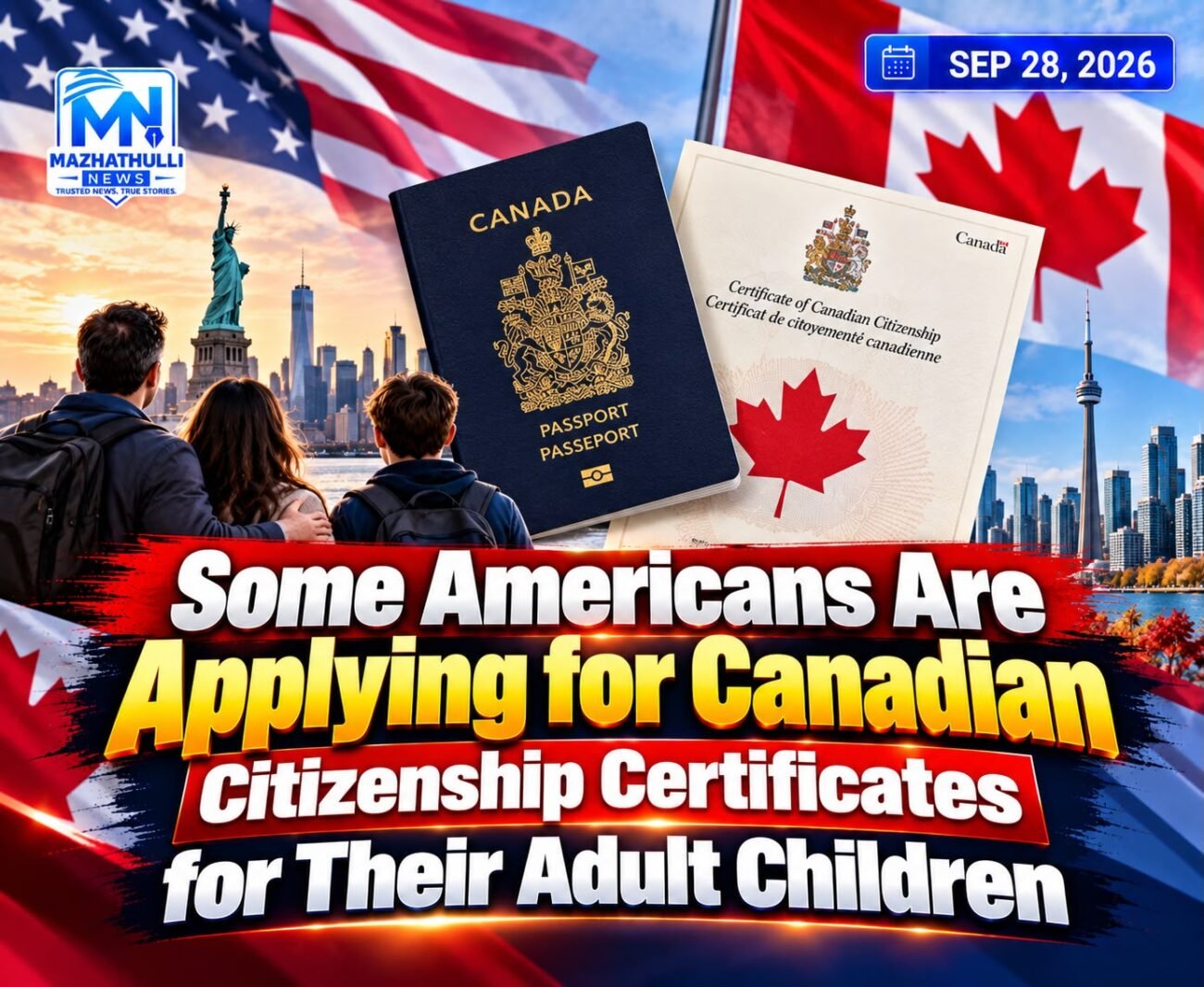
Some Americans Are Applying for Canadian Citizenship Certificates for Their Adult Children
Some Americans are increasingly examining their family histories to determine whether their adult children may already qualify for Canadian citizenship, following major changes to Canada’s citizenship-by-descent rules. The development has attracted attention among American families with Canadian parents and grandparents, particularly those who previously believed that citizenship could not be passed down because the child was born outside Canada. The change follows the implementation of Bill C-3, which amended Canada’s Citizenship Act and changed the rules governing citizenship by descent. The new framework addressed the previous first-generation limit in certain circumstances and created new rules for passing Canadian citizenship to children born abroad. For some families, the change means an adult child who has never lived in Canada could potentially have Canadian citizenship recognized based on their family connection. The person does not necessarily have to go through the regular immigration process or obtain permanent residence first if they already qualify as a citizen. Instead, eligible individuals can apply for a Canadian citizenship certificate, commonly known as proof of citizenship. The certificate confirms whether the applicant is a Canadian citizen based on the information and documents submitted to Immigration, Refugees and Citizenship Canada.
This distinction is important because a citizenship certificate does not itself grant citizenship to someone who is not eligible. It is evidence of citizenship for a person who already acquired citizenship under Canadian law.
For American families, the process can begin with tracing the Canadian connection through parents, grandparents or other qualifying generations. Applicants generally need official records showing the relationship from the Canadian ancestor through each generation to the person applying. Documents can include birth certificates, marriage certificates, Canadian citizenship certificates, immigration records and other government-issued records. When several generations are involved, every link in the family chain may need to be demonstrated. The process can become particularly complicated when family records contain different surnames, spelling variations or incomplete information. Adoption, changes in marital status and historical record-keeping can also affect how an application must be documented. The new rules are especially relevant to families affected by Canada’s former first-generation limit. Under the previous system, a Canadian citizen born outside Canada could face restrictions on automatically passing citizenship to a child who was also born outside Canada. Bill C-3 changed that approach for certain people who had previously been excluded. It also introduced a new framework for people born or adopted abroad in the future. For children born or adopted outside Canada after December 15, 2025, where the Canadian parent was also born or adopted outside Canada, additional requirements can apply. These include rules requiring the Canadian parent to demonstrate a meaningful connection to Canada through physical presence. The changes have prompted some families to revisit citizenship questions that they had previously considered settled. Parents may be applying for certificates for adult children even when those children have no immediate intention of moving to Canada. For some, the motivation is long-term planning. Canadian citizenship can provide the ability to live and work in Canada without a work permit and can provide access to a Canadian passport once citizenship has been established. It can also provide greater flexibility for education, employment, retirement or relocation in the future. An adult child who obtains proof of Canadian citizenship does not have to maintain permanent-resident status in order to retain the right to live in Canada.
However, citizenship by descent is not automatically available to every person with Canadian ancestry. The exact circumstances of the Canadian parent or ancestor, the applicant’s date and place of birth, and the citizenship laws that applied at the relevant time all matter.
The growing interest has also come as Canada faces significant demand for citizenship-related applications. People applying for proof of citizenship can face lengthy processing times, particularly when applications involve complicated family histories or require additional documentation. Applicants also need to distinguish between a citizenship certificate and a Canadian passport. The citizenship certificate establishes Canadian citizenship, while a passport is a separate travel document that can generally be applied for after citizenship has been established. For Americans who believe their adult children may have inherited Canadian citizenship, the first step is therefore not necessarily an immigration application. It is determining whether citizenship was already acquired under Canada’s law and gathering the documents needed to establish that connection.
The renewed interest demonstrates how changes to citizenship legislation can affect families living outside Canada, including people who have never lived in the country but have Canadian parents or other qualifying family connections.
For some American families, obtaining citizenship certificates is becoming a way of formally documenting that connection and giving the next generation another option for living, working or studying in Canada in the future.